Forever Autumn

March 2, 2015

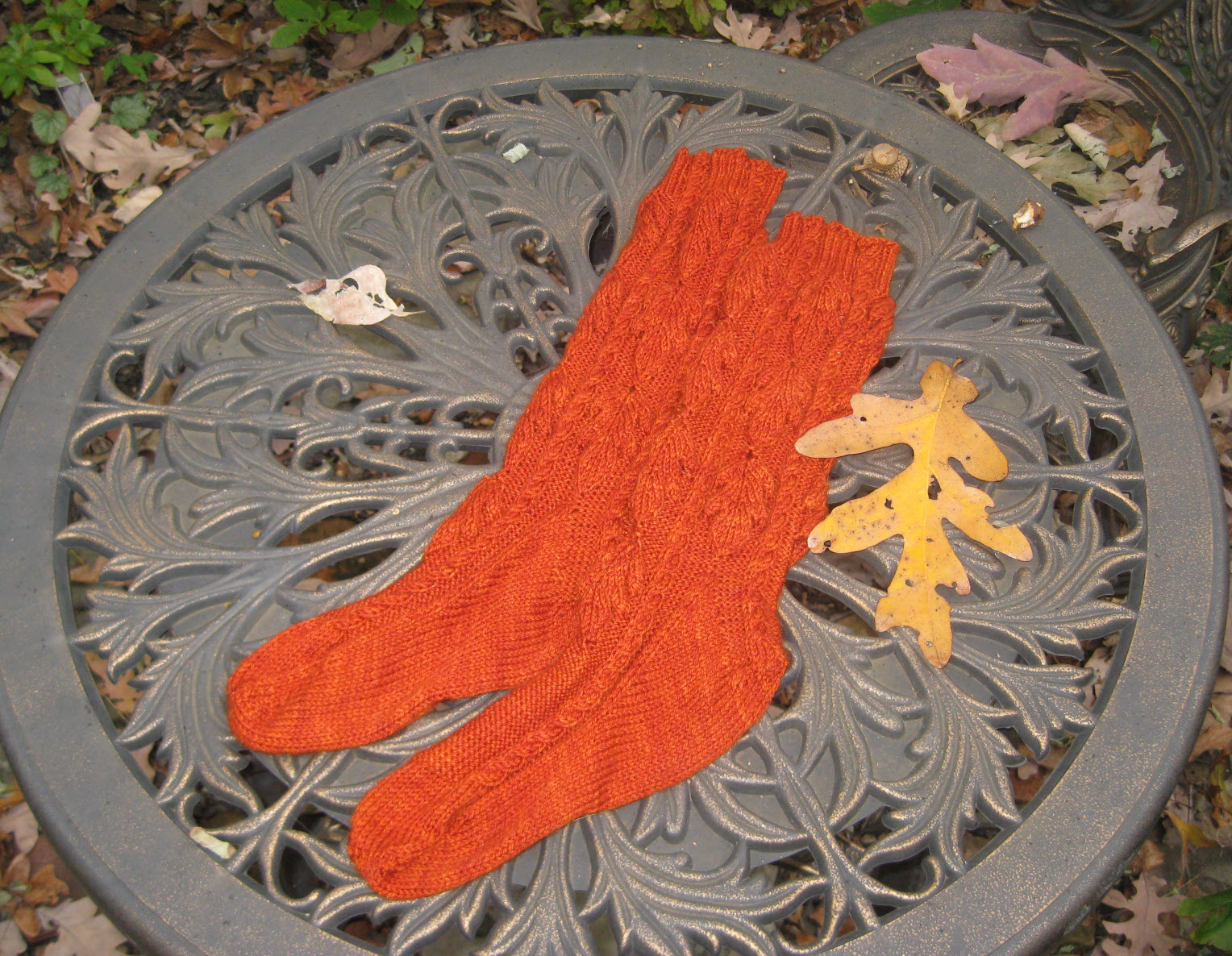
We had an ice storm here last night. We don’t often get them, and while they make for a beautiful, shiny landscape, they are dangerous things. This winter has been filled with cold, snow, and wind. Autumn seems like a long, long time ago and who knows when spring will get here. But I have a reminder of autumn, when the days were still warm and the leaves filled the world with color.

sock 02

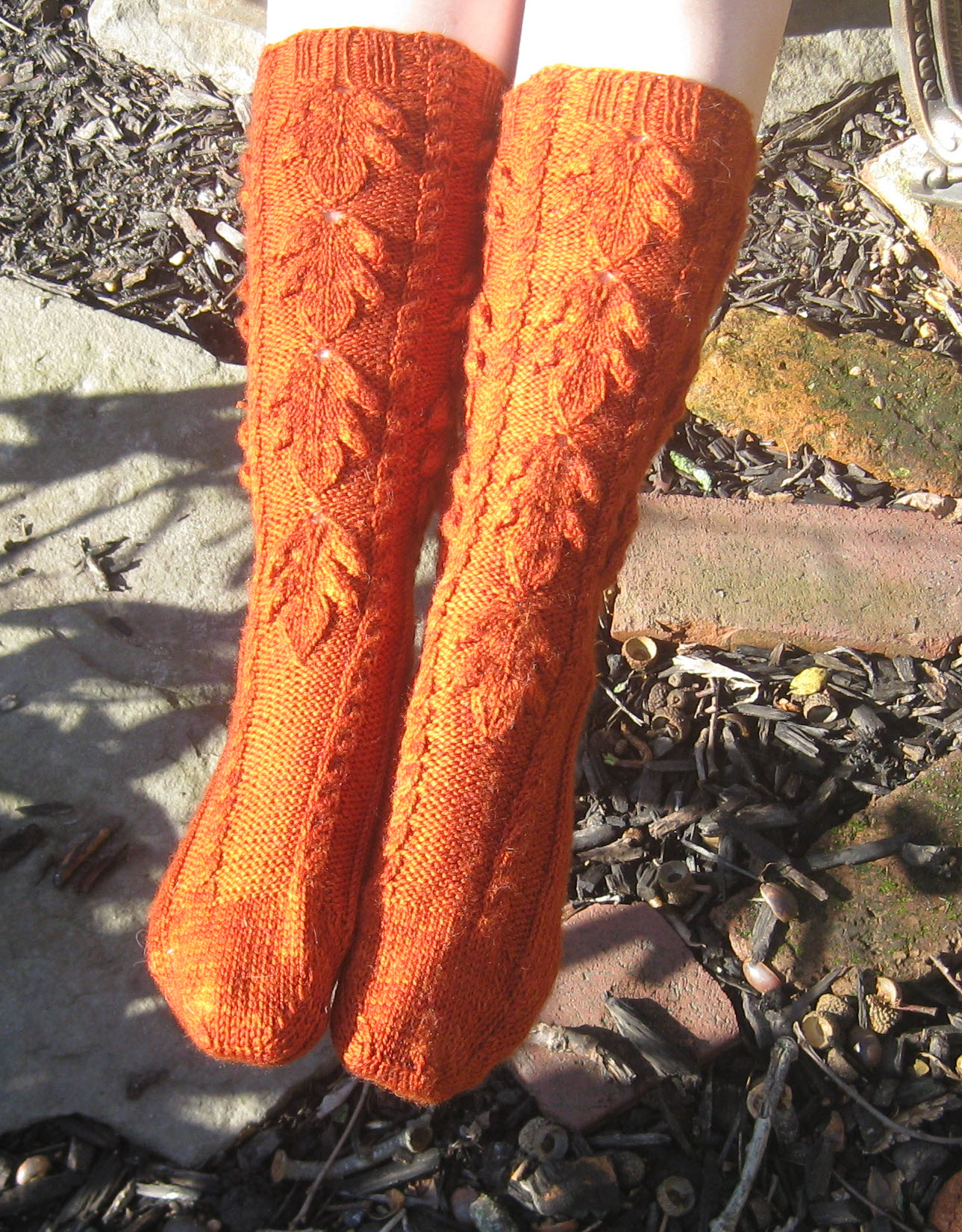
The pattern is “Forever Autumn” by Welsh designer, Sally Pointer, under her “Wicked Woollens” label.

sock 04

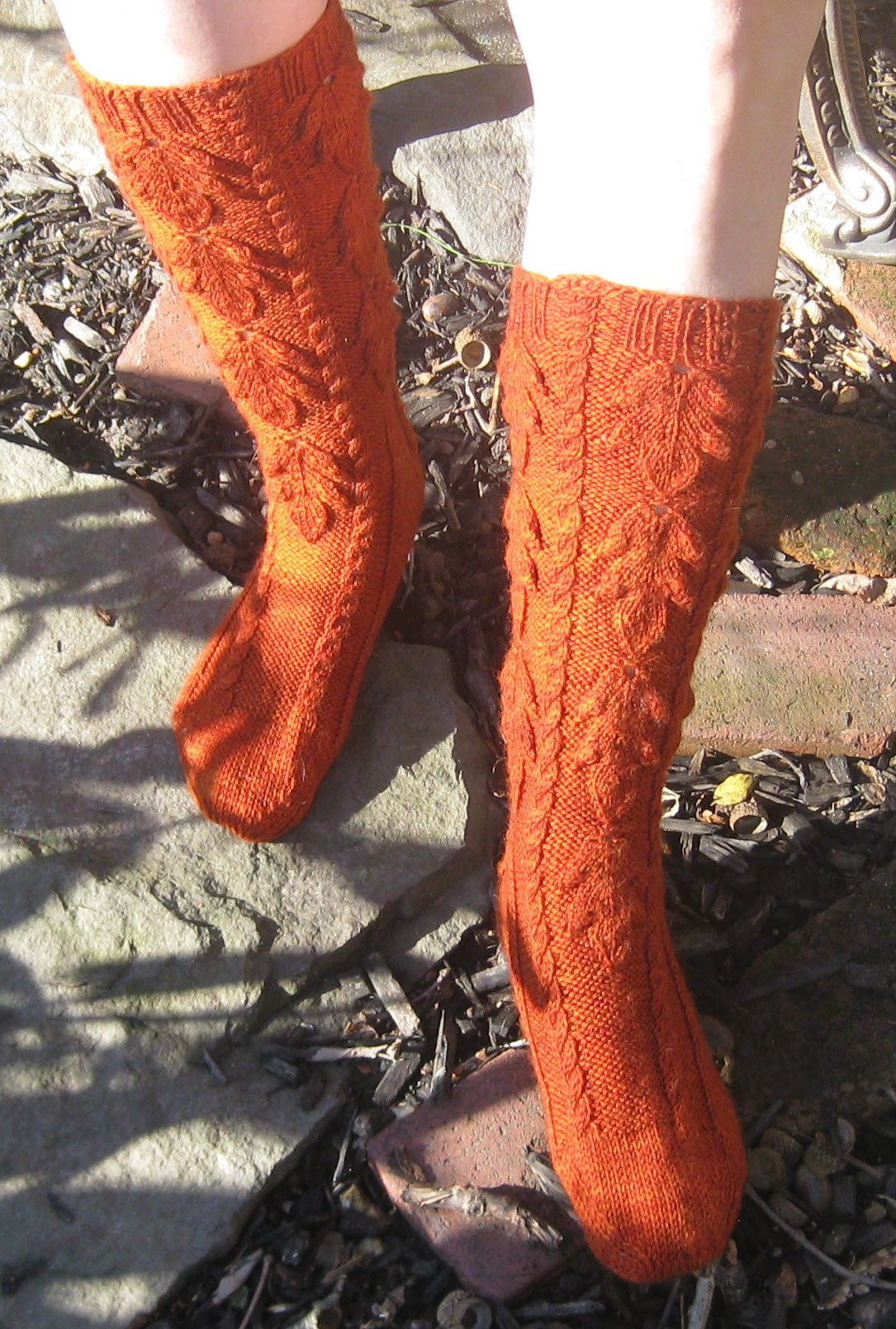
I varied the heel slightly. I have a very narrow heel, so instead of the eye-of-partridge stitch that the pattern called for, used a simple 1×1 rib for the heel. This gives me a tighter fit. I also added an extra level of the leaf pattern.

And although it is a bit hard to discern because of the difficult in photographing white, that is an autumn-blooming azalea sheltering the fairy door below.

sock 01

The yarn is Three Irish Girls Adorn in the “Lucky Penny” colorway, a lovely coppery color that looks like autumn leaves.

sock 03

Given the winter we are having, if I can’t have spring, I would have settled for autumn lasting longer!

socks 1

You get a much better idea of the design with the socks on.

socks 2

I added the extra leaf at the front ankle.

socks 3

And continued the cable down the foot.

socks 4

I love the oak leaf motif!

socks 5

And these took exactly one skein, with the extra rounds of the design. A very happy marriage of a pattern and the right yarn!


February Sweater

February 28, 2015

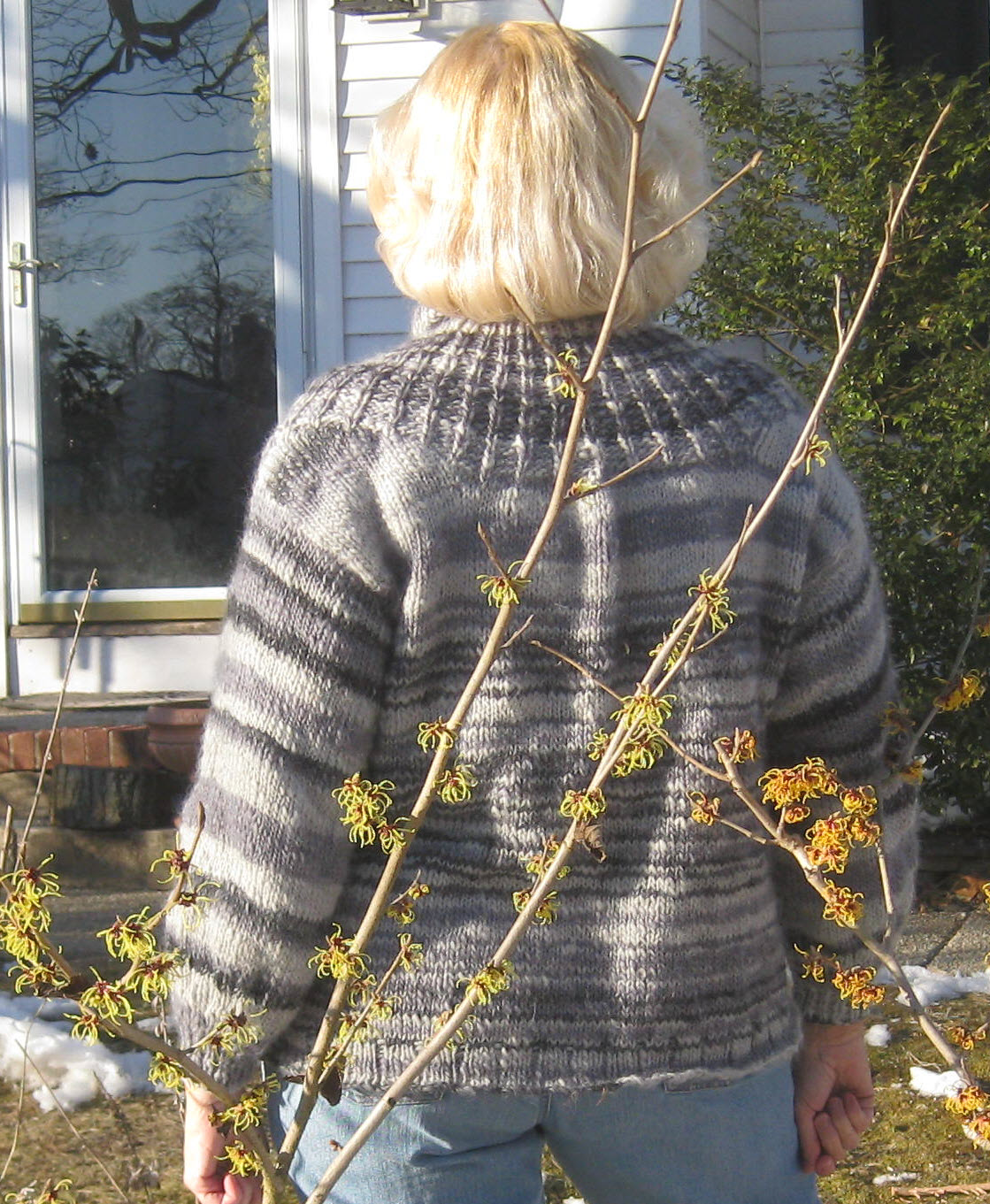
I finished this in time to wear it during February:

sweater 01

When I first began knitting a few years back, there was a yarn called Berroco Foliage. It was a lovely thick-thin pencil roving type of yarn in multi-colors. The first few years it was available, the colorways WERE all named for foliage and trees: Autumn Forest, Japanese Maple, Joshua Tree, etc. Then, they started to changed towards garden plants: Coleus, Russian Sage. Finally, the designers gave up and, in desperation, got away from the multi-colors and the foliage names. The colors became all the same suite: Cranberry Bog, for instance, was all shades of maroon and burgundy. Finally, the designers jumped the shark with “Soapstone,” which was a blend of muddy blue with a name not even remotely resembling anything to do with foliage.

Not surprising, the line went out of print. But one of the later colorways was this one, called “February.” It is not truly grey, but a grey-blue variegated to black. I had a bag of 10 skeins tucked away because I loved the color and had a sort of vision of what I would knit from it. Finally, I came across a pattern book called Classic Elite Knits that contains a pattern, “Rising Stripes.” The big, round turtleneck collar was exactly what I was after.

sweater 04

I used the size small pattern (where in commercial sizes I am a large!), and it fit perfectly. I used a size 7 needle to compress the yarn a little. Having knit with the yarn before, I knew it tended to get a little fuzzy if you knit too loosely with it. A size 7 packed it down a bit. I knit the body in the round until it split for the front and back. I didn’t use the set in sleeves, but picked up 60 stitches around the sleeve opening and knit from the shoulder to the cuff. It is a very simple sweater but very effective with the stripes.

sweater 02

I pushed to finish the February sweater so I could wear it in February. The witch hazels are in bloom. The days are getting longer. February is fading away, but I have a nice new sweater to get me through the chilly days of spring.

sweater 03


Team Scarves. If your team is from the 18th Century ….

February 24, 2015

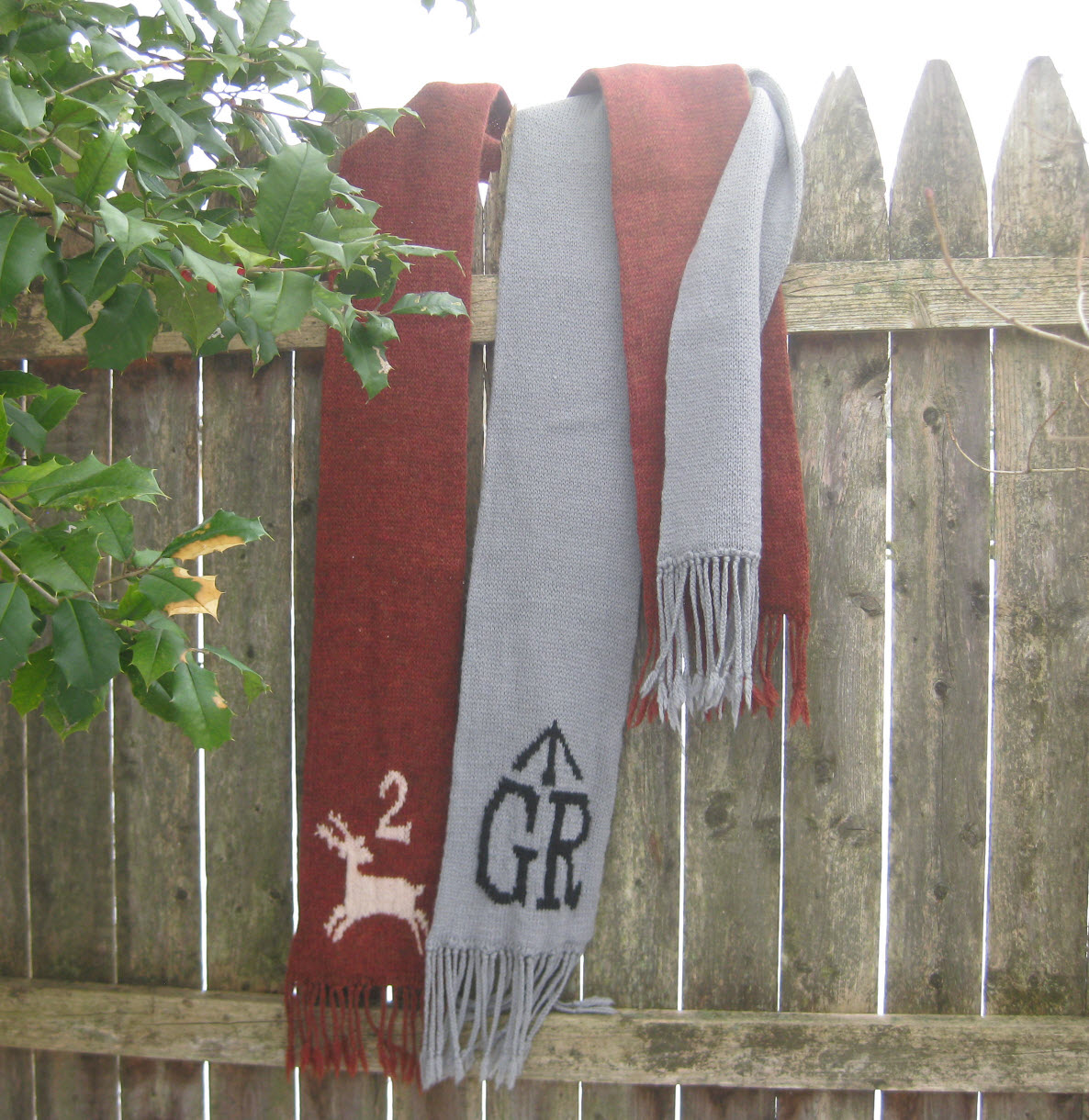
So. I needed a couple of raffle items for my reenactment unit. The unit is a little unusual in that they do two regiments: the 2nd Pennsylvania colonial regiment and the 43rd of Foot British regiment. I had knitted Monmouth caps and Machault caps, but wanted to do something … modern.

I took the logo of the 2nd PA and took the standard King’s Broad Arrow British design and ran them through a chart software. The results were pretty amazing.

scarves 2

I had to go in and duplicate stitch some of the detail on the 2nd PA logo, but other than that, they both worked up really well.

scarves 3

I knitted them flat using KnitPicks Palette Yarn. Once I knitted above the stranded colorwork logo, I joined and knitted in the round for what seems to be miles. Three skeins of the main color. And I learned something that would have helped with the Rhinebeck sweater — when you knit a tube, and wet finish, it will grow longer. Now I know how I misjudged the sleeve length! These grew to exactly the right length.

scarves 4

A little thornier was the logo for the Royal Artillery. This took some thought but was well-received by a deserving artillerist!

artilerry scarf


A New Post, A New Sweater!

February 24, 2015

Lots has gone on here since I last posted. Much has to do with health issues, both mine and family members. Some has to do with my 96-year-old mother-in-law who is concerned about what will happen when she gets old. Not sure when she expects that to be; I’d think 96 was pretty well into it. Add to this the general insanity of life and work and death and it left little time for blogging.

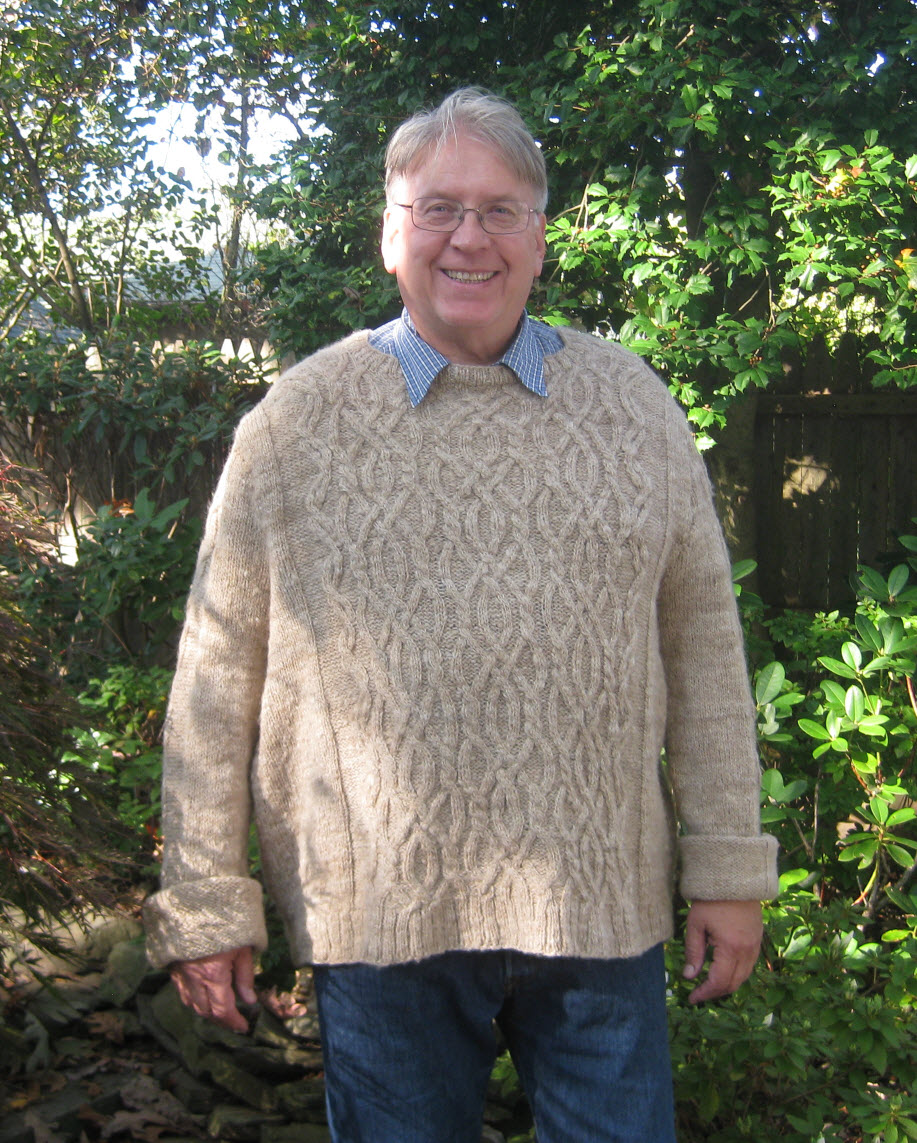
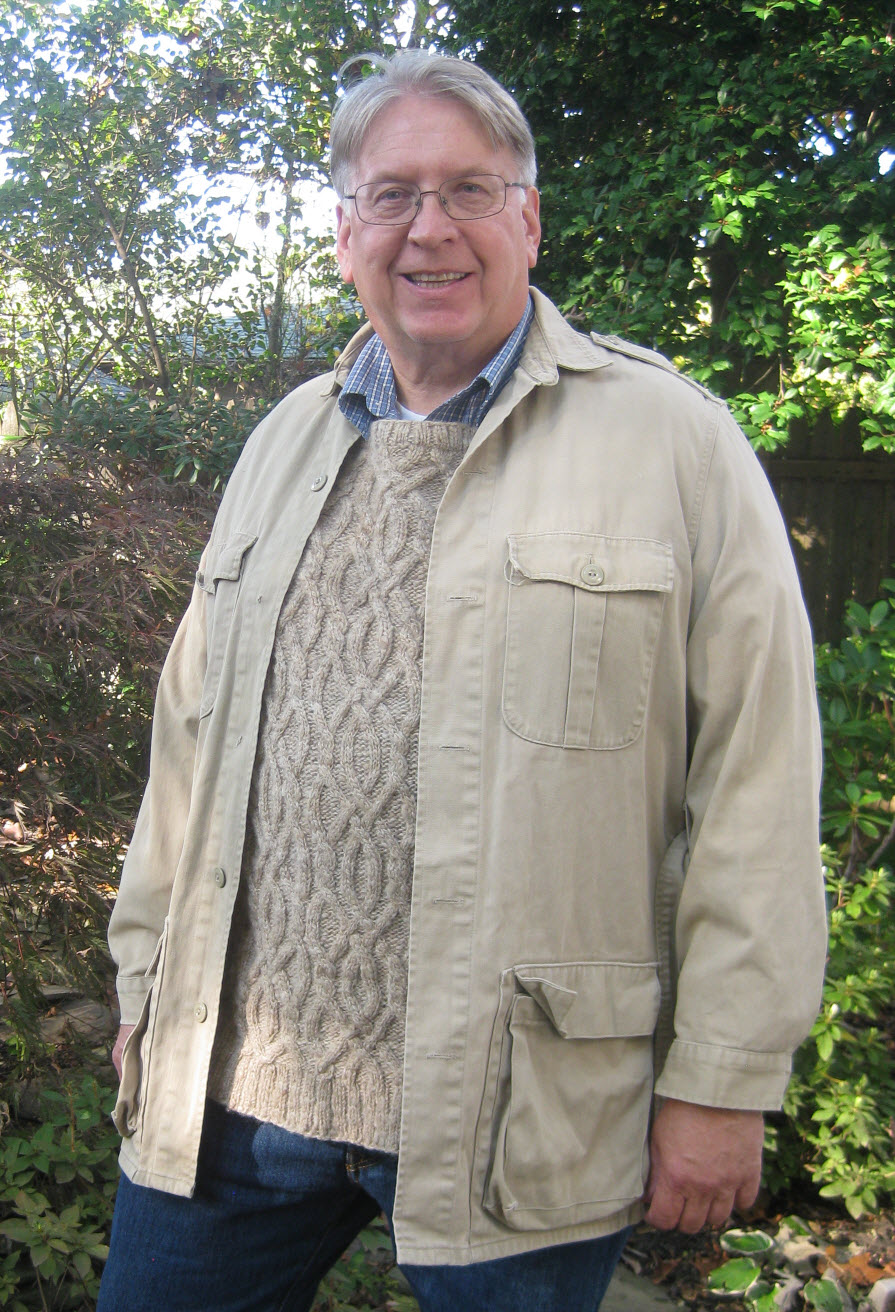
However, I did want to close a loop here — the famous Rhinebeck sweater that my husband insisted on. DONE!

johns sweater

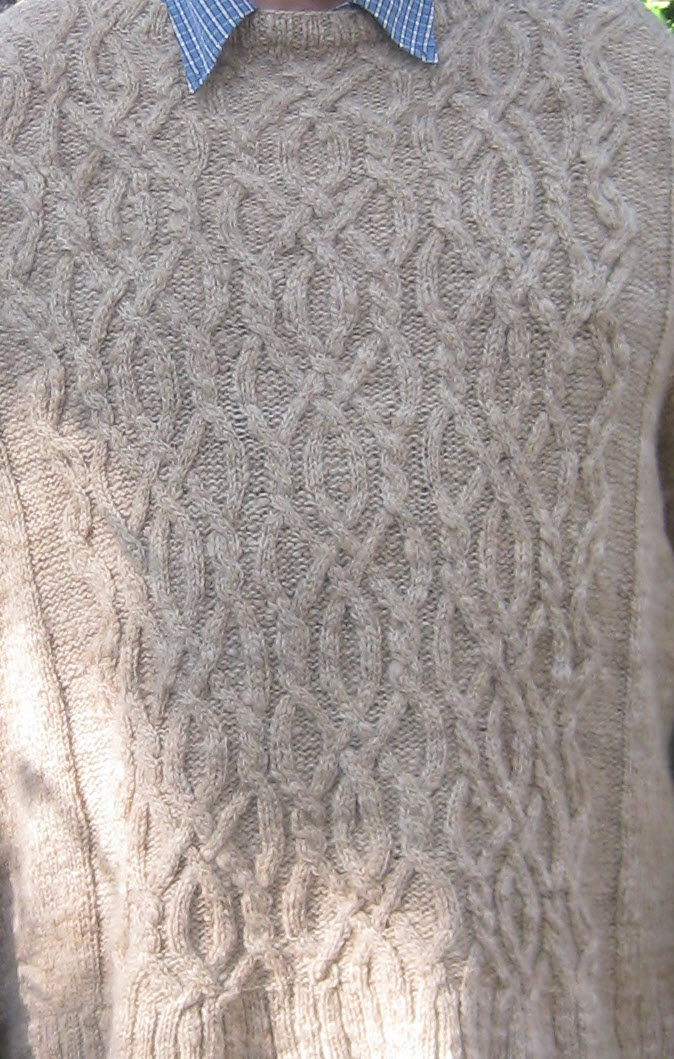
The sleeves came out too long and are in the process of being reworked, but given the compressed deadline and my former lack of knowledge about cables, I was pretty happy how this turned out.

cables

I would be inclined to knit a scarf with just one column of this cable pattern. I really liked working with it and feel like I’ve done dozens of other cabled projects since then. Conquer your fear of cables — just knit a whole lot of them!

sweater


It’s Magic

September 14, 2014

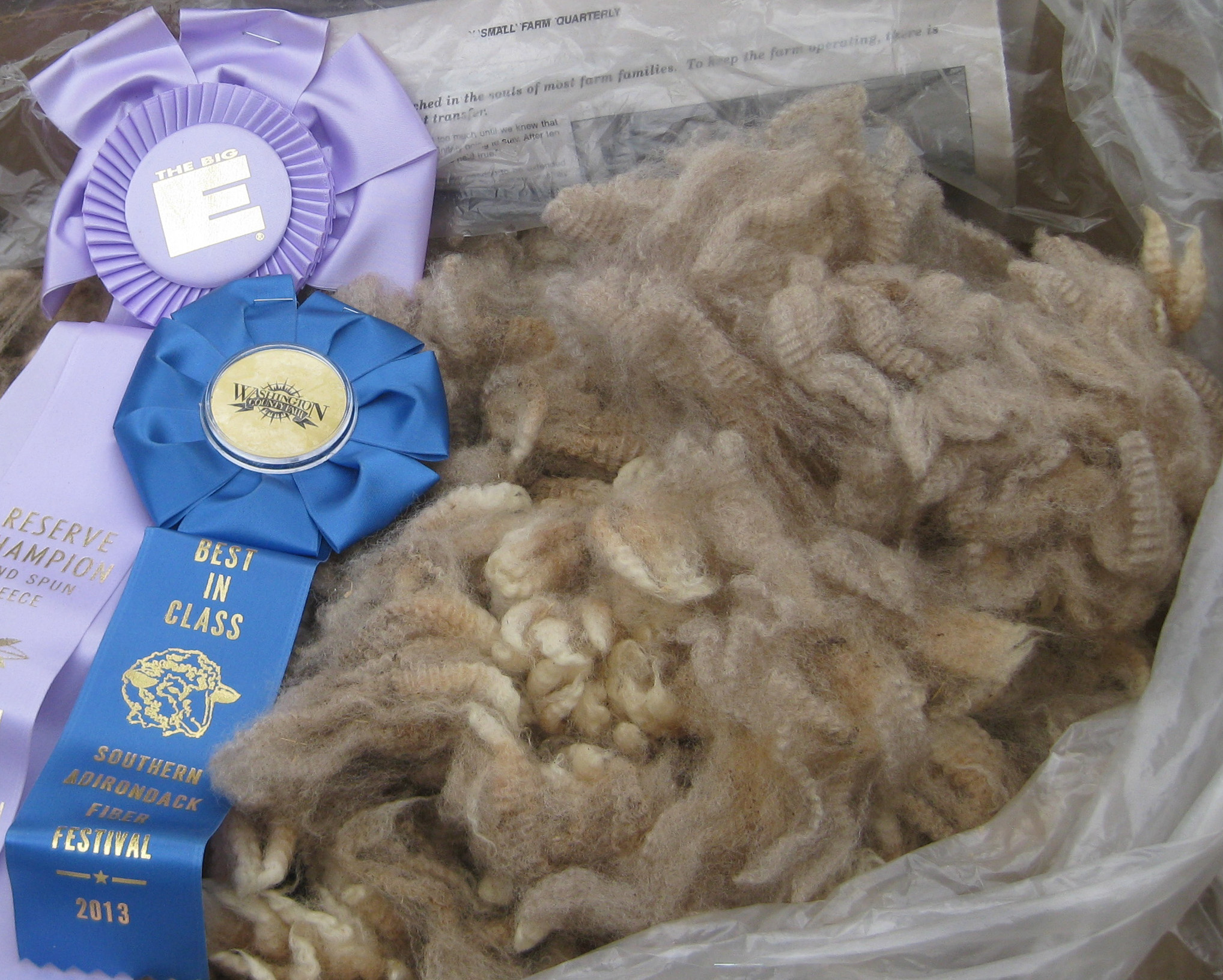
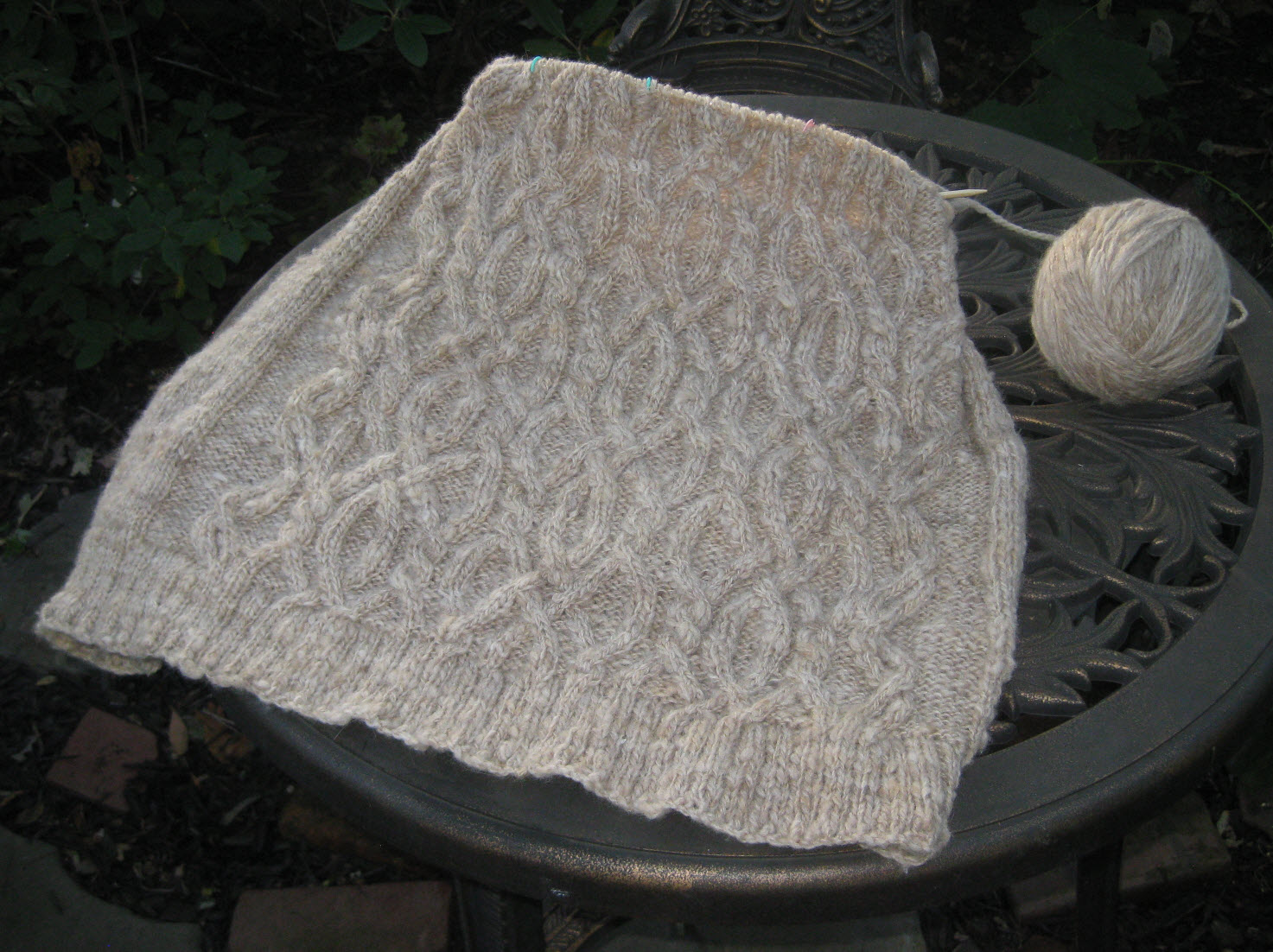
Last year, shortly after Rhinebeck, I wrote this post about a certain fleece seen at the show and tracked down afterwards. Here is what the fleece looked like when it arrived:

01 fleece

Here is what some of it has been transformed into, as of today, in the run-up to 2014 Rhinebeck:

sweater cables

Sleeves are done. I modified the pattern so I could knit this in the round and have just reached the point where I divided front from back. I may actually get it done in time!


World War I Knitting Patterns

September 3, 2014

In this, the 100th Anniversary of the start of World War I, there is expanded interest the time period. Just as there are living history reenactors who specialize in the various revolutions and civil wars of the past, so, too, are there reenactors portraying the First World War.

Several years ago, I won an auction lot of old knitting patterns and this was among them.

1914 pattern

A little 4-page pamphlet published by Bucilla Yarns during the time period of the First World War. For all those wishing to add a little touch of 1917 to their lives, a .pdf of the pattern pamphlet may be had by clicking here:   World War I knits


Revisiting a Favorite

July 31, 2014

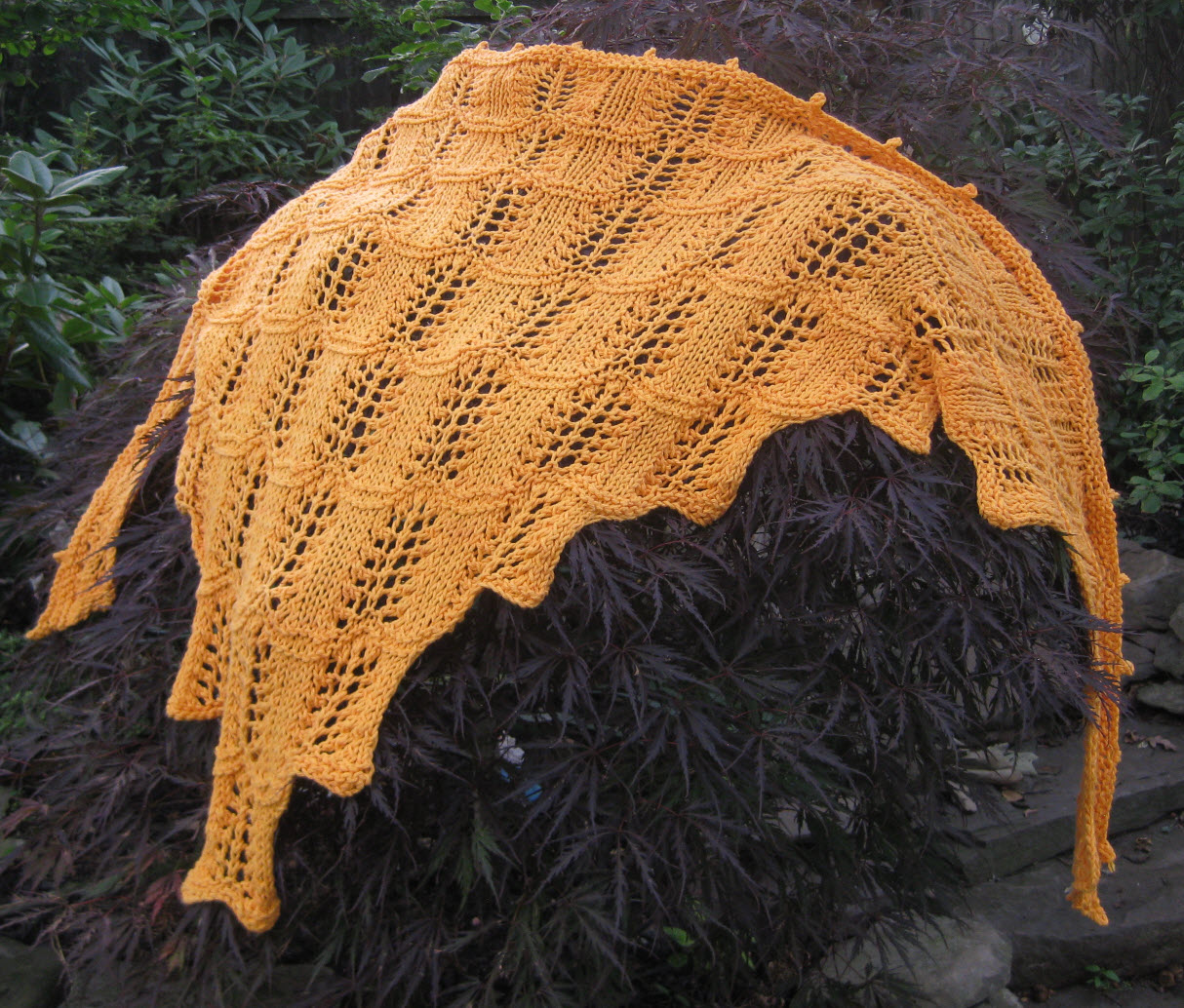
As many knitting patterns I buy or design of my own, invariably there are some I return to again and again. That is the case with the Wisteria Arbor Shawl from the One Skein Sock Yarn Wonders book. I have made this out of my own handspun in the past, colored and a natural cream. This time, however, I used something less typical — kitchen cotton.

shawl 2

I do enjoy this pattern because it is an easy repeat to memorize. You begin at the very bottom with one repeat of the chart, then add on every successive layer. It works up fairly fast, and especially with this yarn which was on (US) Size 7 needles.

shawl 1

The cotton is surprisingly warm, good for air conditioned rooms, breezy walks on the beach, and cool summer evenings in the garden!


How Much Is My Antique Spinning Wheel Worth?

July 28, 2014

Bloggers are provided with all sorts of background statistics via their blog dashboard. I can even see a map of the world with red highlights to show where readers came in from on any day. I can count how many hits to which stories. But by far the most interesting is the “search engine terms” data.

Hands down, the majority of hits to my blog come in, not from knitters or spinners, but from the “how much is my antique spinning wheel worth” contingency. Coupled with this is how many views are garnered by the photos I used in an older post to illustrate three very overpriced wheels.

So, obviously, there are readers out there with spinning wheels in their possession that they wish to evaluate and possibly sell. If you landed here for that reason, here are some tips on pricing and selling your wheel:

1.) Anything is worth what anyone is willing to pay for it. The problem is, getting in front of that one elusive buyer. You may need to lower your expectations, and your price, in order to widen your perspective market.

2.) The people interested in old spinning wheels tend to fall into one of two categories: spinners looking for a wheel that actually works and people looking for decorative items. This post will focus on wheels for use by handspinners.

3.) Knowing what you have will help target your sale in those two categories. If your wheel is incomplete, broken, or otherwise less than whole, it will not be worth that much to a spinner. Keep in mind, too, the style of wheel. Don’t call a wool wheel a flax wheel and vice-versa. If you aren’t sure, don’t reference it at all. If the potential buyer is a spinner, they will know what you have.

4.) If you are selling a wheel and do not want to be bothered with cleaning it, don’t expect to get top dollar. If the seller has to clean the dirty, dusty wheel, they will expect a lower price. Personally, I would rather pay less for a dirty wheel and clean it myself because then I know what went into that. But finding a wheel cleaned by someone who knew what they were doing is always a plus.

5.) Just because the drive wheel turns does not mean the wheel “spins.” It needs all its parts to be used for spinning. If the wheel is damaged or missing parts, the potential buyer will assess it accordingly. On a treadle wheel, the real deal breaker is if the flyer assembly is missing. It will cost upwards of $300 to have a new one made, plus the loss of time in waiting for the craftsman to make it. Rarely would a spinner buy a wheel for more than $75 if the flyer assembly is missing.

6.) As per above, if you are selling a walking wheel (also called a great wheel) and it is missing its spindle head, this is the same as a treadle wheel missing its flyer. Spindle heads are equally expensive to flyers to be recreated properly.

7.) If you don’t know what the flyer assembly is or the spindle head, see #3 above.

8.) Do not describe your wheel as “working” unless you know how a spinning wheel works. Just because the drive wheel turns does not mean the wheel can be spun on. It is much more complex. Are all the parts there? Does the tensioning screw turn? Will the wheel throw its drive band off? What condition are the flyer or spindle bearings in?

9.) Nothing is so unique that another one won’t turn up at some point in time. If you price that Canadian Production Wheel at $500 or $600 and you aren’t entirely sure it is in spinning condition, you will have that wheel for a goodly long time. Fully cleaned, restored, and in top spinning condition, the average price for a CPW is around $300 to $350. Spinners know this.

10.) Insurance appraisals are not reliable. The appraiser will look at what wheels sold at in auctions, create an average, and double it. That will give the “replacement cost.” Trouble is, if you are comparing apples and oranges, you won’t get a good average. A Saxony-style flax wheel that sells at auction for $100 compared to an Irish castle wheel that sells for $1,000 is going to give you skewed numbers. The appraiser needs to compare Saxonies to Saxonies and castle wheels to castle wheels and this is a difficult task. Coupled to the fact that most appraisers never saw a spinning wheel. One of my associates purchased an American-made flax wheel, probably of eastern PA origin. The appraiser told her it was from the Netherlands because “they didn’t make spinning wheels in the U.S.” in the time period of the wheel in question. There is no excuse for this level of ignorance.

From the buyer’s perspective, when I go hunting spinning wheels, here is what I am looking for:

1.) Completeness – how much am I willing to replace that will cost me more?

2.) Soundness – how dry, rickety, or cracked is she (yes, most wheels are she)?

3.) Unusualness – How common or uncommon is the style? Is there a maker’s mark?

4.) Condition – has the original finish been monkeyed with? How badly?

5.) Overall eye-catching-ness – how graceful is the wheel? Interesting turnings? What made me look?

If you think like a spinner, you may have a different reaction to the wheel you are selling. Yes, it may have been your great-grandma’s but this will not typically impress the buyer. No, it probably is not a valuable “an-teek,” there are dozens of the same thing around. Check Craigslist. Check Ebay. Check Ebay especially for unrealistic expectations like the $6000 great wheel that has been posted for several years. A pendulum wheel in mint condition isn’t even worth that much.

I don’t want to discourage anyone from selling a wheel, but I want sellers to be realistic. Don’t ever throw a wheel out; someone will always be around to rescue one. But price them accordingly. When you start getting up into the $300-$400-$500 range, you better have something pretty amazing to offer. And a spinner will know the difference. Knowing what you have and setting a reasonable price is the difference between finding a good home for your wheel and wondering why you have to keep relisting it for sale.

Next to useless ….

July 5, 2014


Well, sometimes. When you blog, you get caught up in the story you are trying to tell. Often you forget little details in your haste to cover everything. And then someone reminds you that without the details, the story is next to useless. Or I am, not sure which!

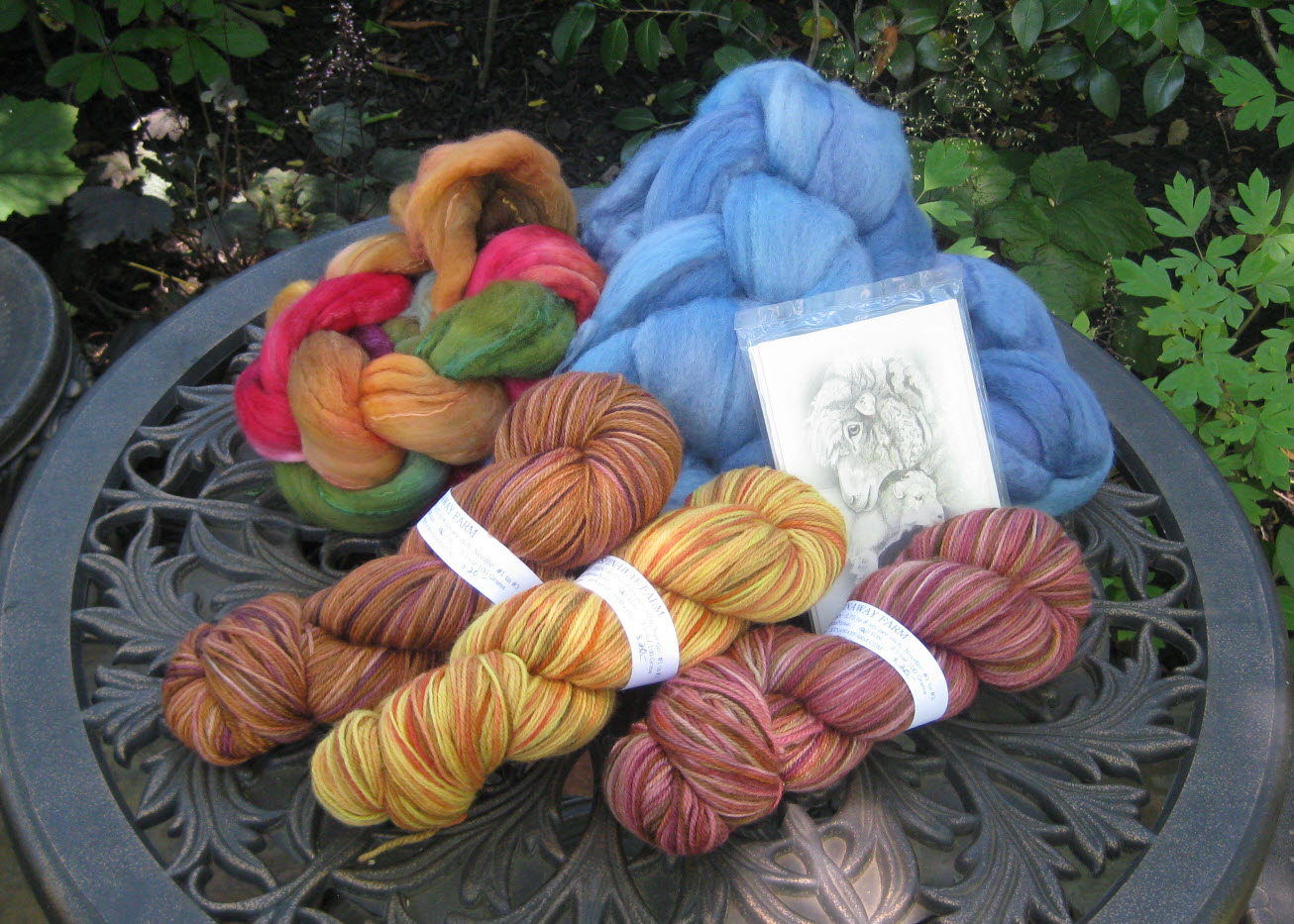
In any event, to rectify the missing details of the recent trip to Lancaster Yarns and Wools in Pennsylvania, here is what I came home with:

lancaster 05

For a closer look, that is a braid of Frabjous Fibers Silky Cashmerino in “Cottage Garden”:

lancaster 02

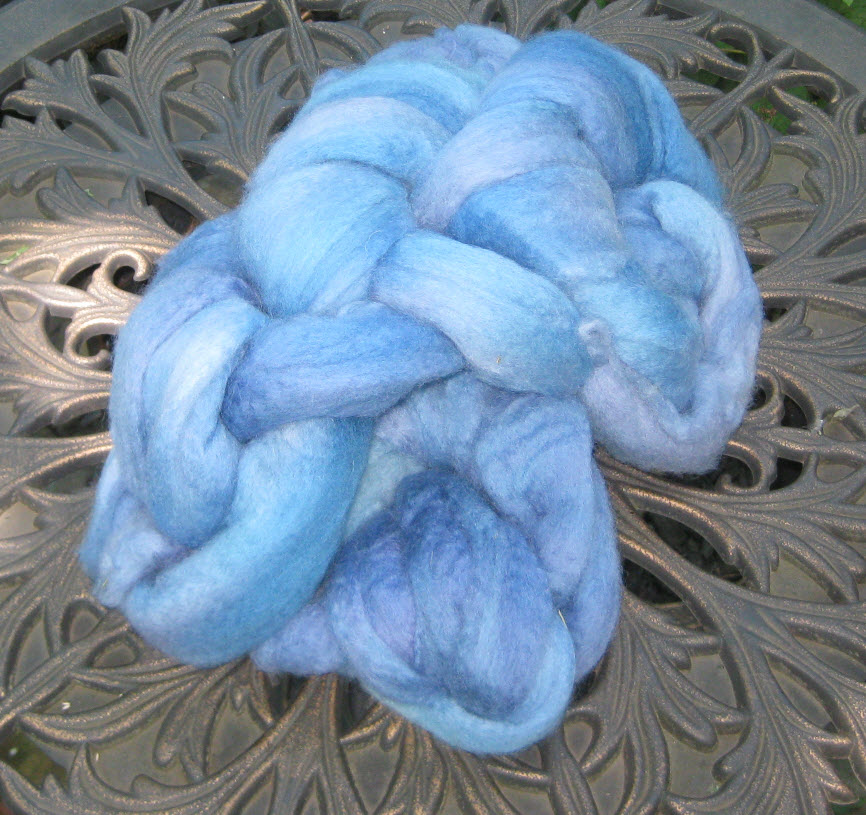
Two braids the “house wool,” blue-faced leicester in a denimy-blue colorway:

lancaster 03

Some nifty sheep note carts by artist Kelsey Showalter for JK Swatches:

lancaster 04

And sock yarn:

lancaster 01

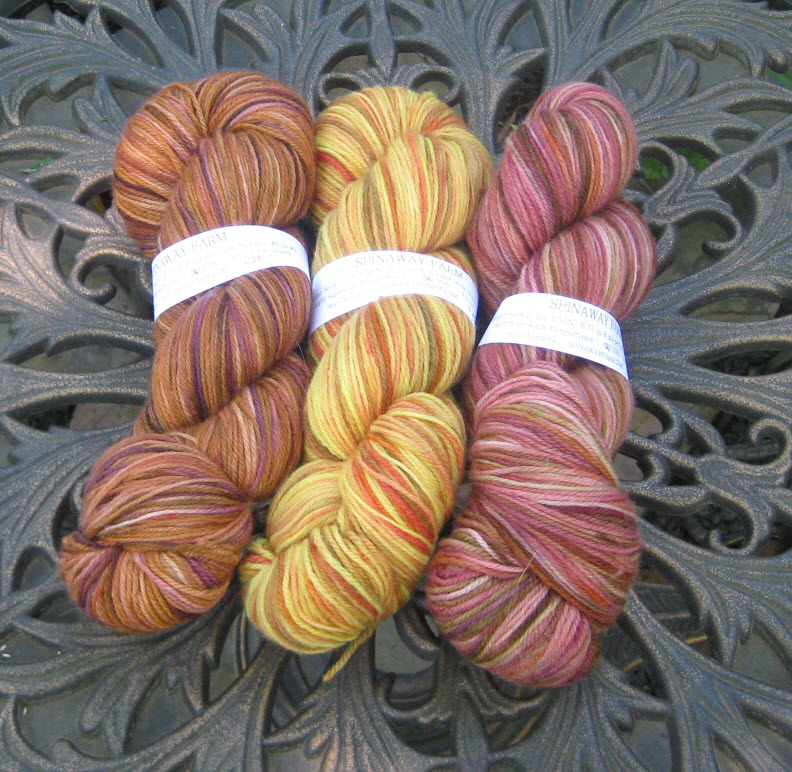
This is three skeins of Wonder Sock Yarn — 80% superwash merino and 20% nylon — from Spinaway Farm in Pennsylvania. Alas, the Farm’s Web site is not yet up and running, but there is an Etsy store for Spinaway. 420 yards per skein, $20 a skein. The yarn has a lovely hand and there were some great colorways to choose from. Now, if only I find the time to get back to sock knitting — this yarn is certainly the incentive!


Lancaster Yarns & Wools and Labadie Looms

June 30, 2014


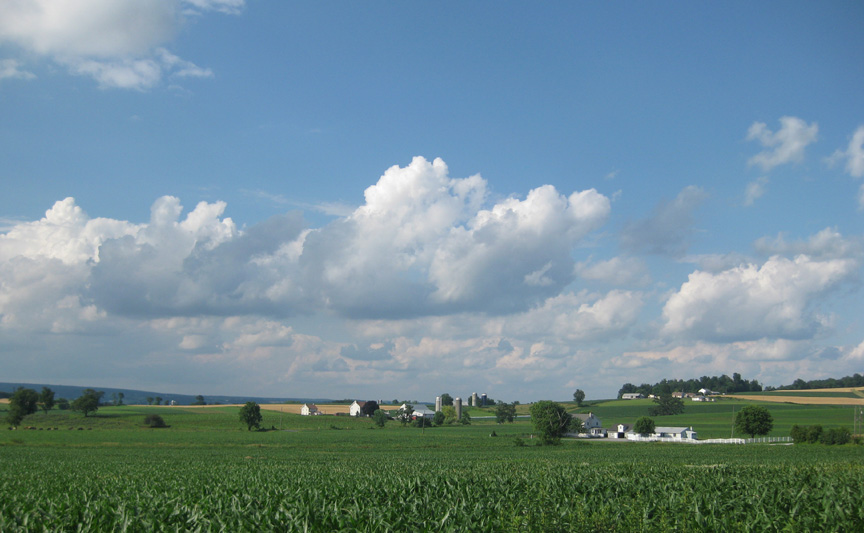
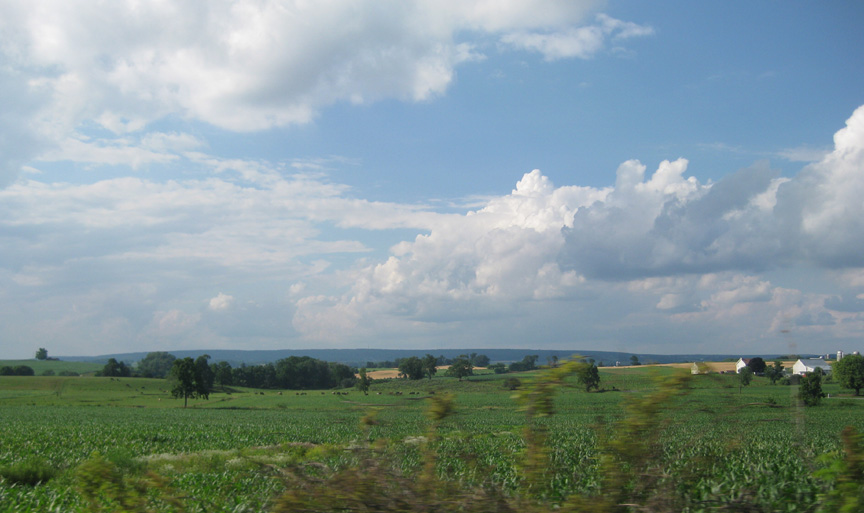
The Lancaster Valley in Pennsylvania is one of the most beautiful places I know, and for the benefit of readers in various parts of the world, here are some of the local vistas:

019 lancaster

Gently rolling green fields, cows grazing, tidy farms, and open sky:

017 lancaster

Now, you may live in a place with similar sites, but in my home state of New Jersey, believe me, this sort of thing is getting rarer every day! You need to come to Pennsylvania to see REAL wide-open spaces.

We were in Lancaster County for the annual carriage auction, but took a couple of hours to poke through antique stores. While searching down a previously uninvestigated road, I suddenly saw:

wool 01

How did I miss this on previous trips???

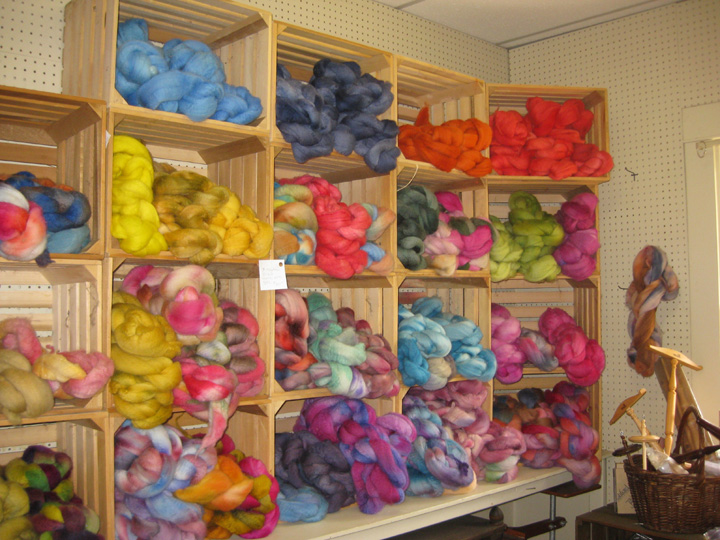
The space is not huge, but the shopkeep has made the most of it. The main room is filled with warped looms and there are two rooms off each side of this. Beautiful rovings on one side off the main room:

wool 04

And a small but tasty selection of yarns to the other end:

wool 02

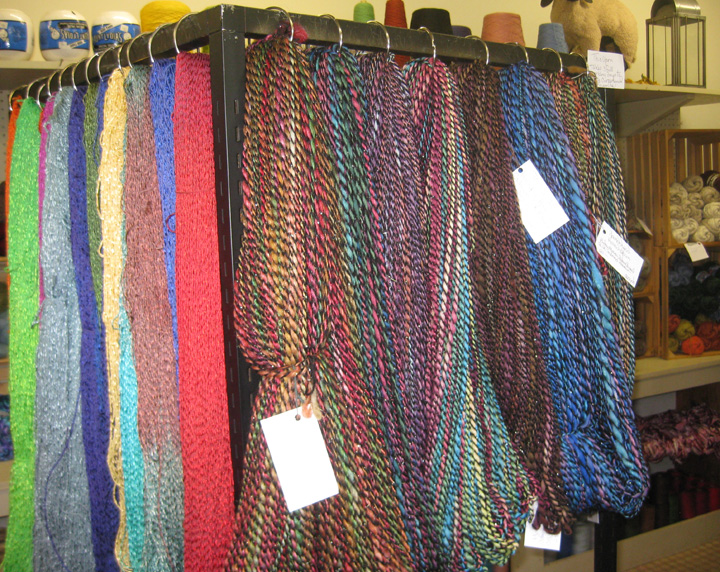
These were some locally spun yarns:

wool 03

I didn’t buy anything at the carriage auction, but made up for it in the knitting store with some roving and 3 skeins of sock yarn. And now I know for my next trip out to Lancaster where I need to stop! Sunny skies for the ride home.

020 lancaster