Wheels of Another Sort

June 30, 2014


My regular readers know I tend to haunt auctions for spinning wheels. Many a good wheel turns up this way, if you know what to look for. At the end of June, though, I attended an auction full of wheels of a different sort. A carriage auction.

Although I though my equine days were over, I acquired a team of fine young mules for which I didn’t exactly have a need but it kept them out of the Alpo factory. Because no one in New Jersey knew anything about mules (I have since found a few knowledgeable people), I found a trainer in Ohio and shipped them there. So far, they have learned to pack, to ride Western, to ride English, and are now being trained to jump. They were also trained to pull.

Knowing nothing about the world of carriage driving, I joined the Garden State Carriage and Horse Society and a whole new world opened up. And, with it, a whole new vocabulary. Clearly, the learning curve was steep. I was told that one place where I would get quite an eye-opener was the Lancaster County (PA) annual carriage auction. So, on an overcast morning in late June, we hit the road for Bird-In-Hand, PA.

You know you are in Amish country when you see this in the parking lot of a local business:
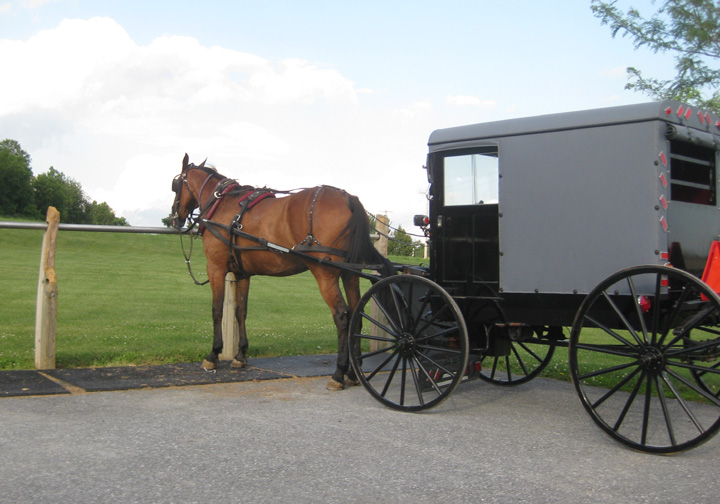
018 lancaster

It is common sight, a horse and buggy at a hitching post outside of various businesses. When we got to the auction, there was even a special spot:

016 lancaster

And once you got in, a little reminder on how to treat your friendly equine:

016a lancaster

And, there were more than a few teams in attendance:

001 lancaster

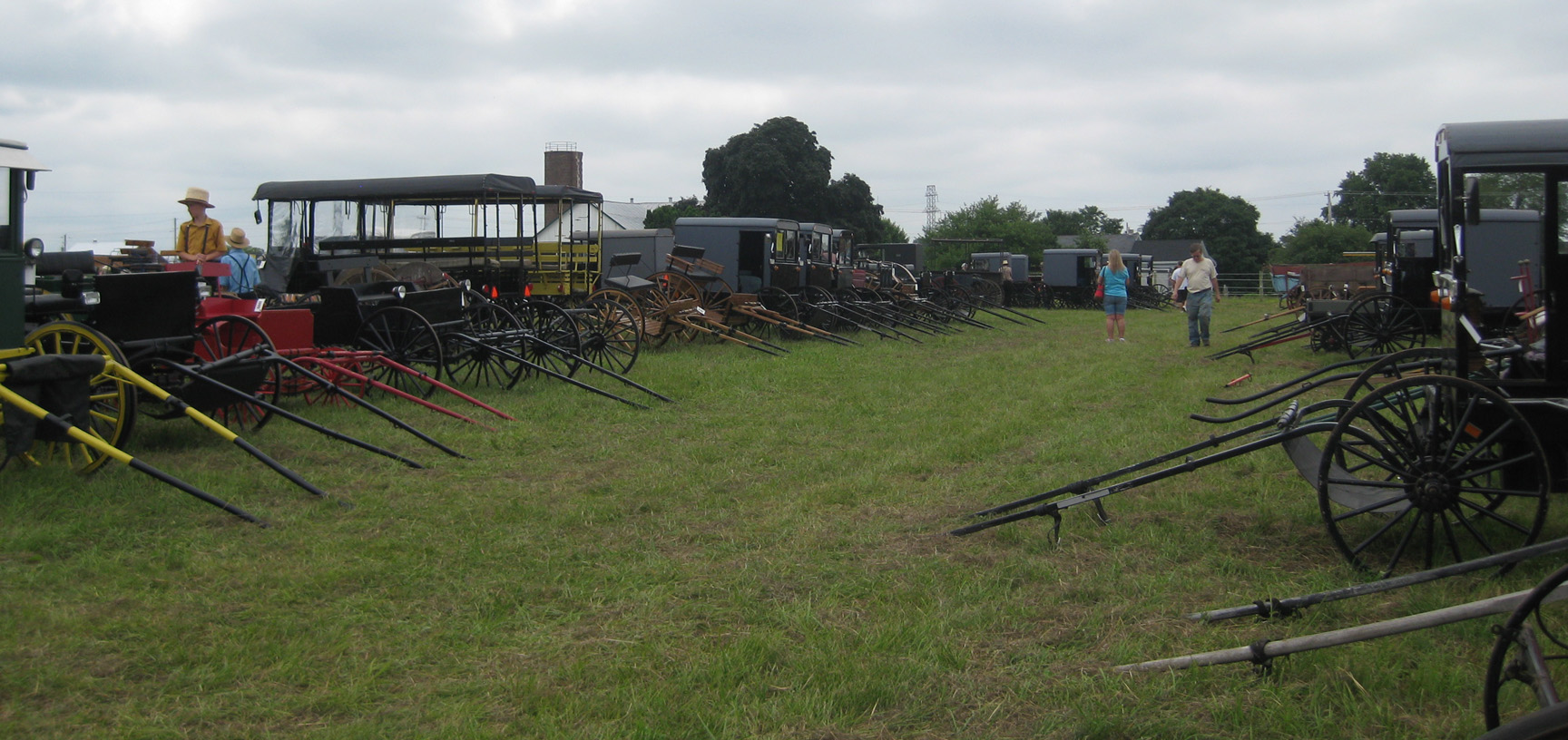
It is hard in a photo to really reflect the scope of this. My husband mused that it probably reflected the picket line of the 7th Cavalry. There were easily 100 horses here:
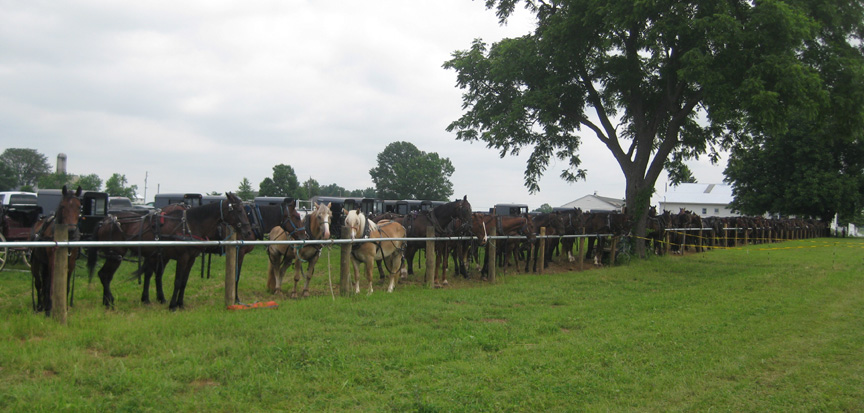
013 lancaster

015 lancaster

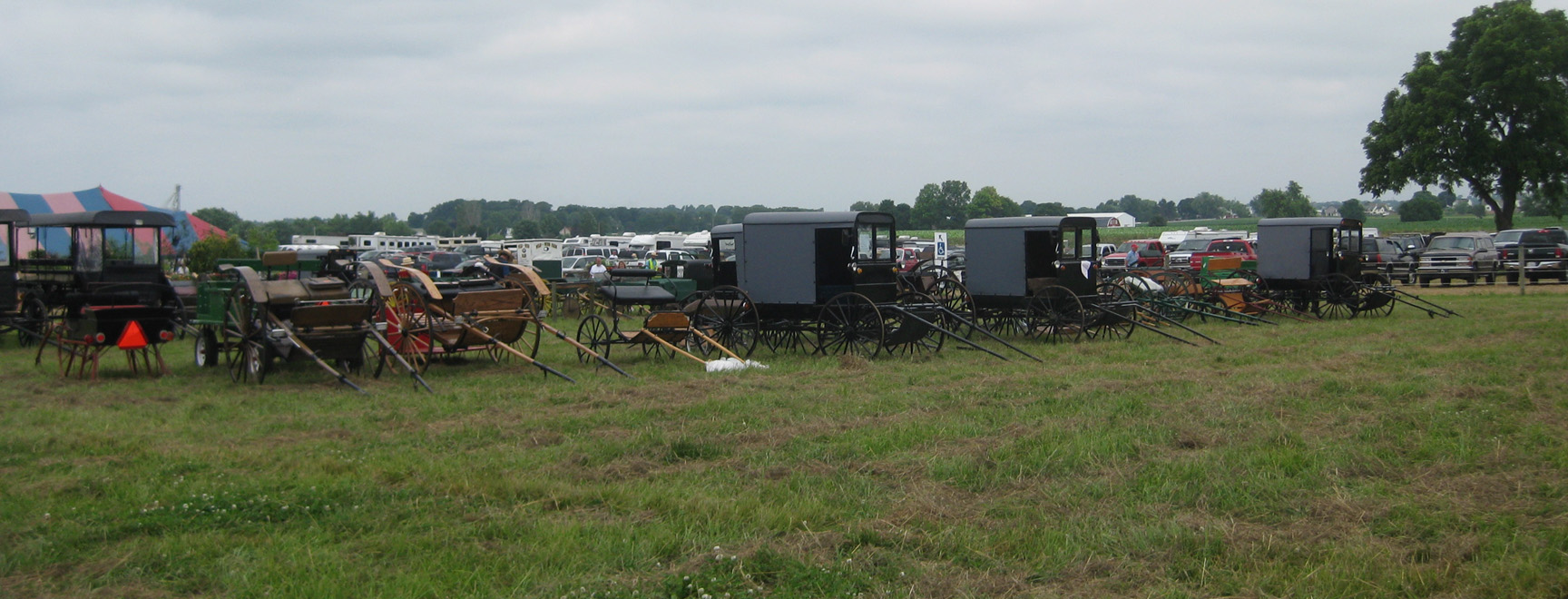
And an equivocal number of conveyances:

014 lancaster

It was beyond our imagination. And, inside the auction, the number of conveyances only tripled:

008 lancaster 009 lancaster

007 lancaster

There were road carts and Meadowbrooks, traps and wagonettes, buggies and big farm wagons. There were conveyances for cold weather:
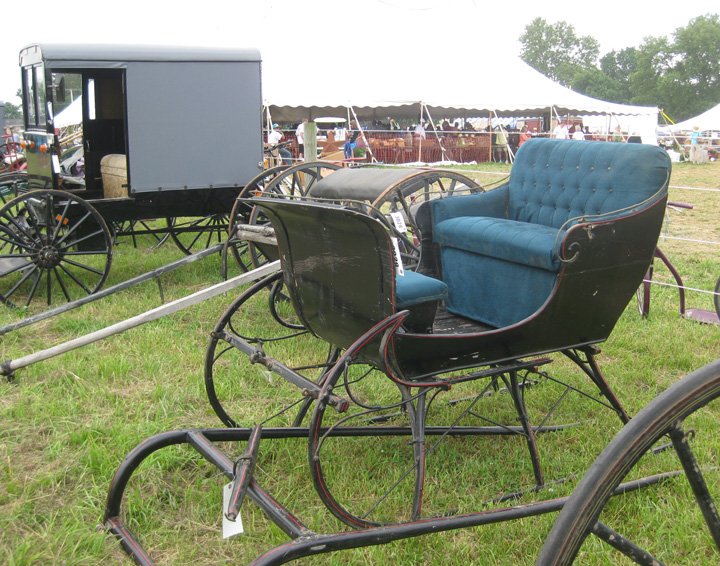
010 lancaster

For special occasions:

002 lancaster

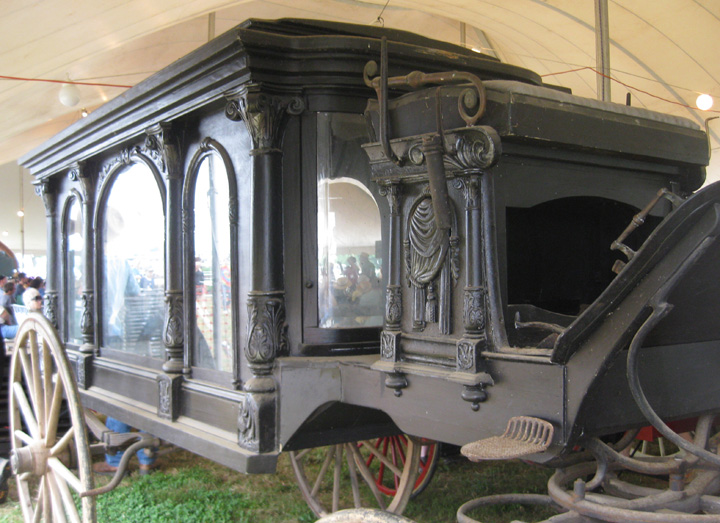
And for solemn occasions:

004 lancaster

Prices ranged from a few hundred to $10,000 for a brand-new top-of-the-line Amish buggy. I was chagrined to have not signed up for a bidder number when this cutie came and went for $350:
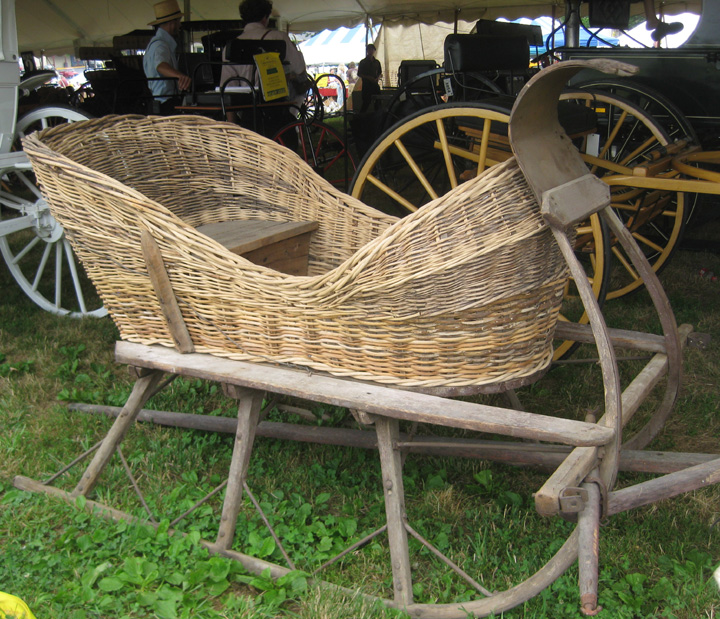
003 lancaster

If’in I ever get a knitting shop, this would have made a tremendous display for yarn and roving!

It was fun just to crowd-watch. There were hundreds of people on site, both looking at carriages and at the adjacent farm clean-out auction. Among all the old farm stuff, just 3 spinning wheels. A saxony with a broken flyer and two less than perfect great wheels, so nothing I broke into a sweat over.

We watched some young Amish men, just about driver’s license age, kicking the tires on used buggies. It must be quite a step up to own your own and not have to borrow dad’s for date. And, lest you think the Amish are squares, they do use modern conveniences:

011 lancaster

Other things were being sold than just carriages and harness. You might need something to pull your cart:

006 lancaster

A little young yet, but give him time!

There was also a rather spectacular flowering plant auction that was still in full swing when we left at 4:00 PM
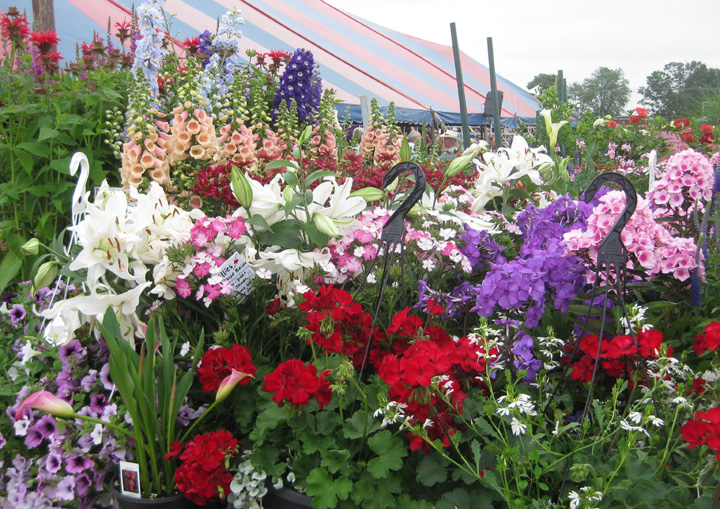
005 lancaster

That alone would have been worth the trip! But, then again, there is always next year ….

It was a long way back to the parking lot, but even that was provided for. Have mule, will give you a lift ..

012 lancaster


What Got Me Through the Winter?

May 19, 2014

I am not a cold weather person. And this winter was cold, even by New Jersey standards.

Growing up, they would tell us in school that New Jersey has a temperate climate. What they did not tell us was this: The temperature in New Jersey can range from zero to 100, sometimes in a 24-hour period. The average, therefore, is 50 degrees, making this a temperate climate.

This winter was on the dark side of temperate. The worst was the 4 degree mornings, walking across the parking lot at work. I had to make sure my coat collar was turned way up and my hat way down before starting off. No matter how well I arranged a scarf, though, the cold managed to get in. I had to come up with a better way to keep my neck warm.

Somewhere I had seen a photo of a cowl lined with fun fur yarn. Yes, I know. Fun Fur. The ban of serious knitters and the fall-back position of grandmas knitting for little girl grand-babies, the yarn snobs would say. But fun fur is soft. And squishy. And nice to bury your face in.

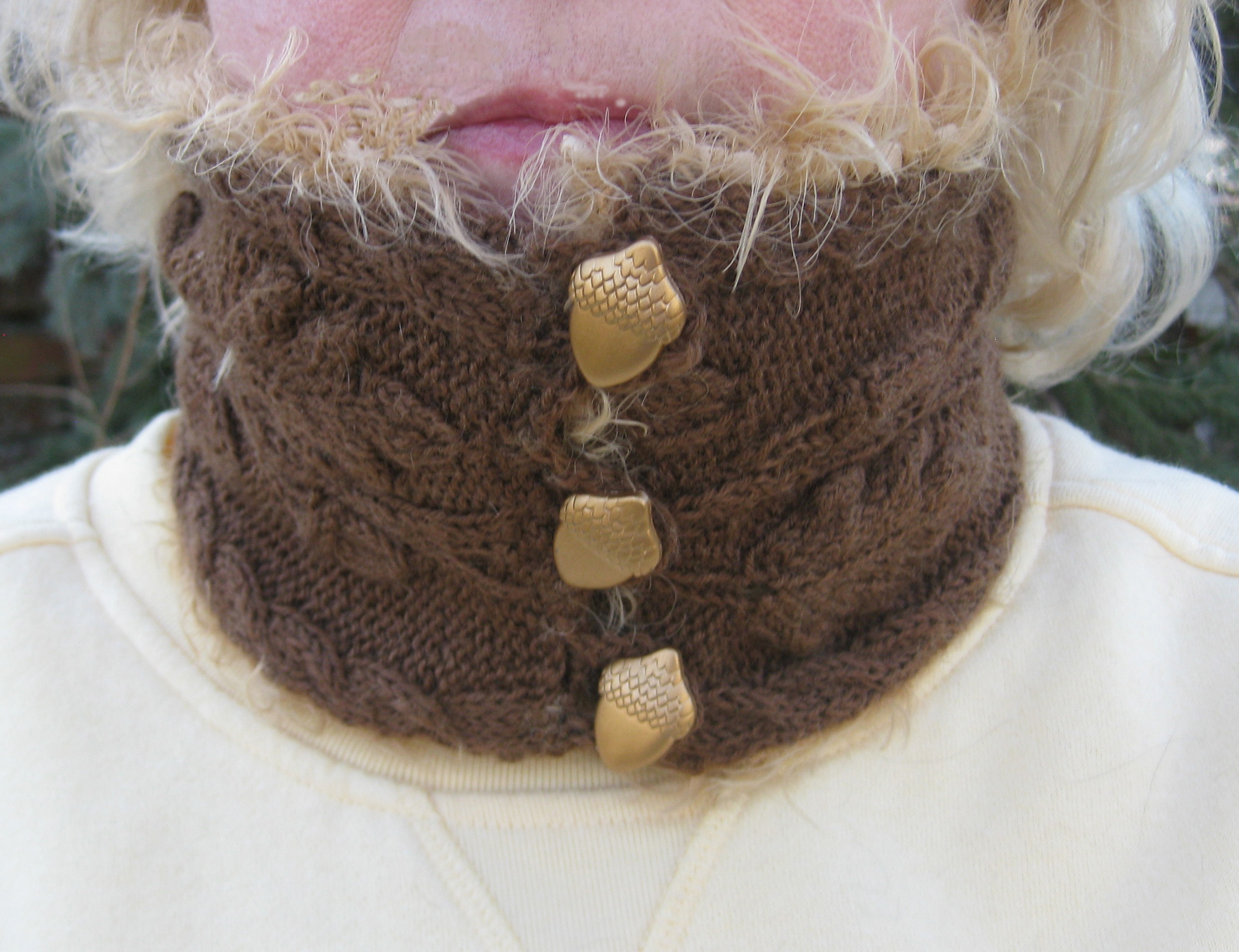
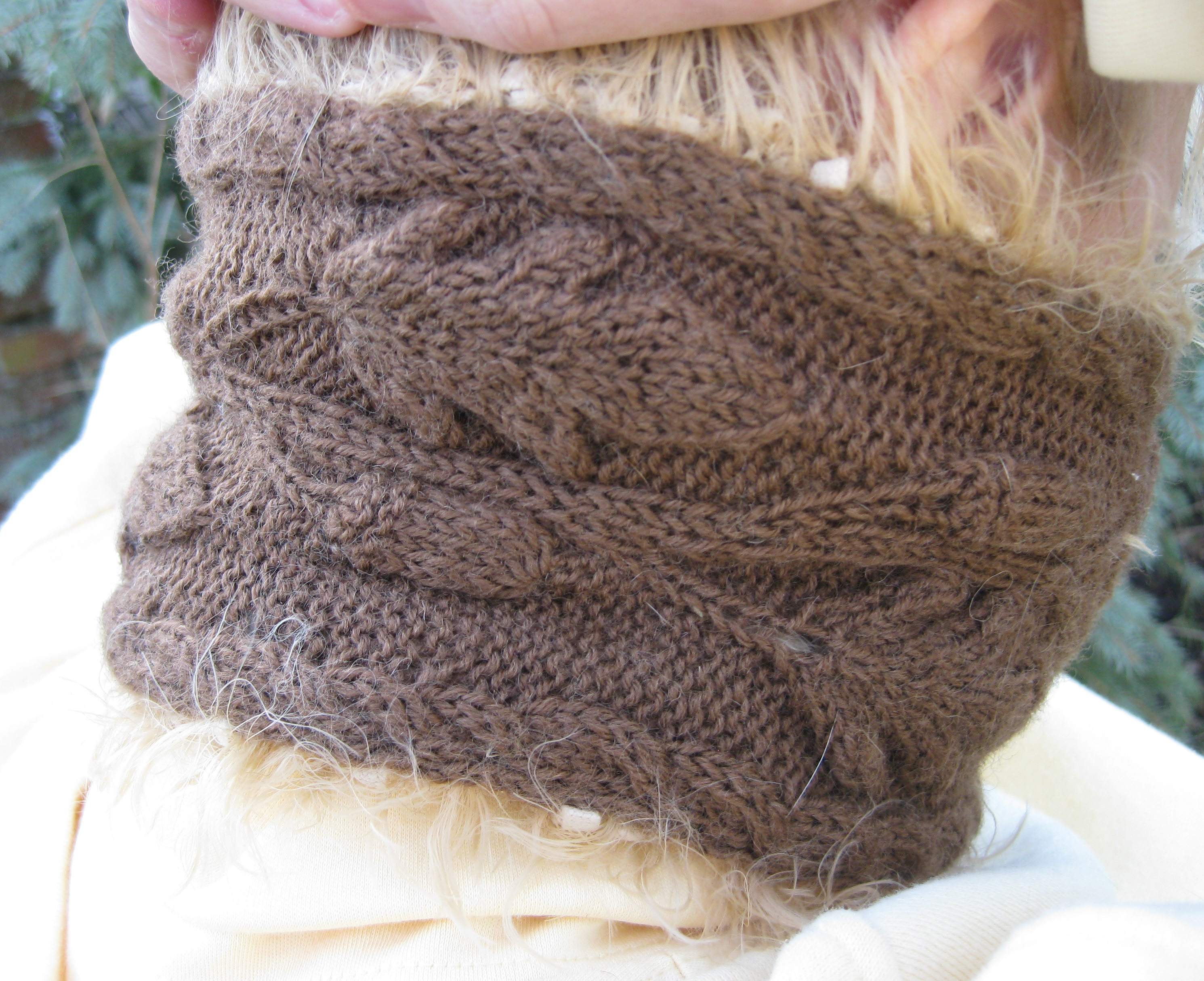
I had wanted to try out the oak leaves and acorns vine pattern and determined this would be an excellent chance. I used a Lion Brand sock yarn in the colorway “Root Beer,” and a cream-colored fun fur called “Lady.” Instead of a cowl, I made a button front neck gaiter.

neck gaiter 01

The outer layer is knitted as 40 stitches cast on a size 2 needle. I added a cable to each side.

neck gaiter 02

The fun fur lining was 28 stitches cast on a size 7 needle. This compacted the yarn just enough to make a solid piece without too much give.

neck gaiter 03

I sewed the two strips together all the way around and added 3 button loops. I found some antiqued-gold acorn buttons and voila!

neck gaiter 05

I would drive to work with the top button open, which gives the piece a wing collar effect. I buttoned up before getting out of the car. The neck gaiter worked like a charm at holding in heat and keeping out the cold.

neck gaiter 04

And, I got to try out one of my favorite stitch designs. This has opened up a whole new line of thought on straight designs I’ve been wanting to try. I may wind up with a whole wardrobe of neck gaiters next winter!


Replacing Spindle Wheel Bearings

April 26, 2014


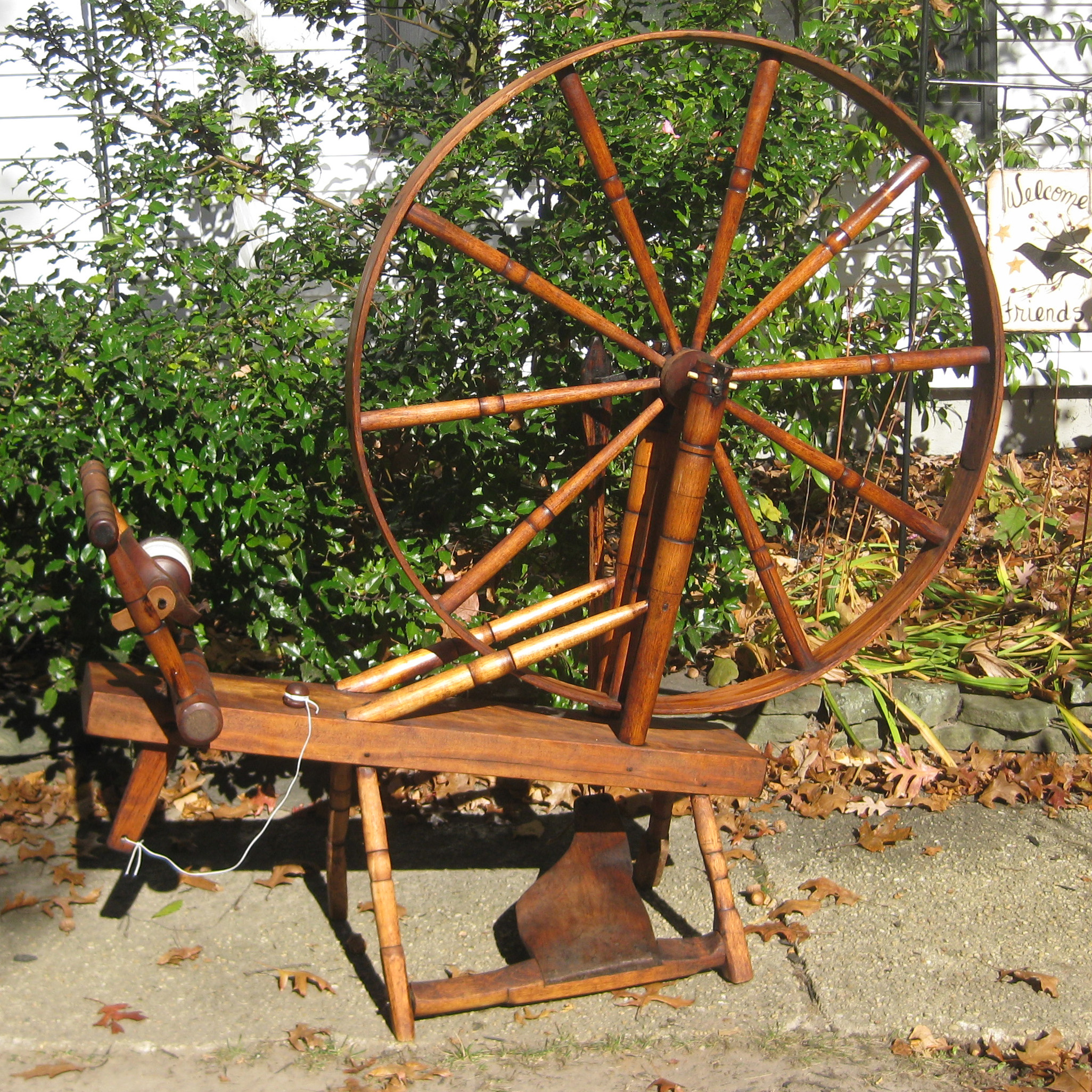
Great wheel, walking wheel, wool wheel, Jersey wheel, spindle wheels — the names vary, but the result is the same — the ability to spin fiber off the tip of a spindle.

A problem common to spindle wheels is missing or worn out spindle bearings. These bearings are typically made of cornshuck and are either in an advanced state of dry-rot or are broken off when you find a wheel.

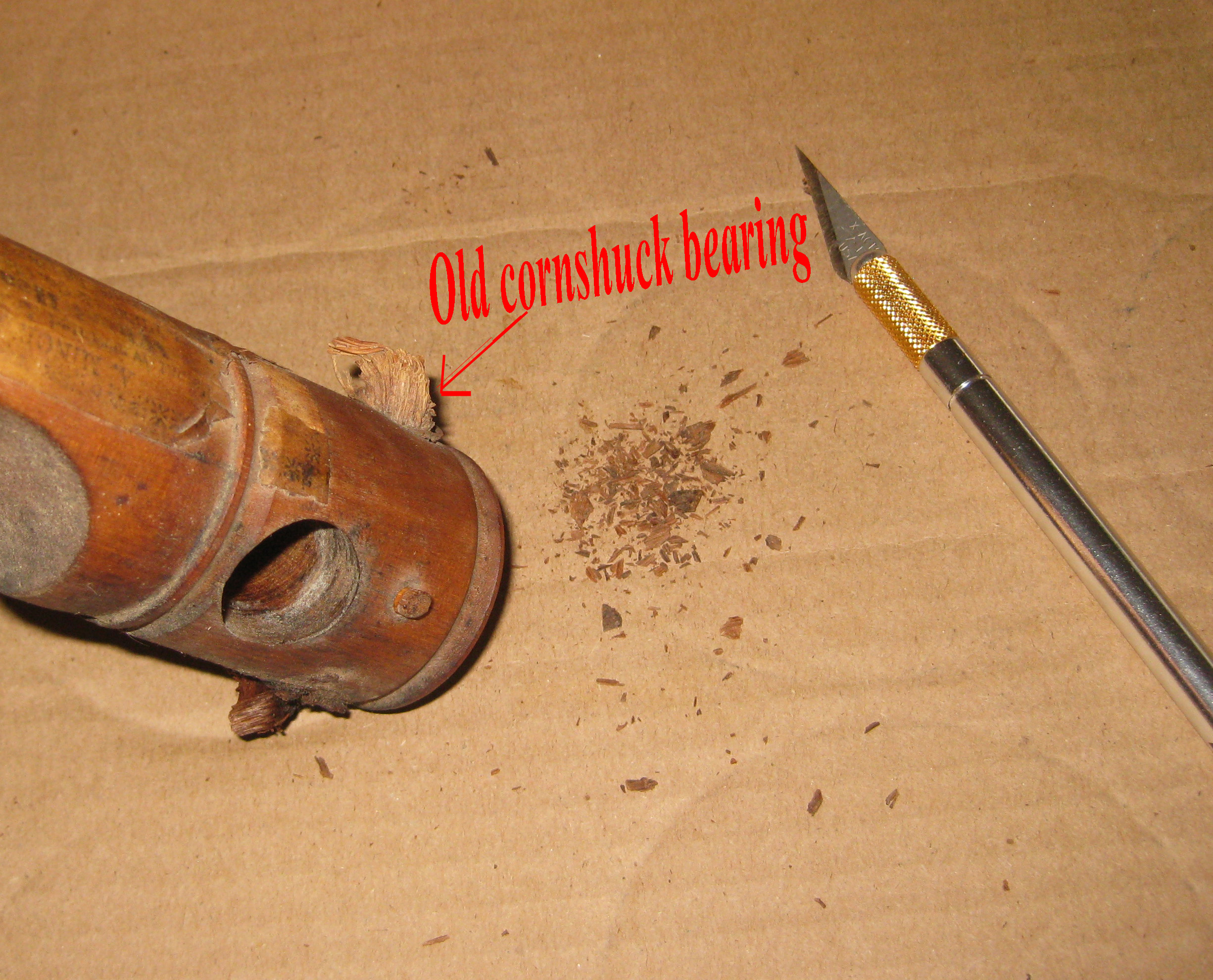
This is a typical example: what remains of the old cornshuck bearings is jammed up inside the bearing holes.

01 bearing

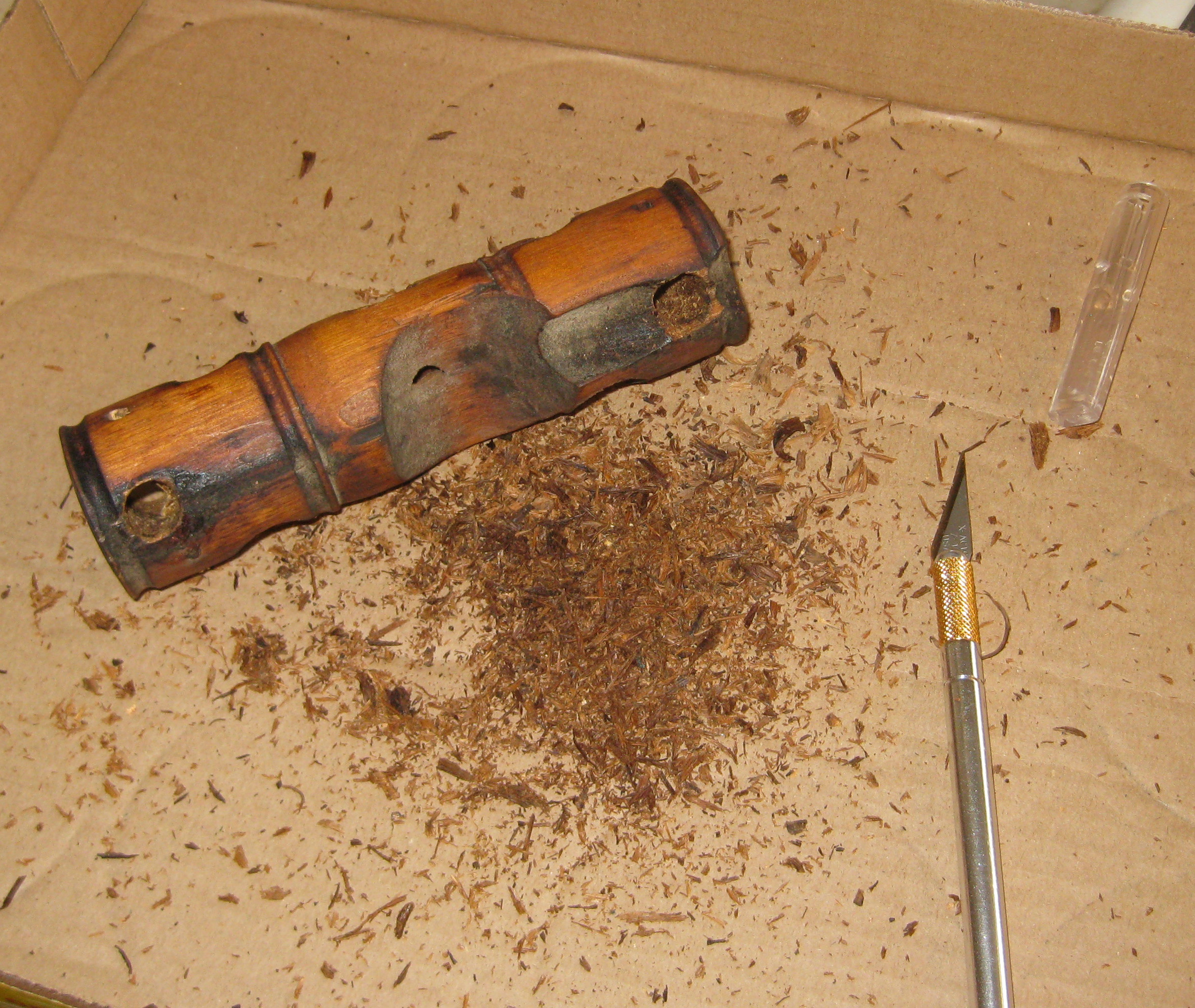
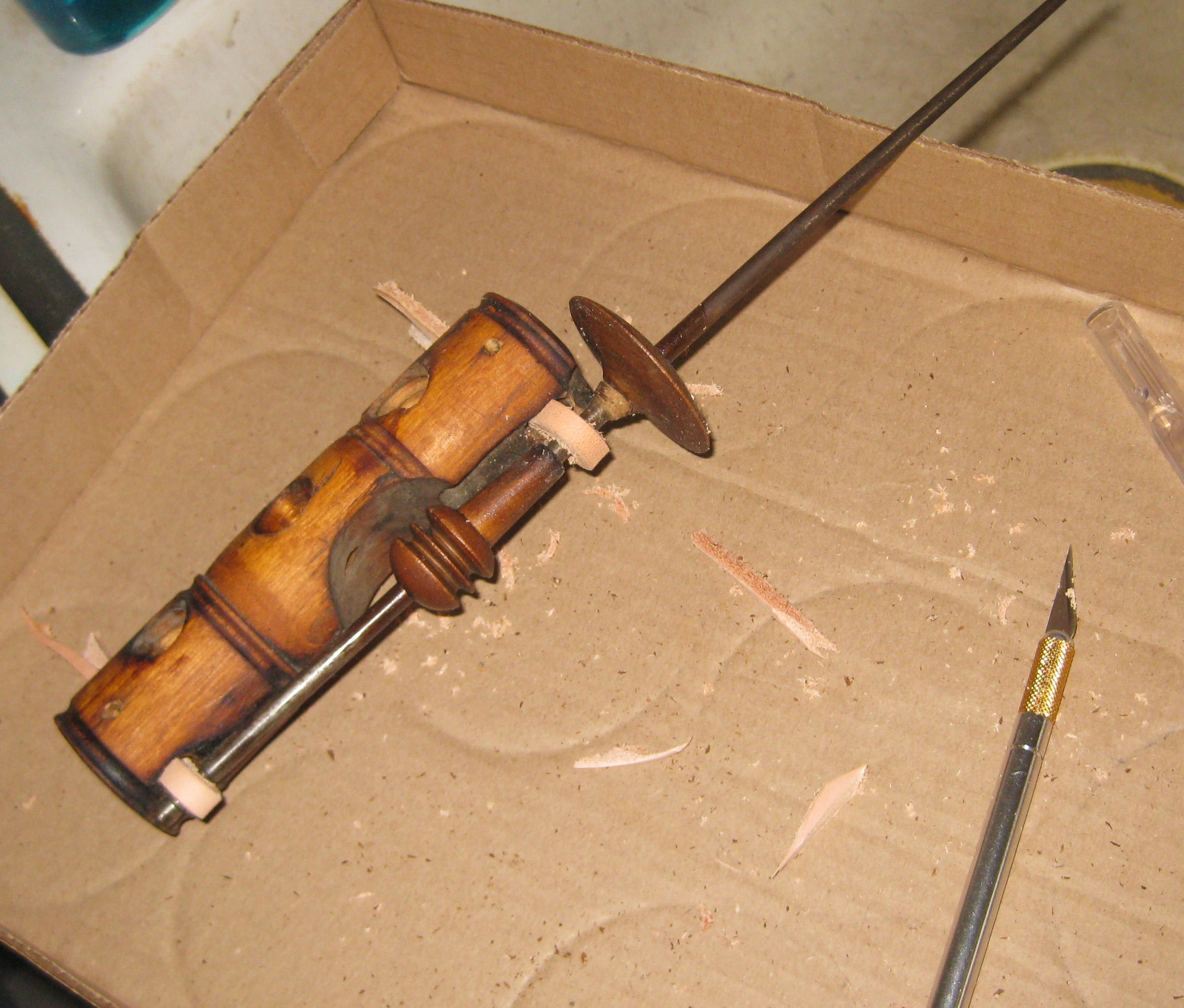
Take an X-acto knife and carefully scrape out as much old cornshuck as you can. Once the majority is out, you may still need to take a drill to finish reaming out the hole. This leaves a lot of tiny debris, so it is handy to have some sort of vacuuming implement nearby!

02 bearing

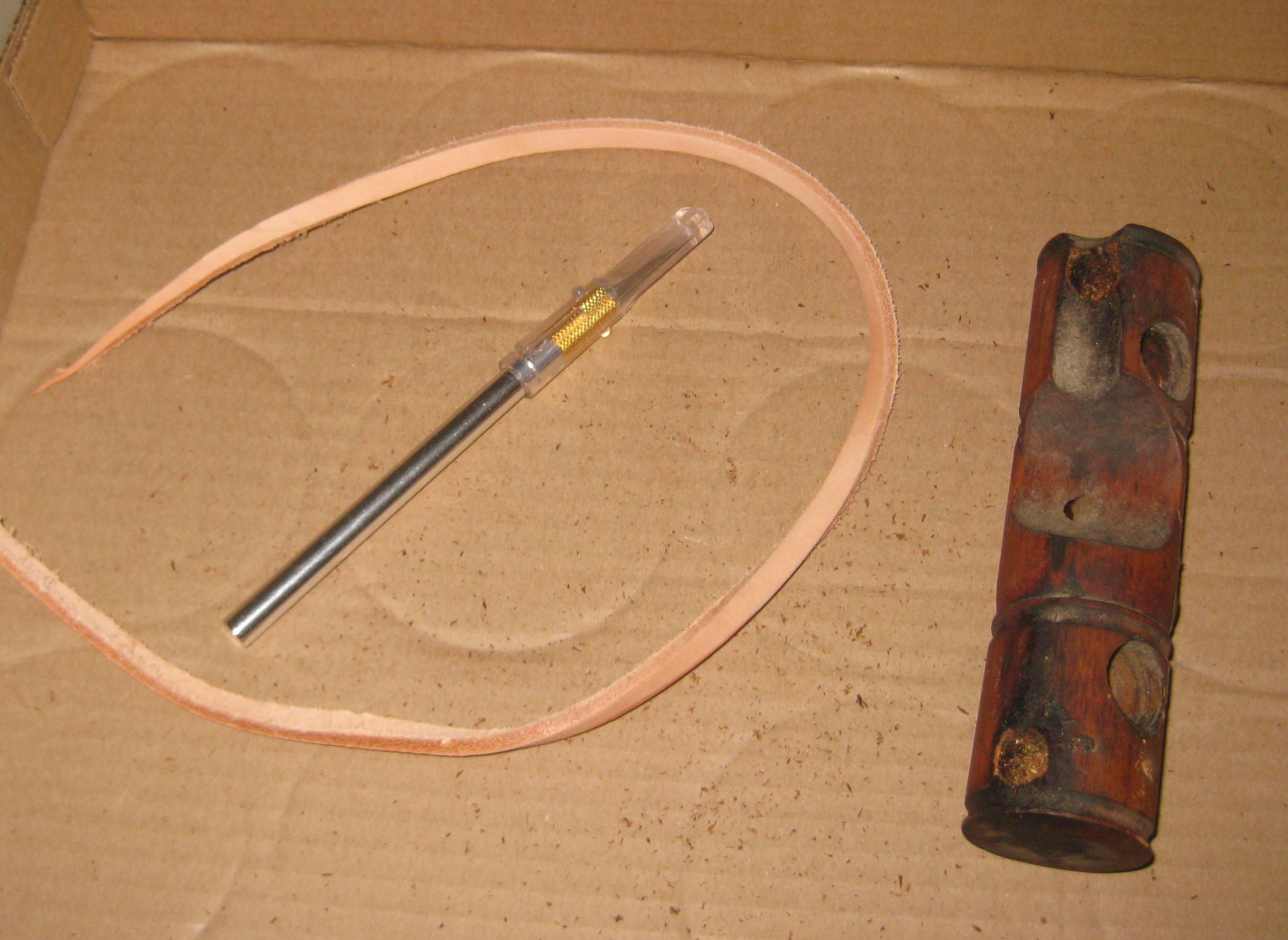
In this instance, the replacement bearings will be leather. You can braid a set of cornshuck bearings but leather tends to hold up better.

03 bearing

Again, the X-acto knife is your friend, because you can use it to trim and basically whittle the leather into the proper width and taper. To measure the length, insert one end of the leather strip into the bearing hole and bring the rest around the mother-of -all.

04 bearing

Trim down this end and tuck through the bearing hole. Done. 15 minutes. These went in so snug, they don’t need a shim or a nail to keep them in.

05 bearing

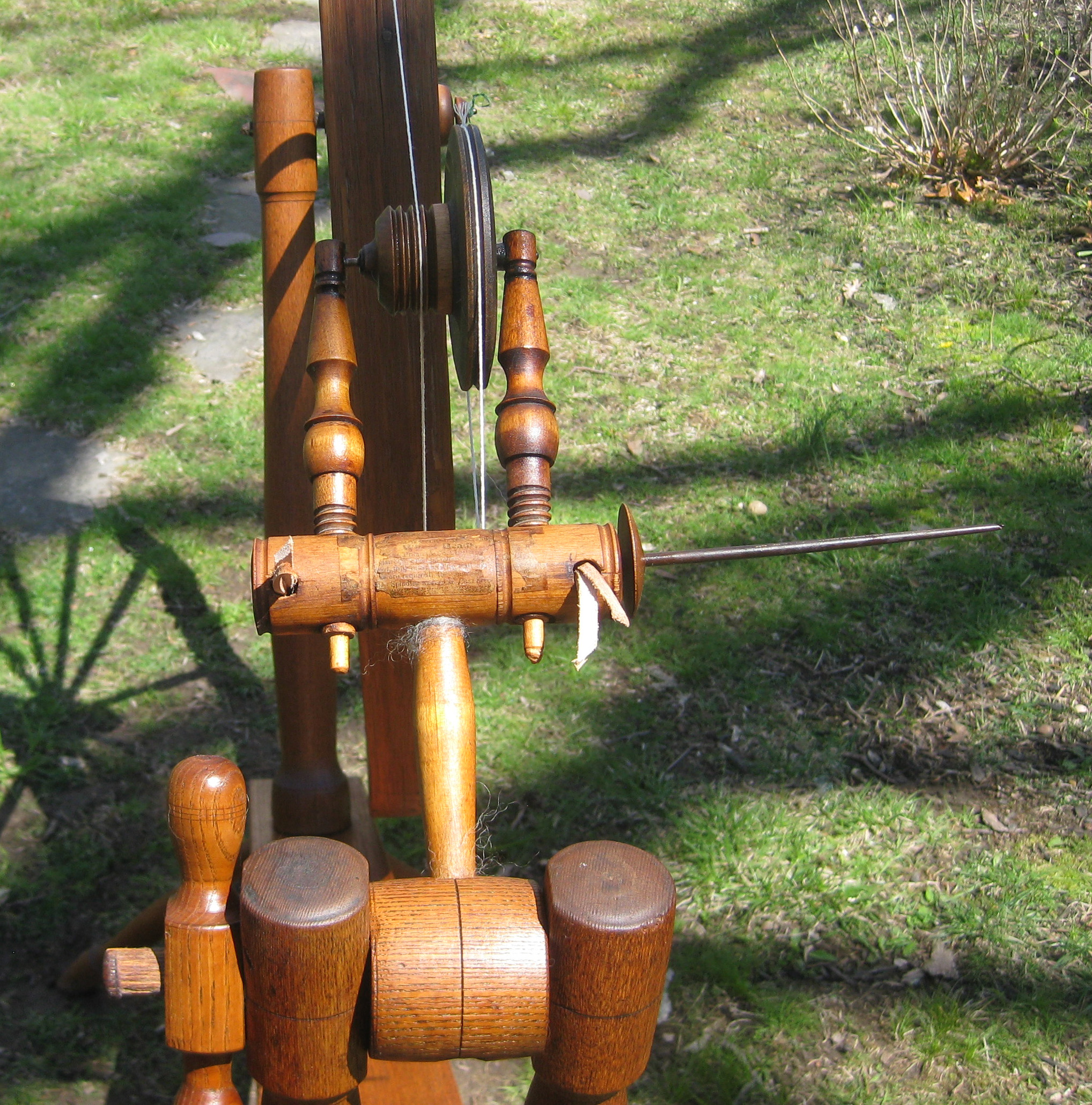
Reassemble the MOA and mount the spindle head on the post.

07 bearing

Add the drive band for the minor’s head and the main drive band. Adjust your tension.

06 bearing

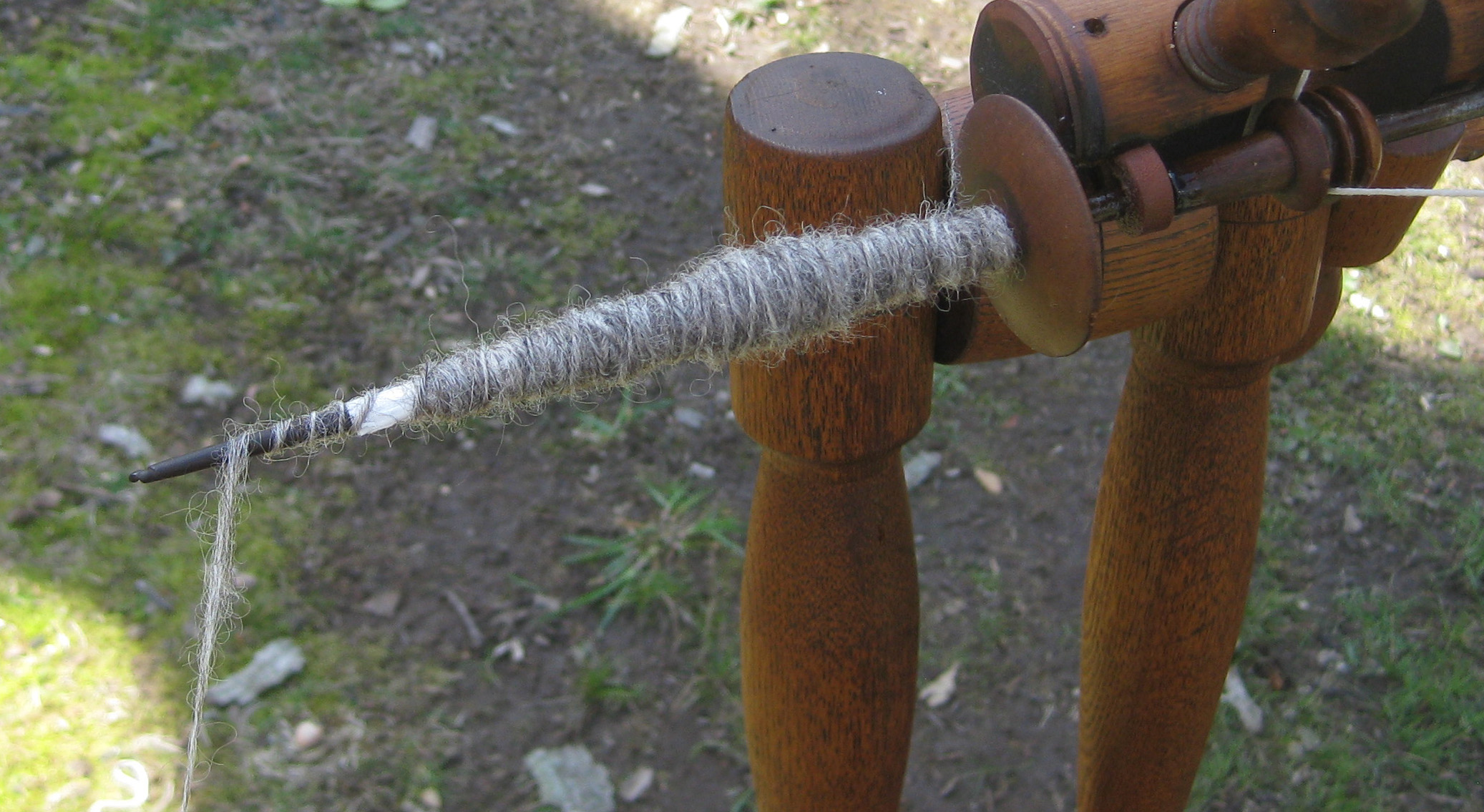
Spin. Enjoy. Confound the neighbors. It is as easy as that!

08 bearing


Ravellenics

February 18, 2014

Being a somewhat indifferent knitter who tends to stick to small accessories, I finally took the plunge this year and entered the Ravellenics. This is the reincarnation of the original Ravelympics, run by the fiber art social media site, Ravelry. The Ravelympics were very popular until they came to the attention of the International Olympic Committee, who felt it was an underhanded attempt to make knitting an Olympic sport and told Ravelry the name couldn’t be used. Guess the gods who sit on Mount Olympus have the copyright.

Anyhoo, the outcome was use Ravellenics and everyone seems (so far) to not be able to find a copyright violation.

The Games are held during every Olympics and are simply a fun way for knitters, crocheters, and other fiber artists to organize and complete a project during the time they watch the Games. I don’t actually watch the Games because I can’t stand the drivel from the broadcast booth. I also would like to see other competitors than those from the USA. But, you don’t have to watch the games to participate in the Ravellenics, so this year I took the plunge.

My main entry, the King of Confidence sweater:

sweater

I realized afterward that the thing I liked best about this was the yoke design. The pattern sizing is HUGE, so if you think you want to make one, you might want to refer to a basic bottom-up, round yoke sweater pattern and substitute this yoke. It is worked in repeats of 10 stitches, so would be easy to work it into a different pattern.

Also, while the pattern calls for the body to be worked in commercial yarn and the yoke in handspun, I did work the entire piece in handspun. The body is a 50% Shetland wool, 25% silk, and 25% angora bunny fur blend that I mixed up a couple of years back and had carded by Spinderella’s. It was spun on an Ashford Traveller with a jumbo flyer and bobbin, and let me with huge skeins. The body used one and one-half skeins and I have lots left over. The yoke was a braid of blue-faced leicester in a color way called “Tiger Lily” that I had picked up at the Maryland Sheep & Wool Show. I used exactly the entire skein. The original pattern called for a round neckline, which I’m not thrilled with, so I kept adding on and had enough to make a mock turtle-neck.

sweater yoke front

Where the sleeves attach to the body is a bit wonky, so I will go back and let these seams out and rearrange things a bit. The pattern was very unclear on attaching sleeves and seem to assume the knitter had done this before.

In any event, for all the fiddling with size, I was happy with the way it turned out AND finished during the time frame of the Ravellenics. The sweater just wants wet-finishing and blocking.

Here is the back view:

sweater yoke back


Which Came First?

January 13, 2014

The boot toppers or the desire for a pair of casual boots in brown?

This all started with a very nice little pattern book called “Gifted” by designer Mags Kandis. Among the 34 designs were a pair of cabled boot toppers. Not leg warmers. Not socks. Boot toppers. Knitted cuffs you pull on first, pull your boots on over them, and turn down the nifty cabled cuff with its picot bind-off fringe. Just a really cute pattern.

This was at least sometime in 2012 I saw the pattern and, like so many others, filed it away in my mind on the “nice to have” list.

Over the summer, I was rearranging my stash to reacquaint myself with what was there. Unfortunately, the Woolly Lamb in Pennington, New Jersey, had gone out of business and, of course, I had to have one last binge there. This, even though they had had a big blow-out of warehoused yarns during 2012 and I had binged there, as well. In sorting through my loot, I found two skeins of a beautiful green tweed, Grignasco Knits Loden. I made sure the two skeins were in the same spot and filed their existence away in my mental card file, too.

Somehow, this mental filing away of the cabled boot topper pattern and the green tweed yarn must have been percolating in my sub-conscious. As autumn approached and I took inventory of my fall wardrobe I realized something: I had dressy black boots. I had dressy brown boots. I had cowboy boots. I did NOT have casual brown boots.

Did I NEED casual brown boots? I must have, because I suddenly found myself thinking at odd moments: Must. Get. Casual. Brown. Boots. Black never entered the picture. Brown, they had to be brown. Why? Because brown went better with the green tweed yarn. Green. Tweed. Yarn.

Must. Have. Cabled. Boot. Toppers.

I wouldn’t say I obsessed about this, but it did rise to my conscious world every so often. After work one evening, I stopped at a local JoAnn’s Fabrics to pick up some odds and ends. Walking back to my car, I looked up across the parking lot. There, shedding its radiant soft glow was the big DSW sign. Designer Shoe Warehouse. The well-lit windows shown out like a beacon of boots. There, I knew, would be my brown boots.

Entering, I was greeted with row upon row of boots. I spent an enjoyable hour or so prowling up and down the aisles, sometimes stopping to stroke a toe cap or straighten a limp leg that had toppled. But, with all of the boot bounty, nothing really spoke to me. I had a couple of mental “possibles” and roamed off to look first at the dress pumps before once again scanning the boots. Nothing really jumped out at me. To take another break, I went to check the discounted section.

The discount section can be a real treasure trove. This is where shoes go when the store gets down to the last few pairs and wants them gone. The discounts can be sizeable. I rooted around, not looking for anything in particular, when suddenly up popped these:

cables 3

Real leather. Made in Brazil. One pair left, size 7, which is a half-size larger than I normally take but would accommodate heavy socks for the cold weather. Sizable discount. And, best of all, they were brown! Needless to say, they came home with me. And don’t they look a little plain, the casual brown boots?

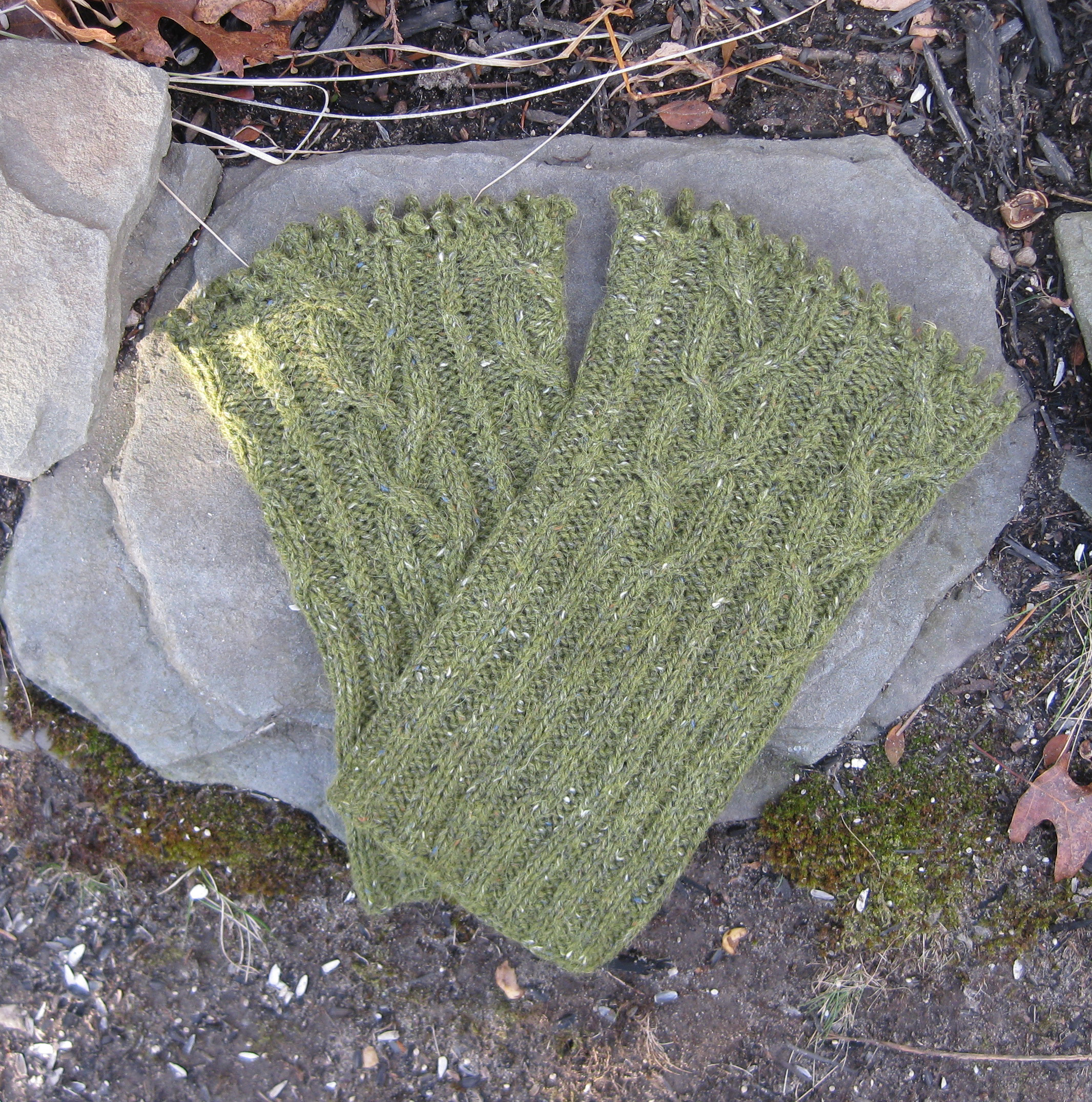
I quickly dug out the pattern book and the two skeins of green tweed yarn. I must have really wanted to satisfy the sub-conscious need for these things, because I cranked out the first one in two days. I finished the other one during the next week and finished them a few days before Christmas.

cables 2

Naturally, you knit them on the cable side but to wear them, you turn them inside out. This way, the cable shows over the boot.

cables 4

Amazing, isn’t it, how sometimes the simplest things make us the happiest?


The One That Almost Got Away

November 27, 2013


When you walk around the Rhinebeck Sheep and Wool festival, there is so much to see and do, it is easy to get distracted. If you don’t come with a clear idea in mind of what you want, you go home with things you didn’t know you needed but nothing you really wanted.

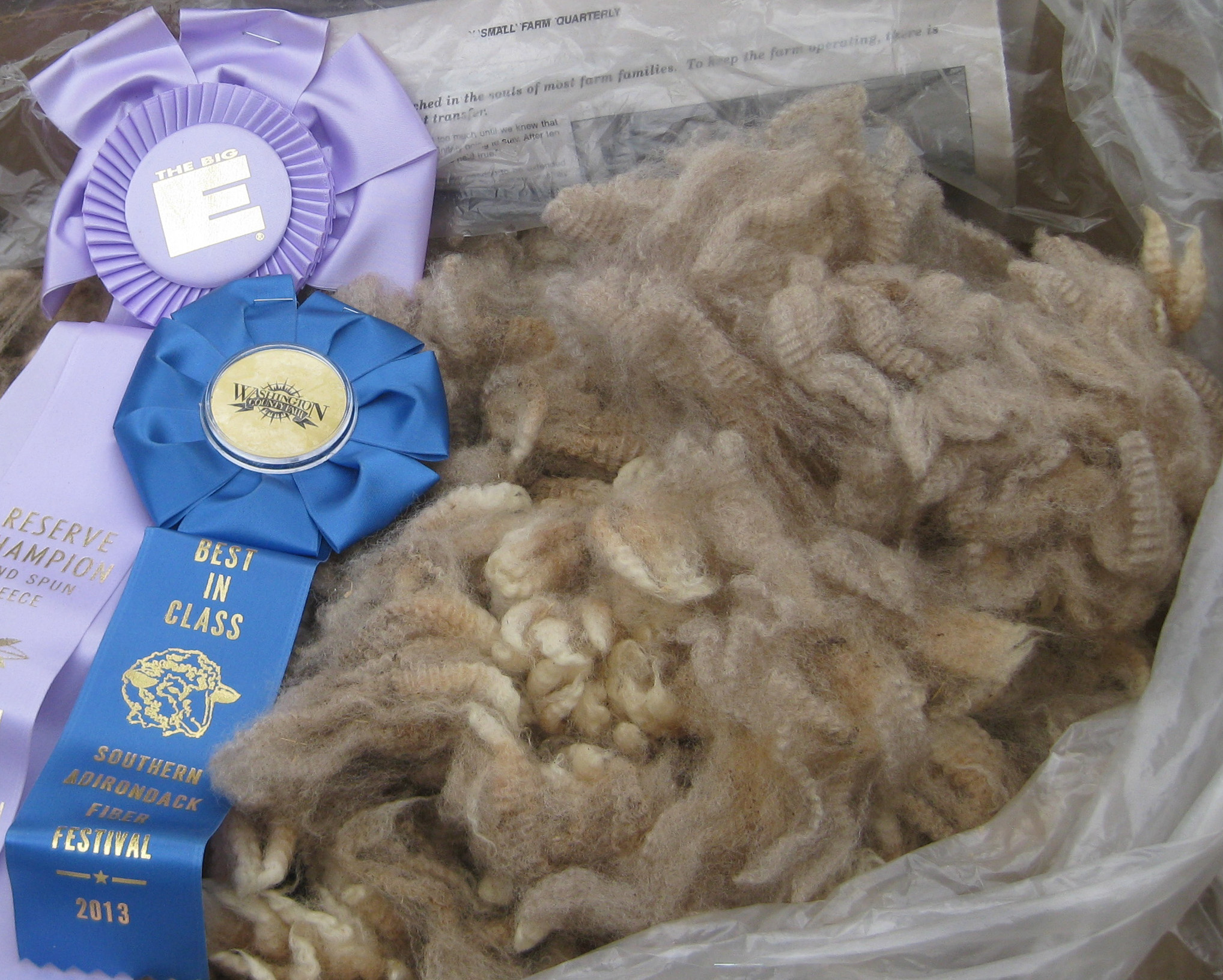
I didn’t know I wanted this fleece until we were on our way home:

01 fleece

On the way home, my husband and I had a discussion about the “Rhinebeck Sweater” — that concept that, if you are going to Rhinebeck, you should have a sweater that you knitted to display your knitting ability. I had knitted the Enniscorthy Sweater by Maggie Jackson this year. Husband noted that HE had no Rhinebeck Sweater and that, perhaps, he should have one for next year. The discussion then went on to what type of sweater (cables) and what color. “Lighter instead of darker,” he said, “Like that fleece you kept looking at in the booth.”
I had looked at said fleece in the Fiber Connections booth several time. This is a booth where shepherds and spinners can consign their wares in one location. I had walked by several times and was quite taken with this fleece, which is a Romney cross, but, hey, I have fleeces home I haven’t spun yet. I bought fleeces in the Rhinebeck sale. I have projects lined up from now until I am at least a hundred and eleventy years. Did I need another fleece? As much as this one called to me (and I think I went back, oh, 5 or 6 times?), I had to regretfully pass.

And now, on the way home, I find out this was the perfect fleece.

I had one saving grace here — I had picked up a wheel from a fellow Ravelry spinner and she had noted that she bought a Romney fleece from Elihu Farms in New York State. She ALWAYS wound up buying from them, she said, because the always had the nicest wool. I had filed away the name of the farm in that vast storehouse of mental trivia, only to have it pop forward in the Fiber Connections booth, because this fleece was tagged as having come from Elihu Farms.

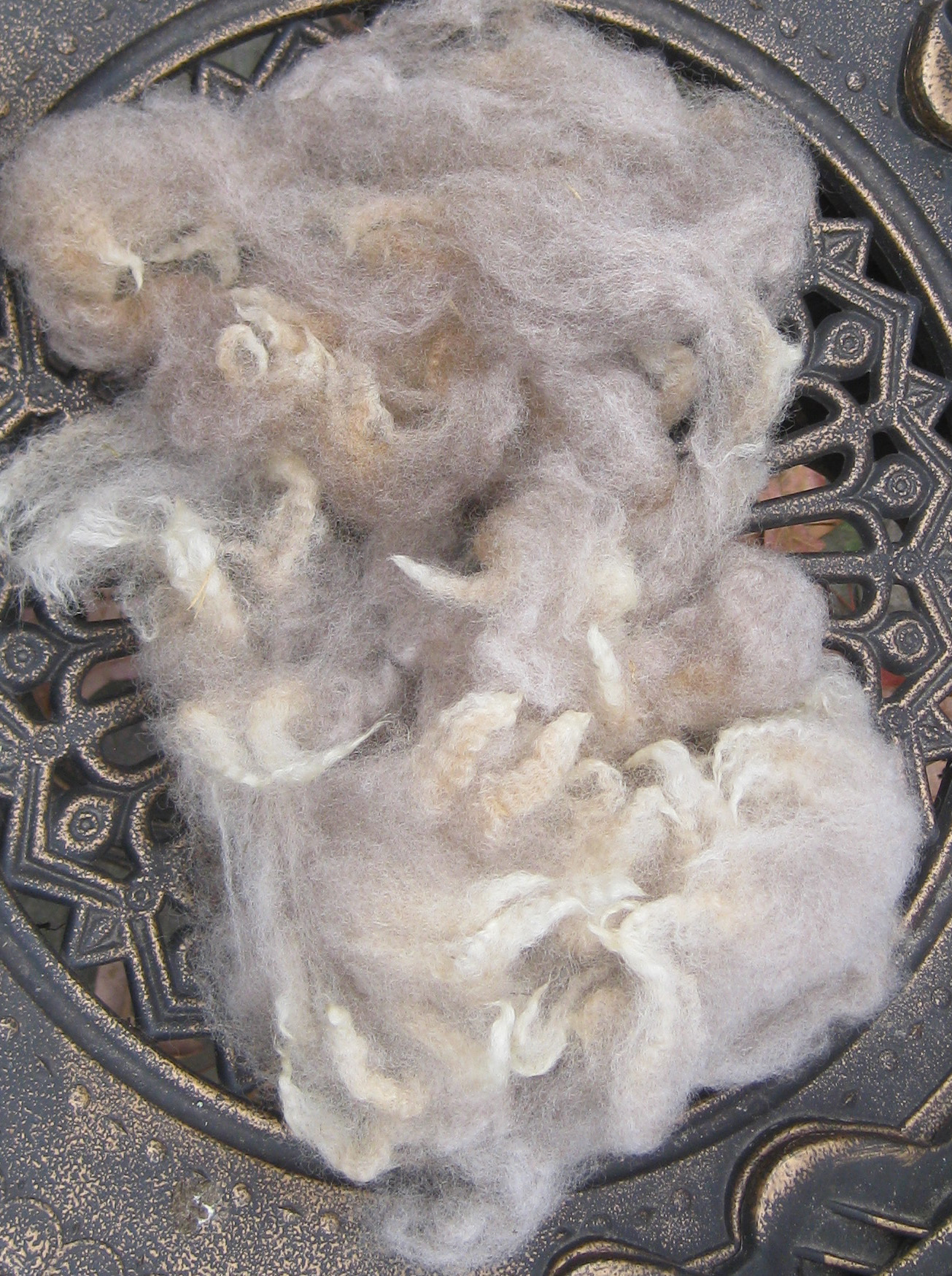
What did we do in the days before Google? A search quickly turned up the farm and a related e-mail. The e-mail was answered by the very lovely shepherdess, Mary Pratt, who said that, no, the fleece had not sold and that yes, it was still available if I would like it. I explained the circumstances and she laughed. She was happy to hear the fleece was going to someone who would appreciate it and she hopes to see the finished project come next Rhinebeck.

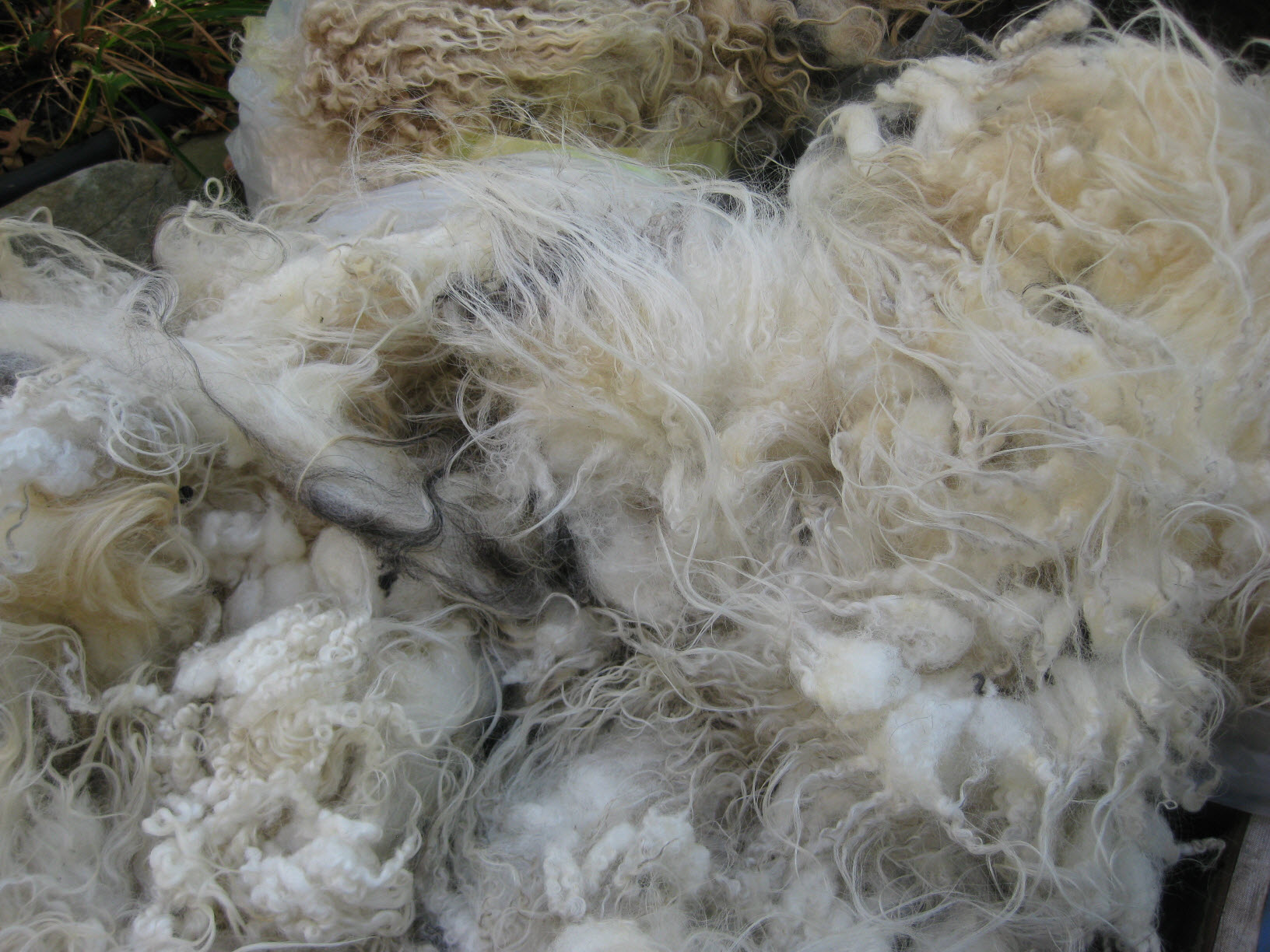
I have a Dec. 7 deadline for some other work and once that is fulfilled, I will be turning my attention to this fleece. I did already wash a handful of it and, once it dried, kept walking around with it and burying my face in it. This is a lovely, creamy, clean, soft fleece:

02 fleece

Yummy. Can’t wait to work with this.

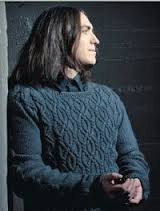
Of course, the pattern will be the challenge. Cables, go figure. I can do cables. I haven’t done really complicated cables. I am much better at reading charts than I used to be. So, cables, okay, how bad can it be? The chosen pattern is the Severus Sweater:

01 severus sweater

Stay tuned. 2014 promises to be full of knitted adventures!


Flat-Rim Wheel

November 11, 2013
 

This wheel took along to get to me via the “wheel railroad.” One of my Antique Spinning Wheel friends on Ravelry kindly picked her up for me last spring, but we could never make a connection. Finally, we both agreed to meet up at Rhinebeck in October and, so, this lovely finally came home with me.

There are several styles of this wheel around, but no one seems to know anything about their origins.

002 flat rim

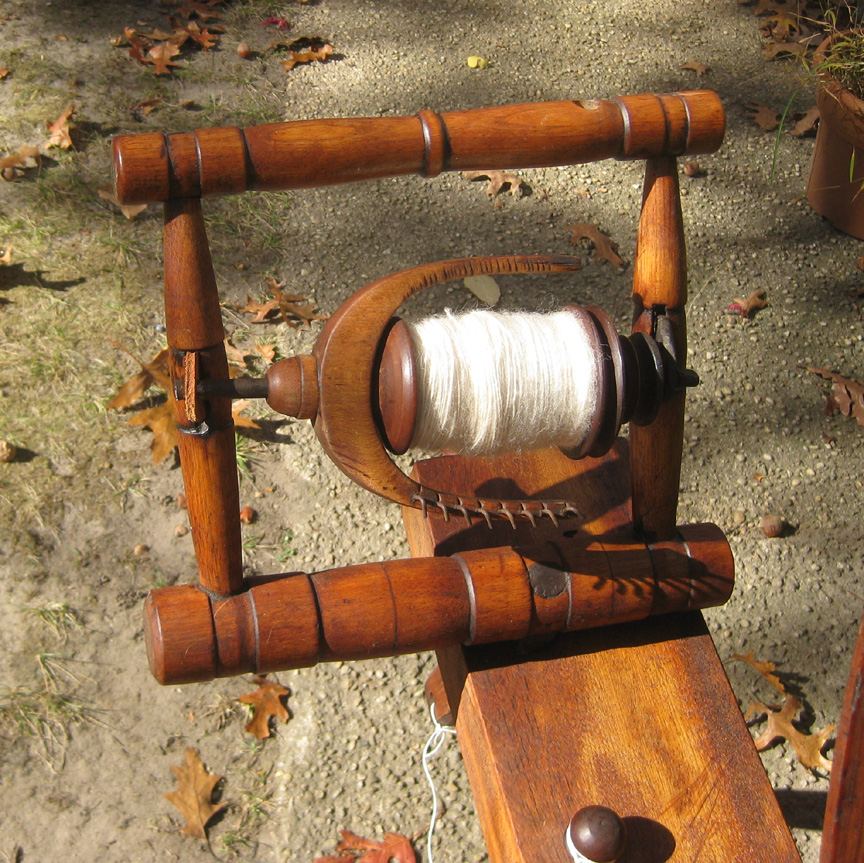
This is a big wheel. The drive wheel is 32″ in diameter, comparable to a Canadian Production Wheel. But, unlike the CPW, this wheel’s rim is flat, like a walking wheel. Like a CPW, this wheel has a tilt tensioning system, and has the optional Scotch tensioning bar attached to the top of the maidens.

005 flat rim

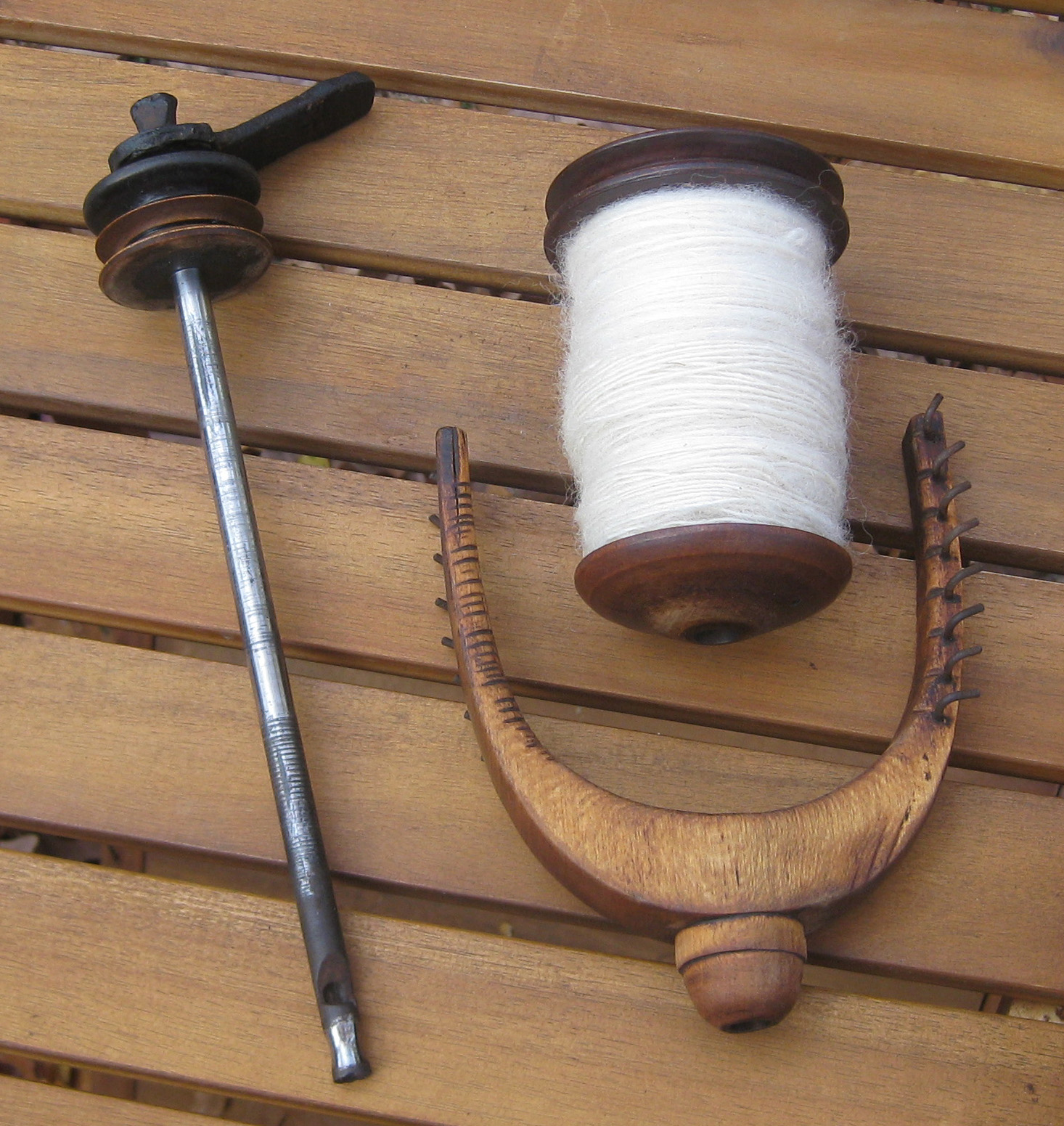
Perhaps oddest of all is her flyer assembly. Where with other flyers, you unscrew the whorl to remove the bobbin, this wheel has a quite a different approach:

001 flat rim

That’s right. You unscrew the FLYER. The downside on this is that there is a little knob at the other end of the shaft to prevent the whorl being removed. The problem with this is that it also prevents the rear maiden bearing from being removed. The leather bearing on this wheel is beginning to wear out, so there will be some creative repairs needed in the future.

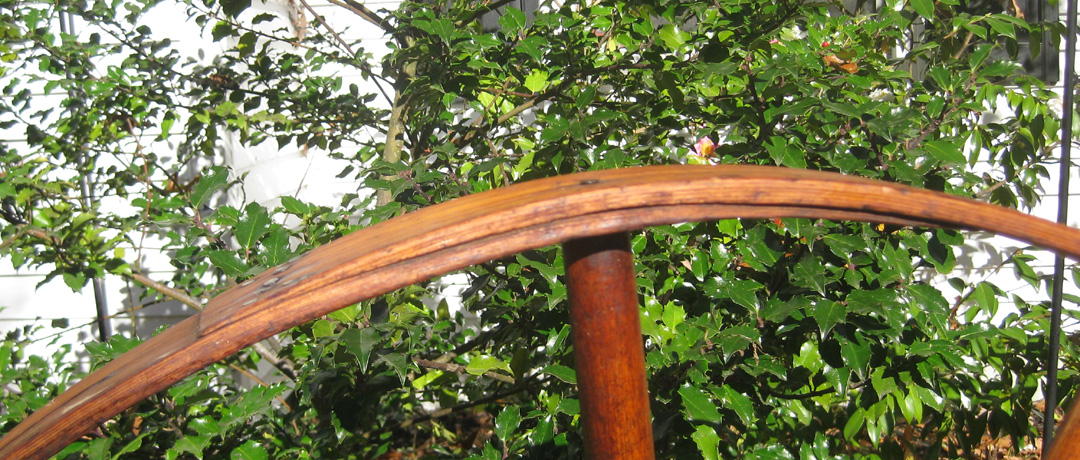
The flat rim drive wheel has a nicely-fitted lap joint:

006 flat rim

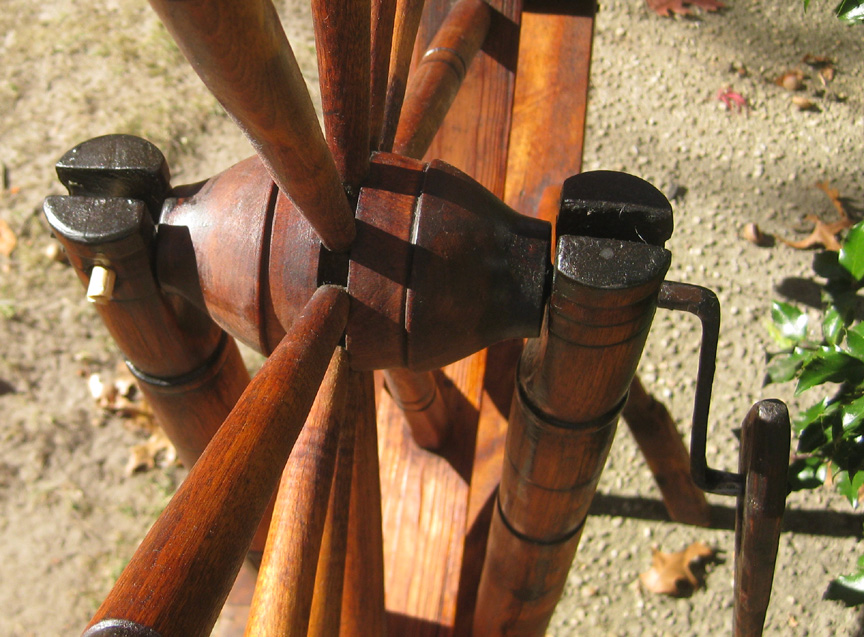
Her hub is also interesting in its shape, being very elongated, rather than the roundish “bagel” shape of so many wheels. This hub is more reminiscent of a walking wheel hub.

007 flat rim

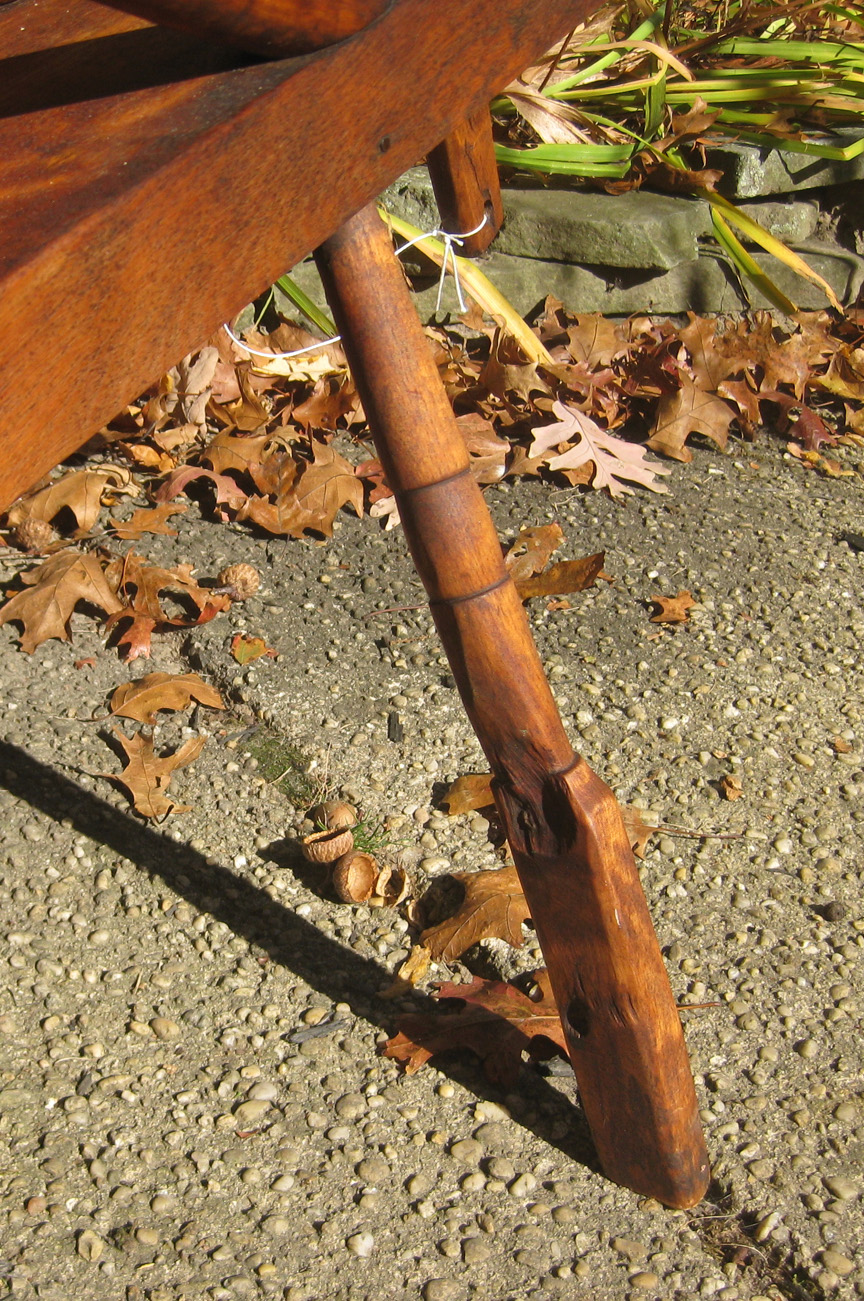
Another oddity about this wheel is that she has 4 legs. Most “saxony” style bench wheels only have 3 legs. In this case, however, the extra leg comes in handy. The front leg on the farthest side from the spinner shows signs of having originally been the leg that held the treadle pin. When the leg became worn from use, it was simply exchanged to the back position and the good leg moved to the treadle.

004 flat rim

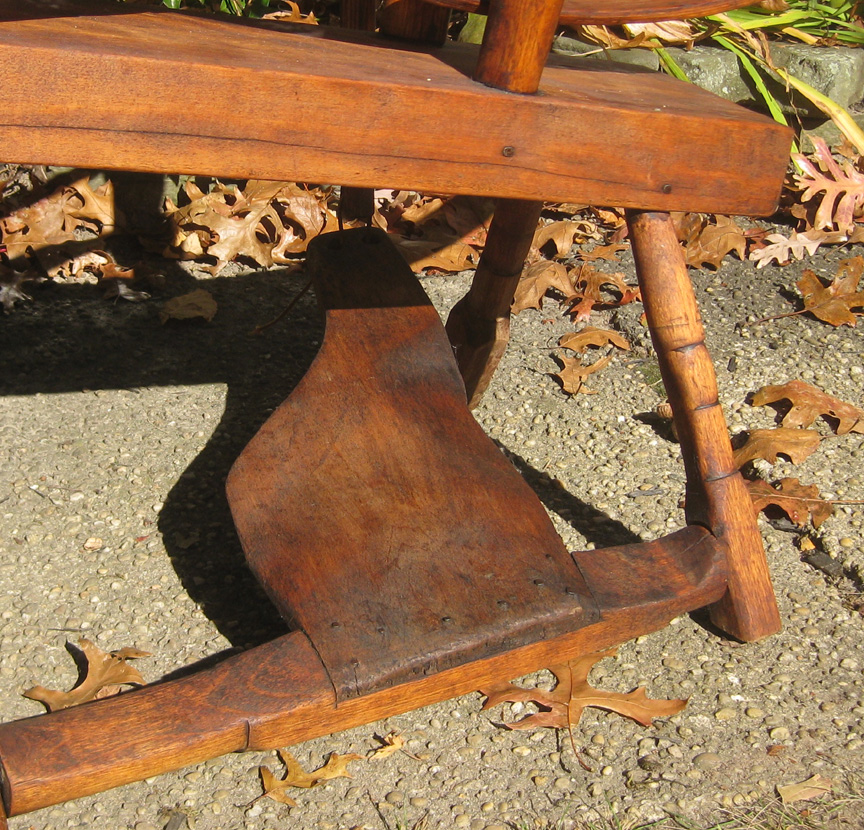
And how much use did this wheel see, in order to cause that much wear?  Quite a lot, apparently, judging from her treadle:

003 flat rim

That, dear readers, is the footprint of some long ago spinner, preserved on the treadle. Notice, too that the treadle bar on the left hand side also shows wear. On these single treadle wheels, the spinner often rested both feet on the treadle while spinning. This wheel, where ever she came from and whomever built her, was a well-loved, well-used workhorse in her time.


Autumn Mitts

November 4, 2013

The leaves here turned abruptly and there finally is a little sting of cold in the air. I am taking precautions against the winter’s cold, as I usually wait too long and find myself without gloves, without scarf, without hat, whatever. And curse myself for not thinking ahead to make something. This winter at least my hands will be warm.

This is a little pair of angora mitts I knitted from one ball of angora:

01 mitts

The haze of the angora made it a little hard to get a clear shot. No pattern to share, I’m afraid, I just made these up and put a little cable along the plane of the index finger for interest. For indoor wear as wrist warmers or for driving:

02 mitts

And I finished my Northanger Abbey Mitts from the Fall 2012 issue of Jane Austen Knits:

03 mitts

I love the tweed, I love the green color. This is Berroco Blackstone Tweed, 2 balls for the mittens. I love that soaring gothic-arch motif up the back of the hand.

04 mitts

The other thing that is nice is the extra-long forearm. If I remember to put these on first, then a jacket over them, they will keep my arms warm as well as my hands.

05 mitts

See how the ribs of the forearms turn into the gothic arches? Simple designs can be really amazing when you see them worked up.

Now, I think I am going to need the lack of a scarf next ….


And what did I bring home?

October 22, 2013

While I know that some people, especially those not close enough to get to the festival, were interested in seeing what they missed, SOME readers just want to know what came home with me.

haul

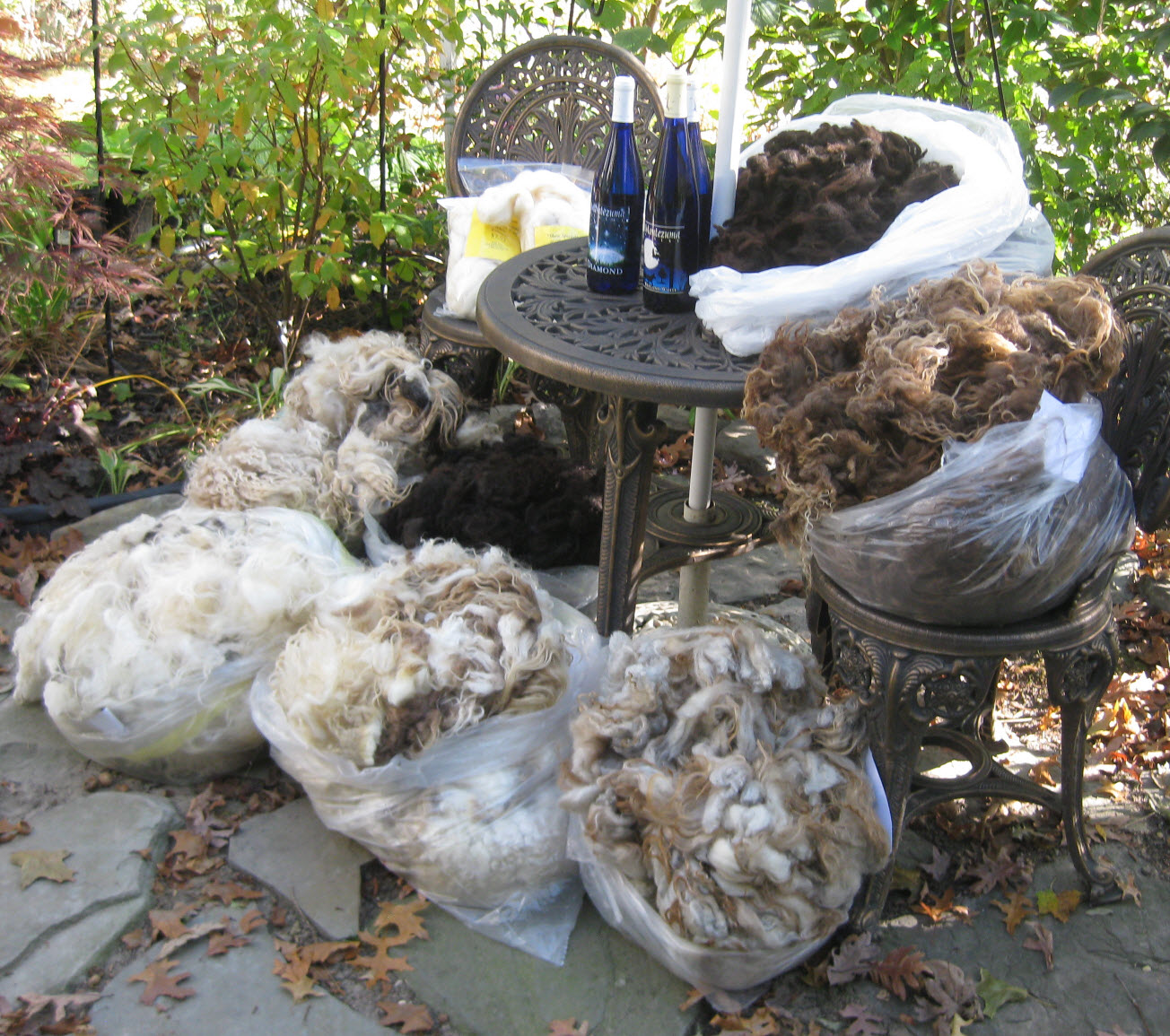
Three bottles of wine from the Montezuma Winery in Seneca Falls, NY (two of Diamond, one of Wetland White), 2 pounds of blue-faced leicester roving, and 7 fleeces. 6 are Icelandic and one is a Romney/Corriedale cross. The REAL prize was one of the Icelandic fleeces:

fleece

Did I NEED another fleece? Probably not, considering how much plain vanilla white wool I dropped off at Zeilinger’s. But, oh, the little undercoat thel locks with the corkscrew crimp tips! Somehow, EVERY spinner needs a fleece like this!


Rhinebeck in Review

October 21, 2013


Rhinebeck 2013 has come and gone. If you couldn’t make it this year, or if you are too far away to attend, here is a brief glimpse of some of the things you missed.

First of all, the scenery around Rhinebeck, with the leaves just turning and the hills just appearing in the distance.

001 rhinebeck

Closer and closer: a view of the Hudson River from the Rhinecliff Bridge: sorry this is not a better shot, but it is hard to shoot a good photo from a moving car. If you’ve never seen the Hudson River, this is actually a pretty majestic thing to see.

002 rhinebeck

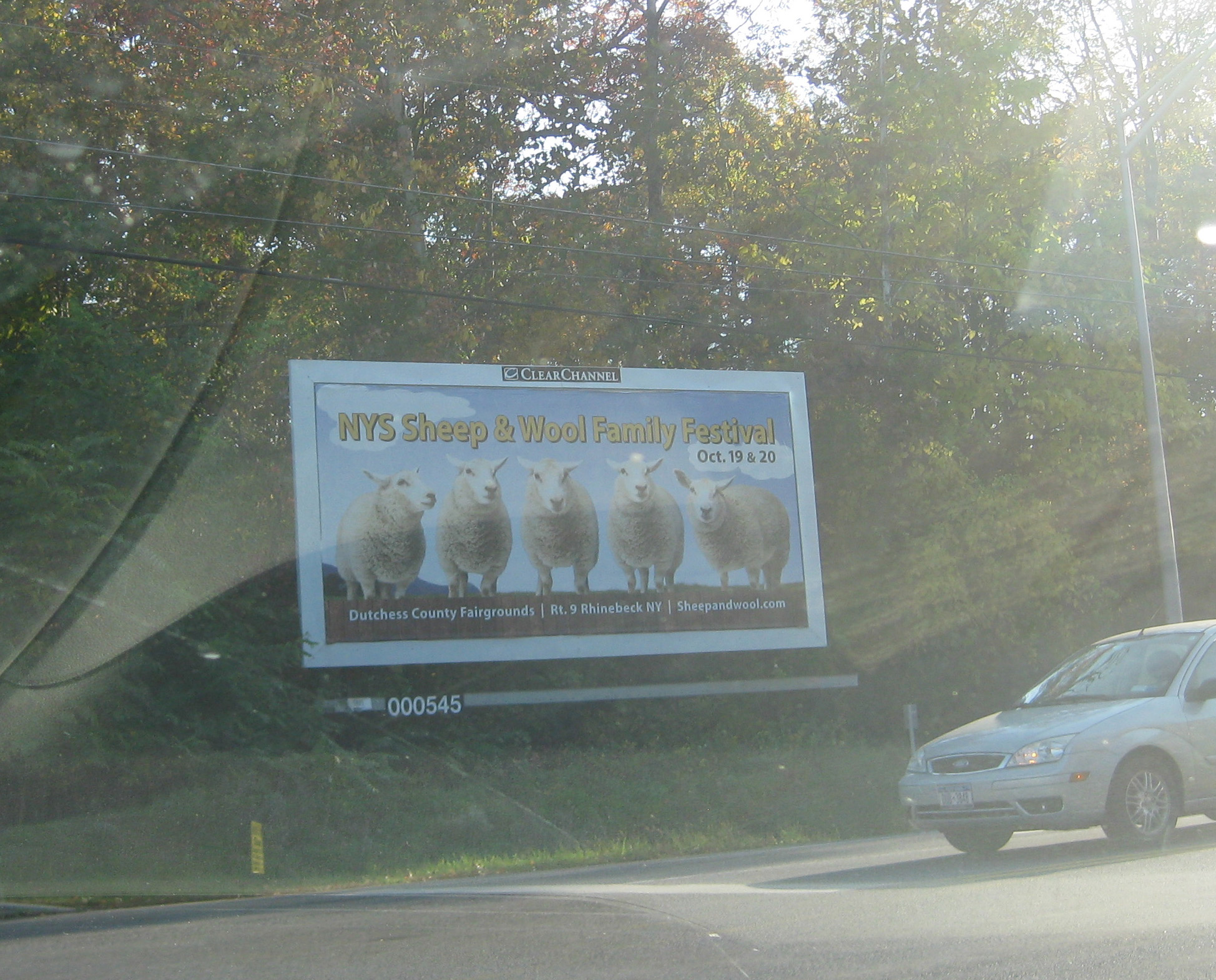
We had made good time in our journey and were on the bridge at 9:00 AM sharp. We missed the opening gate of the show, but figured we are about 3 miles from the fairgrounds at this point so would be there fairly quickly. We were wrong. It took one solid hour to get from the bridge to the fairgrounds, thanks to traffic. It took 20 minutes to get from the bridge to the intersection where you make the turn for the fair, where this billboard greets visitors:

003 rhinebeck

We crawled the next 40 minutes. It was 10 AM when we finally pulled into the parking lot. This presented a problem, because I had the car stuffed with wool to drop off with Zeilinger’s for processing and was supposed to rendezvous around 11 AM with someone to pick up a rather large spinning wheel. The one thing I wanted to take a look at first was the fleece sale, so we decided to take a quick sweep through before dropping off the wool.

004 rhinebeck

The fleece sale is pretty big. The people who HAD arrived at 9 AM had already made their picks. See the sign to the left that says “Medium”? Right behind there is the cash register. See the line that begins on the left, goes all the way back to the wall, crosses over the back, and starts down the right-hand side? That is the check out line. A quick sweep of the fleece showed there was nothing I was missing, plus the prices were pretty hefty. Relived I wasn’t going to miss out on anything, we headed over to Barn 31 to find Zeilinger’s booth and figure out how to drop the wool off. We were told to drive up behind the buildings to the vendor parking where their trailer was set up.

001 wool

There is a WHOLE other post to be had out of the story of those wool bales! I may even have to run a contest to guess the weight — it was more than I expected. Once the wool was safely dropped off, we made our contact for the wheel, which is also a post for another day. Once the wheel was safely stowed, we had the fair to ourselves. Before barraging you all with the purchases, here are some of the sights and sounds of Rhinebeck

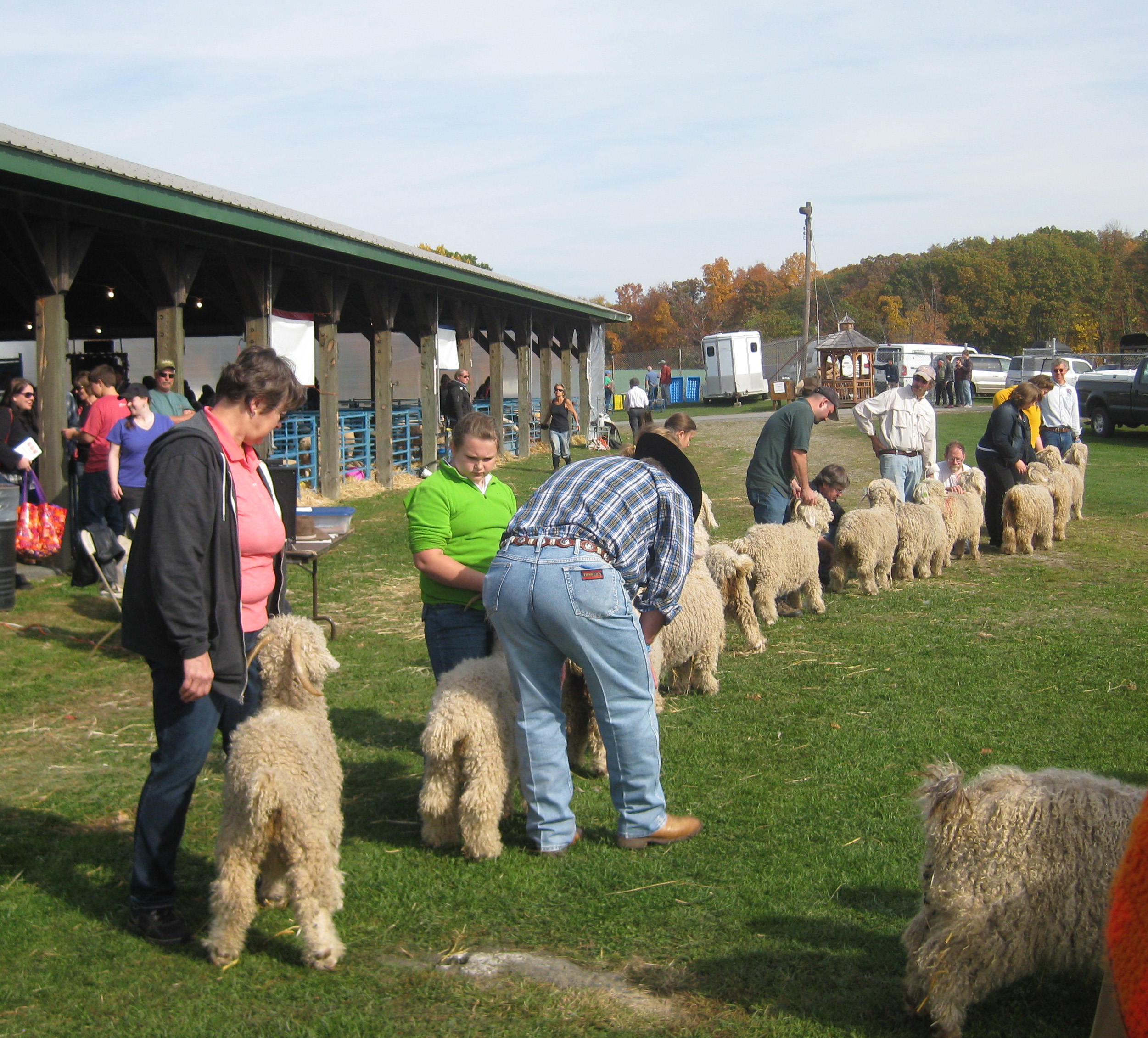
There were goats being judged:

005 rhinebeck

While some of their brethern waited their turn:

006 rhinebeck

No pressure to perform here: this fellow enjoyed a munch of hay.

007 rhinebeck

Sheep were being primped, fluffed, and buffed for their big appearances:

008 rhinebeck

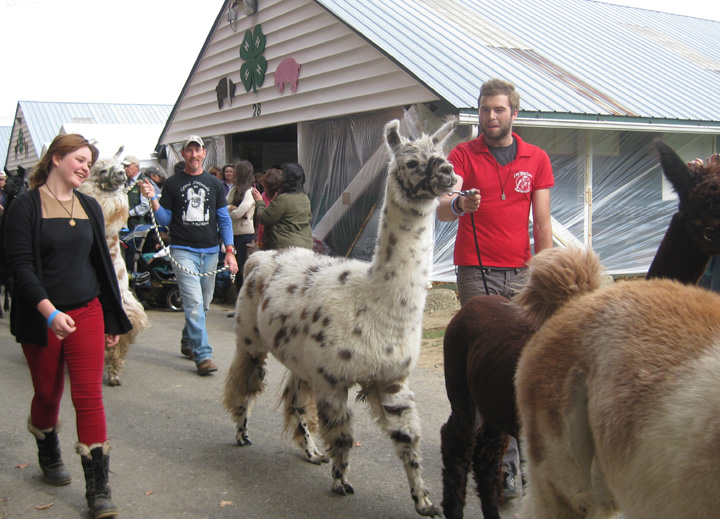
And out in front of the show barns suddenly came the cry: “Make way for the llamas!”

010 rhinebeck

A llama parade! Not sure if this fellow is leading an appaloosa or a cameleopard!  The next llama in line was equally interesting in color and in cut:

011 rhinebeck

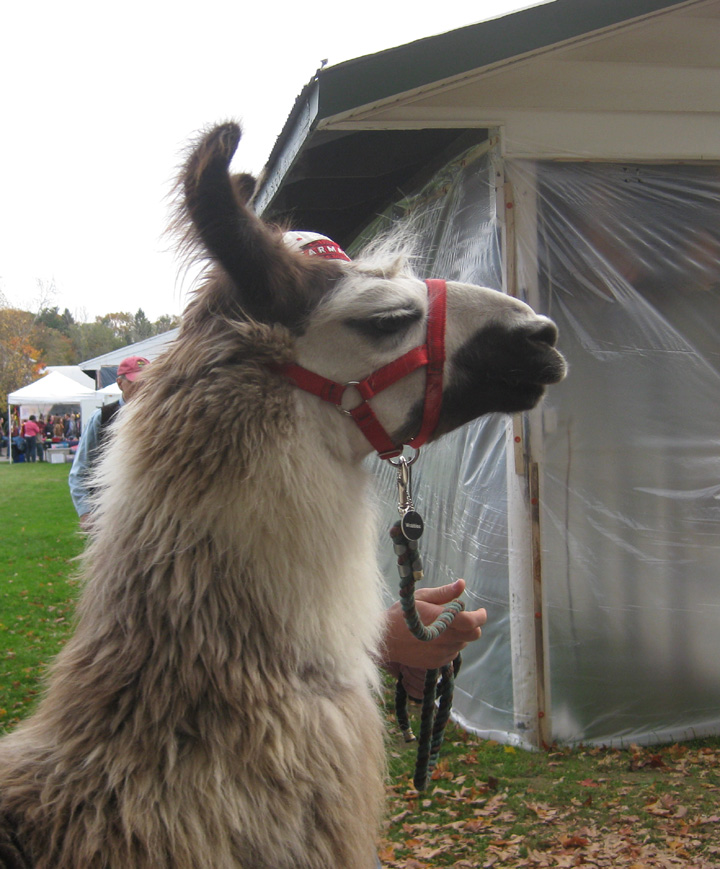
This noble fellow brought up the rear of the parade:

012 rhinebeck

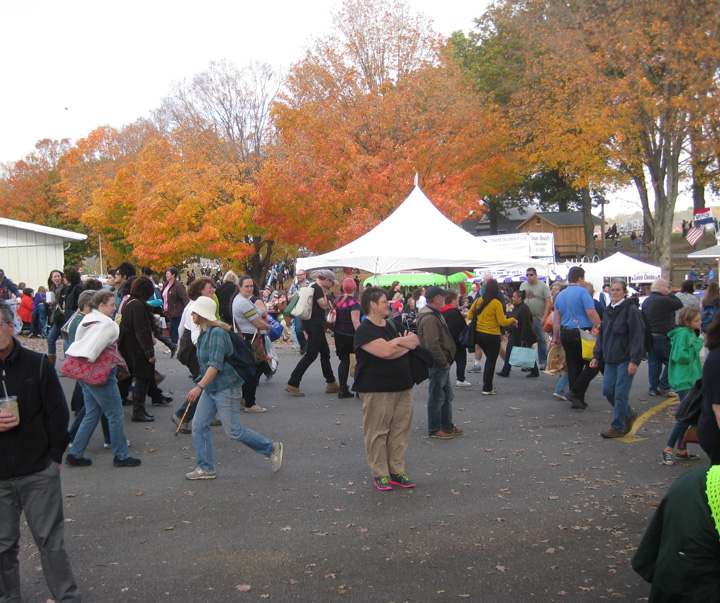
People were on parade, too. The fair seemed to be particularly packed this year.

009 rhinebeck

Handknits were in abundance, sweaters, shawls, and hats. The morning was milder, so some visitors eschewed all outerwear. As the day wore on, the clouds rolled in and it turned into a bit of a blustery autumn afternoon. If you could find a little place to sit and relax, it was fun to crowd-watch. You might even see a young lady out walking her sheep:

013 rhinebeck

We came home with the wheel I was picking up, some raw fleeces, two pounds of blue-faced leicester roving, and 3 bottles of wine from the Montezuma Winery. The day was crowded, the traffic was bad, but we met up with old friends, made some new ones, and went home tired and happy.