German Slanted Bench Wheel

May 15, 2011

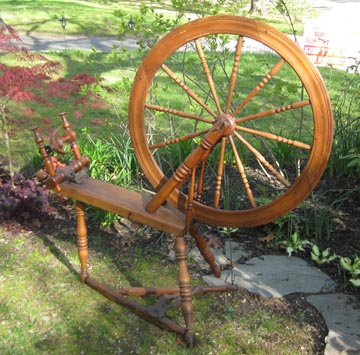
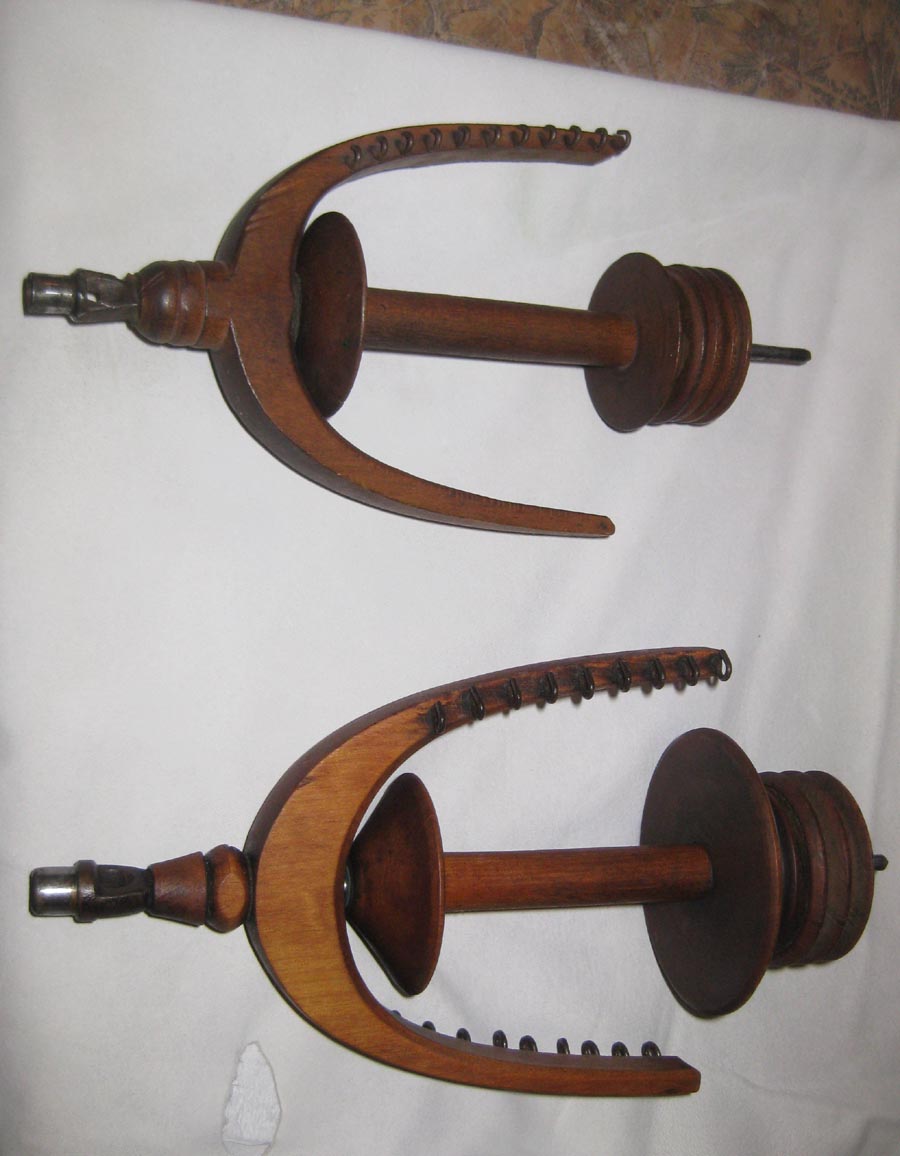
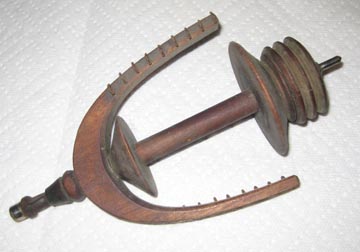
There is a colloquial term for spinning wheels with slanted benches; they are called, not surprisingly, “slantys.” This is a very small slanty from Germany:

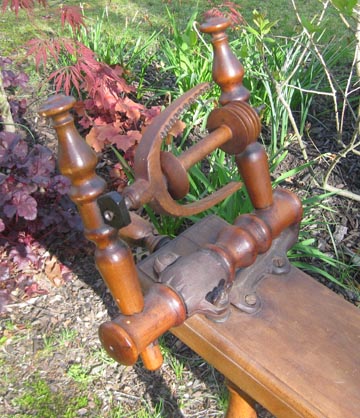
A little closer view, the other side:
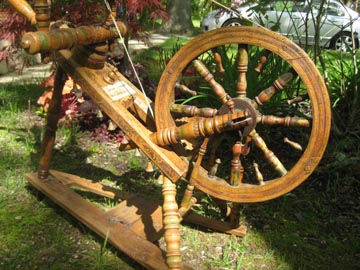
This wheel is filled with all sorts of interesting points. First of all, it is a wedding wheel:
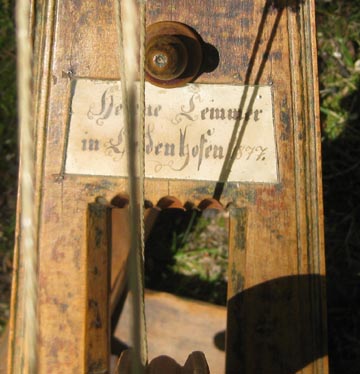
The drive band is a bit in the way, but the plaque reads: Helene Lemmer in Leidenhofen 1877.  Also, note the carving at the edge of the split bench. This is echoed around the edges of the tensioning area:
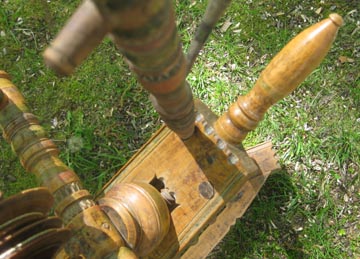
Note, too, that the tensioning knob is worn smooth from use. The flyer is in excellent condition:
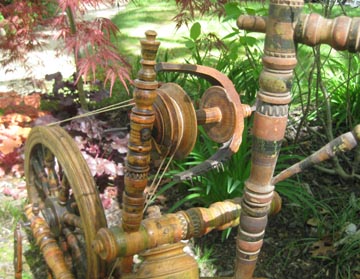
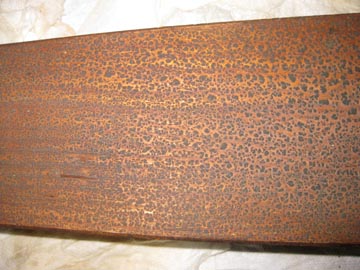
The wheel is delicately and ornately carved; the carvings have lost much of their color over time, but you can still see the old paint:
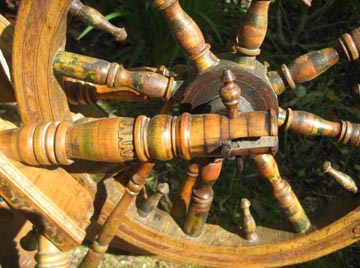
Even the treadle is chip carved. An interesting point I have not seen before: the front legs go completely through the treadle bar and so it sits up slightly, about an inch of the front legs visible beneath it.
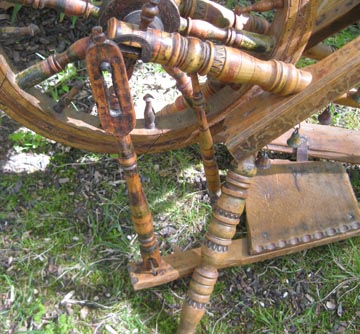
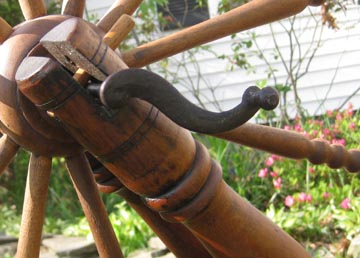
I found the drive wheel crank to be enchanting. I am used to working with the much larger Canadian Production Wheels. This crank is the same shape, but a fraction of the size:

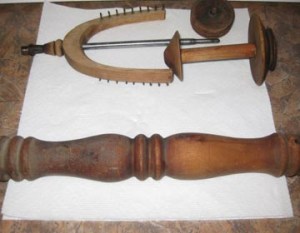
The upper portion of the distaff is similar in carving, but appears to probably be either a replacement part or added from a different wheel:
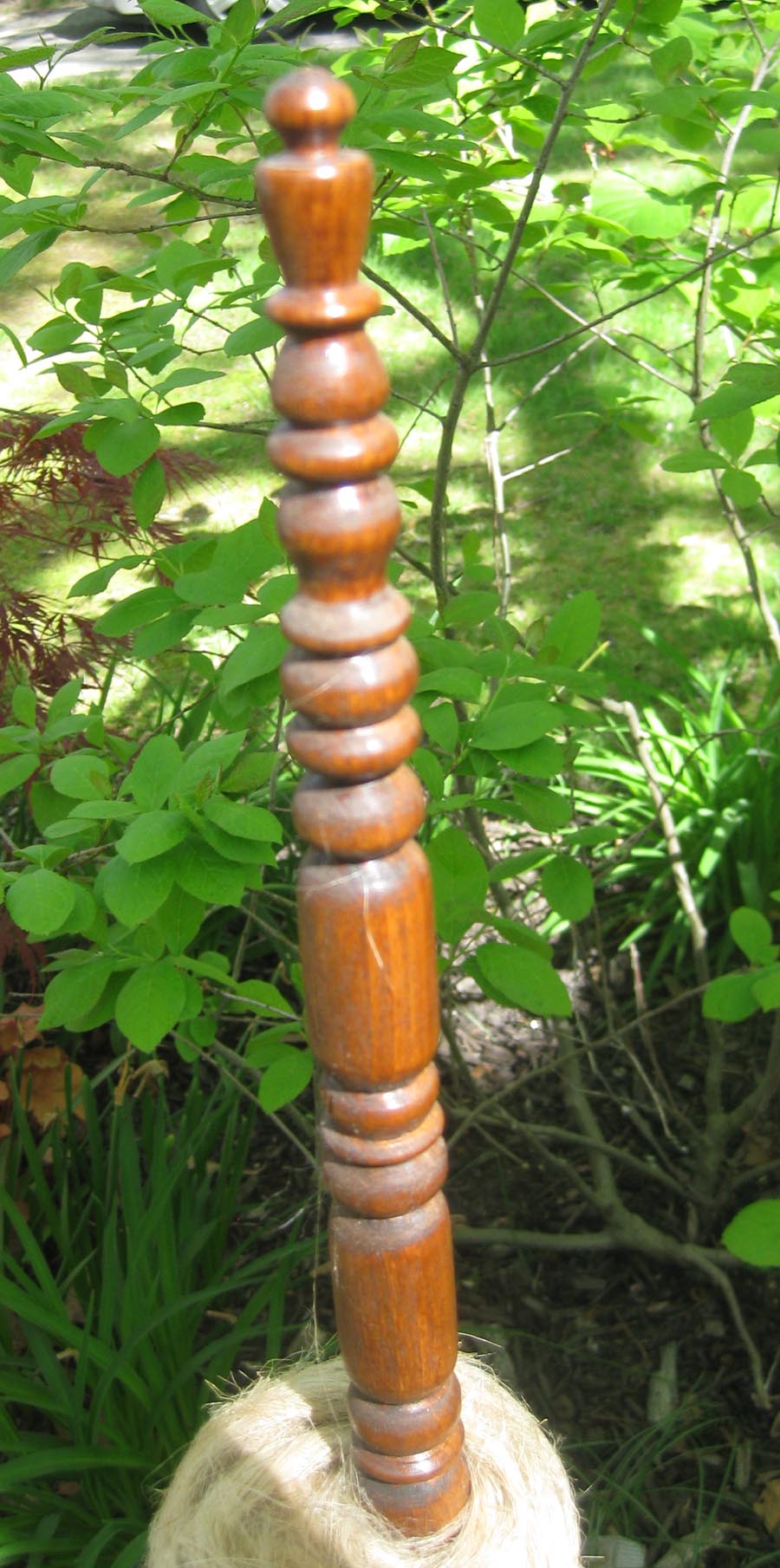
But perhaps best of all, both the front and back of the bench are lined with tiny carved wooden bell shapes:
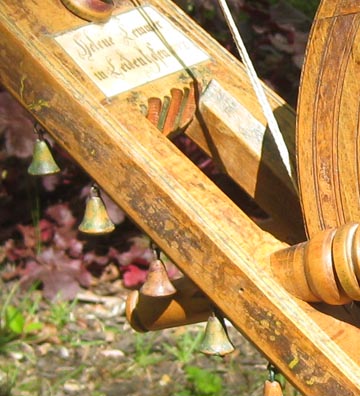
You can discern a bit more of her former paint job here; it looks like she had a line of arabesques and small flowers alongside her bench.

Other than the typical woodworm holes that most European wheels have, this slanty is in excellent condition. She is a lovely, sound wheel and I am looking forward to working with her.


New Jersey State History Fair 2011

May 9, 2011


For several years, one of our favorite living history events was the New Jersey State History Fair, “The Spirit of the Jerseys.” “The Jerseys” is a nod to the colonial distinction of East Jersey and West Jersey, although now we’ve factionalized to the point of being North, Central, South, and the Shore. Even with this, people will argue what is really the Shore, the Bruce-Springsteen-Asbury-Park Shore, or the Long Beach Island Shore.

It was nice to have a State History Fair, especially in New Jersey. We were one of the original 13 colonies, but, typically, everyone thinks history began when they were born and so don’t realize the state’s role in the past. This event brings together living history reenactors from all time periods to teach about the past. The Wool Merchant’s Daughter has always presented the handspinning demonstration.

Then, in 2010, deep budget cuts sanctioned by our new governor derailed the history fair. The original site of Washington’s Crossing State Park in Titusville, NJ, was a wonderful location but did not have a large base of volunteers who could assist with organization of the event. However, for 2011, the NJ Div. of Parks & Forestry (who, for reasons relatively obsure, also administrate historic sites in the state) found an alternate solution. They partnered with Allaire Village, Inc., a non-profit group that leases and runs the Historic Village at Allaire, located in Allaire State Park. Allaire Village, Inc. has a fairly large volunteer base and could contribute considerable support into organizing the event.

This change of venue was not a bad thing. Yes, it is all the way across the state from the original location, but happened to be 15 minutes from where we live. So, for once, we did not have to arise at the crack of dawn, dress in our 18th century rigs, and then drive clear across the state. It was much less stressful to put everything in the car Friday night, get up at a reasonable hour, and take a short hop to the event.

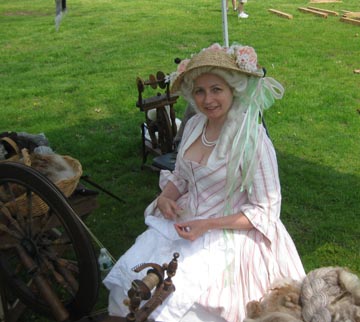
Yours truly, spinning away. In the midst of the thousand of other projects I’ve been working on, I finally found time to make a new dress. I loved the blue striped one I had worn in the past, but a girl needs a new gown every 7 years, at least! Plus, I was better versed in construction techniques and finally had the petticoats and skirts pleated correctly to fit over the panniers. It made for a much more comfortable experience.
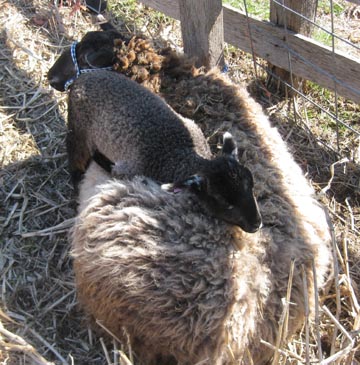
And I did get some serious spinning done. I continued working on the musket shetland fleece cited in a much earlier post. I am spinning this one in the grease:

This fleece is from Windswept Shetlands, and I heartily recommend them if you a looking for good Shetland fleeces. A wide range of colors and the shepherd, Mike Ludlam, is a great guy to work with. This fleece is so clean, I just flick the longs with a historically incorrect dog comb and spin from the lock. This is the spinning so far on my Country Craftsman wheel:

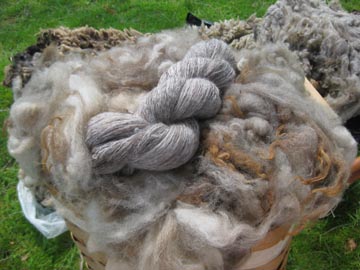
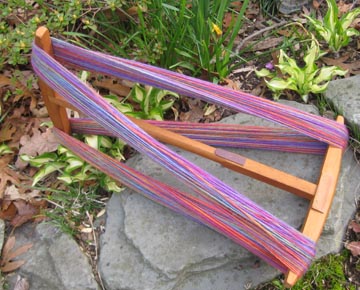
Spinning in the grease allows for an easily-spun laceweight; the grease helps stick the fibers together so I can draw a long, thin thread. Here is the before and after, a finished washed skein on the basket of fleece:

And a close up of the finished skein:

Of course, I don’t knit laceweight, so I guess this means I am going to have to learn!


Another Day at the Spinning Wheel Spa

May 2, 2011


My newly-renovated porch and its 11 feet of counter space is certainly getting a workout today:

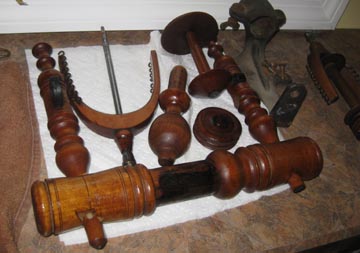
Lots of small parts in there, too, that don’t show up well in a long shot:

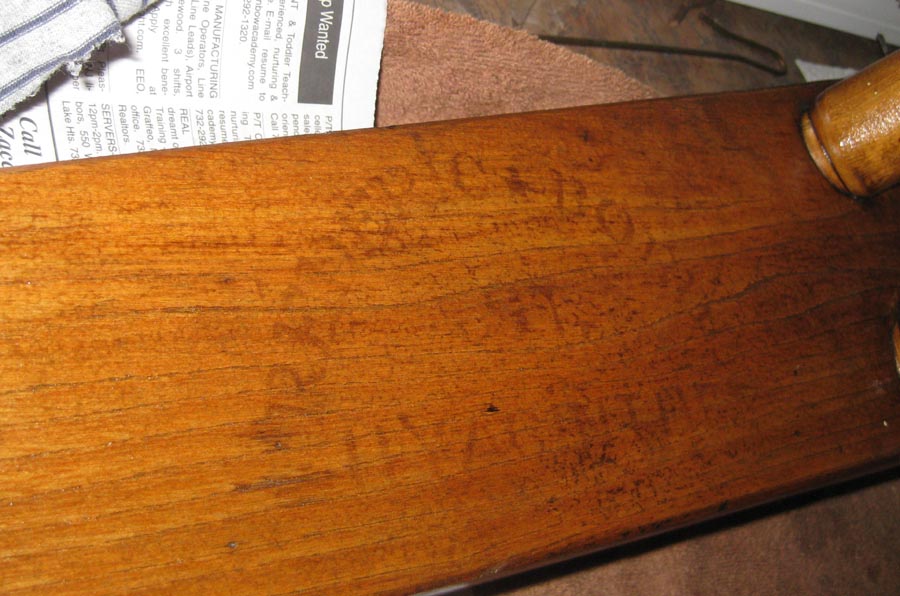
Everyone is getting a goodly coat of boiled linseed oil, including the newly-discovered Borduas wheel:

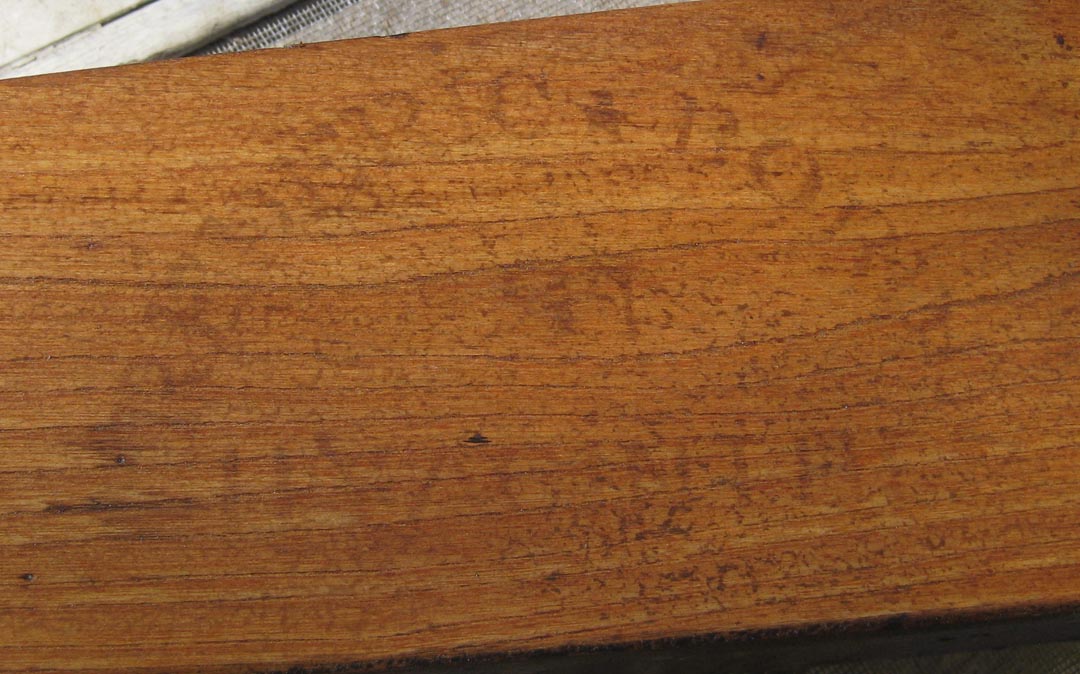
The mark really only shows from a very specific light angle and better when it is wet. I’m hoping the coat of oil will keep it visible.

The bench also has some damage that needs to be clamped:

I’m trying to get all the parts done before I start on the drive wheel. It has the same gloppy brown finish that the rest of the wheel had. What fun (not!) to get to clean all the spokes …

But I did find time for some spinning in all this!

Can this girl fill a bobbin, or what?


See You Later, Alligator!

May 1, 2011

And hello, Mr. Bordua!

So, in my spare time, I’ve been doing the “rainy day rehab” and cleaning up the dirty little Canadian Production Wheel that has been lurking in my basement since around 2003. I say “little” because it has a 27″ wheel, as opposed to the big girls with the 30″ wheel.

Her finish is really, really in bad shape. I had cleaned all the smaller parts and now had to face the bench with the uprights still in. Being a lovely spring day outside, I set up a workbench outside and hauled the cleaning supplies and wheel parts out in the sunshine.

I don’t know what the finish was on her, but it came off in great, brown, syrupy glops. It was really, really awful. But miraculously, beautiful, glowing golden wood began to appear and I took heart that she might actually look like something. She has some dents and dings that still need work, but there appeared to now be hope for her finish. All the alligator scales began vanishing.

When I began, she looked like this:

As her grain appeared, I noticed there was a pattern to it, sort of like a burling in the wood. I walked around her in the sunlight, and, by golly, what do you think?

When I finished, she looked like this:

Frederic Bordua, St. Hyacinthe

I just yesterday told someone I am never lucky enough to find a marked wheel, and here she has been in plain sight in my basement, lo these many years.

This will teach me to leave wheels sitting around unattended for so long!


What I Did on My Day Off …

April 30, 2011


Friday, April 29. Got up at 3:00 AM, on the road at 4:00 AM, in Princeton, NJ by 5:00 AM to attend a Traditional English Breakfast and see the Royal Wedding on a big screen. As a historian, and one who specializes in British History, the wedding between the future king and queen of England is as close to a sporting event as a historian will get.

On the road again by 9:00 AM, and headed to Maryland and the dreaded Baltimore Loop. It was long past rush hour, so the loop was not as bad as we have seen it in the past. Down to Catonsville, where we retrieved this lovely:

A Canadian Production Wheel of unknown lineage, but in excellent shape. She had been purchased at a house auction in Frederick, Maryland, several years ago. The woman who had her said the man who owned the house being auctioned said this had been his grandmother’s wheel and dated to around 1900, which would be smack in the middle of the time frame for CPWs.

She has the typical CPW cast iron “clamshell” tensioning devise, and the iron trivet treadle:

Her wheel crank is an “S” shape; the first time I have found one of these, instead of the usual “C” shape:

The crank has the most lovely, sinuous flow to it.

There is only minor damage on this wheel, and that is on the rim of the wheel itself. There is one spot that looks like it was dropped at one point:

The break appears to have been restained to cover the wood. Her maidens and mother of all are also a bit darker than the rest of the wheel, so perhaps were rubbed up with the same coloring. The rest of her wood is slightly lighter, like the wood in the lower part of her wheel above.

The one slight oddity (or not!) is her bobbin, which is very small, but fits the flyer. The top of the bobbin is the same diameter as the whorl, where, typicall, the top of the bobbin is larger. Here is the new wheel’s flyer assembly against another CPW’s flyer I am working on:

The new wheel’s flyer is on top. I tried the bottom flyer on the new wheel, but it will not fit. But a woodworker who makes replacement bobbins could make on with a larger top so you could spin a bobbin that holds more yarn, so this is by no means a fatal flaw.

Overall, she is a lovely-looking creature. In the upcoming week, she will get the standard bath in Murphy’s Oil Soap, some minor repair to one of her leathers, a good oiling, and she will be as good as new.


Rainy Day Rehab

April 28, 2011

I had off from work, it was a rainy day, I made some progress on the latest project wheel.

I mentioned in a previous post that the finish had turn into alligator skin. This is what the bench looks like after a washing with Murphy’s Oil Soap:

Lovely, huh? Let’s see a close-up of that:

Fortunately, it does come off. The amount of scrubbing is worth it, because there is lovely wood underneath. Here is the mother-of-all and flyer assembly relaxing after a rub-down with boiled linseed oil:

Can’t wait to get the whole thing looking like this!


Irish Castle Wheel

April 26, 2011

For those who don’t know this, on July 30 I will be exhibiting many of my antique and not-so-antique spinning wheels for the Monmouth County Historical Association in Holmdel, NJ. This means I have to now inventory and clean everyone, which was overdue any way. This is one of the major pieces that will be coming that day:

The flyer on this has made me a little nervous to work with it much. There isn’t much holding it up:

The other thing I was not used to when I got this was the footman, or lack there of. It is butcher’s twine.

Yes, it is dusty. That is why I am cleaning and oiling everyone. If anyone would like to volunteer to be my wheel-oiler-upper, feel free to step up. No money, long hours, must like cats, and the fiber you can digest!


A New Rehab Project

April 24, 2011


The successful rehabilitation of Bedelia back into a viable working wheel encouraged me to take a look at the wheels sitting on my basement workbench. Occasionally, I come across a wheel that is less than perfect and at a good price. I buy it with the intention of rehabilitiating it back into society, but, as we all know, the road to Hell is paved with good intentions. So, my workbench has a gaggle of sadly ignored wheels in various states of disrepair.

I selected the one with the least amount of damage for my next project and started on the parts that remove the easiest, the flyer assembly:

The flyer is in mint condition, with no old mended splits and little to no surface rust. All its hooks are in good shape. It is just really, really dirty. Not sure where I acquired this wheel, but the several years it has spent in my basement has not improved the dirt status any. However, mercifully, the whorl unscrewed with no issues.

The core of the bobbin and whorl and flyer shaft all need to be degunked, but everything is in working order. I’m unsure what the actual old finish was. Everything got a hot bath in Murphy’s Oil Soap and, once dry, a going over with denatured alcohol. They cleaned up fairly easily.

The legs, for once, came out easily, too. Generally, these are so tightly wedged in you can’t get them to budge. These needed a little twisting but came out without much of a fight. Either end of the treadle inserts have heads on them, so the treadle does not detach out of the front legs. I started instead on the lone back leg. Below, the left side is untouched, the right side is cleaned:

The wood has a nice, warm, mellow color and is very dense. I’m thinking it is maple: it is clearly a hardwood species but does not have grain of oak. The old finish has a quality termed “alligatoring” for its scaly appearance:

I’ve had to use a little 0000 steel wool to get all of this off, that and a lot of elbow grease. But she is cleaning up nicely. Hopefully within the next week or so, I will manage to get her cleaned up and spinning again.


Shearing Day

April 20, 2011

A couple of Saturdays ago, my husband and I packed up the car for the day and headed off to Delaware for a  sheep shearing. I had met the owner several years ago at an event and this was the first time I’d been able to attend the shearing.

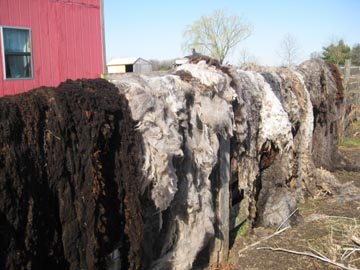
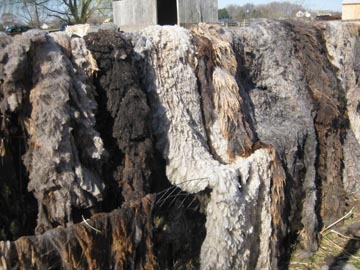
We arrived around 9:00 AM and were concerned that we’d missed much of the excitement. The fences were already festooned with shorn fleeces:

This turned out to be a warning for those who don’t patronize their fleece growers: this is all last year’s clip. As there was no market for the fleece, it was simply hung along the fence row to the benefit of the birds and mice.

The real tragedy here is that this is nice wool. The flock is primarily a merino/cheviot cross, with splashes of shetland and border leicester. If you are a handspinner, please buy fleeces from the breeders. Otherwise, this is what happens to the wool.

Arriving at the farm, we were greeted by the welcoming committee

Other barnyard representatives were more engrossed in each other:

And, of course, there were sheep:

Note the sheep on top of the hay roll. This girl was no dope — she had the best seat in the house!

Shearing was well under way and sheep were everywhere, in the pasture, being led from their field into the shearing pen, tied up along the fence row.

I was encouraged to see so many colored sheep. I love moorit fleeces and the blond outer coats generally mean a brown or moorit undercoat. Yet among the sheared sheep, so many had that lovely gunmetal blue-gray color.

This little guy was unconcerned about the shearing. He was more interested in the milk bar. Once lunch was through, he found himself a nice warm, wooly bed for a chilly spring morning.

Sheep were lined up for shearing. Not only was the farm’s flock being shorn, but 4-H members were trucking in their sheep, as well.

Thick and fast, they came at last, and more and more and more …

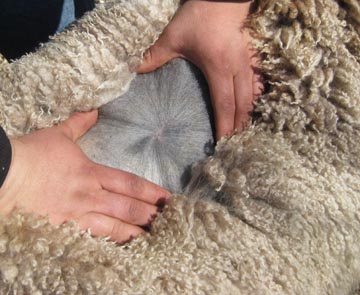
Sheared, they all began to look gray, so I started doing some fleece testing. Here is what appears to be a lovely, shaggy, light brown fleece.

However, part those locks and look at what is underneath:

This is Ralph’s lovely silver-gray fleece, one of many I acquired before the end of the day.

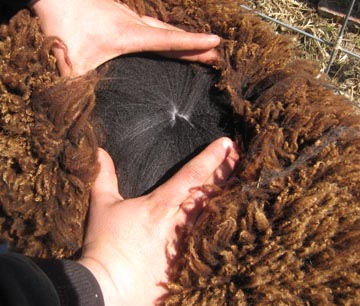
Here is another lovely and brown-looking fleece:

Yet under this seemingly-brown exterior:

A very black interior! Another buy by the end of the day.

The shearer was kept busy from 9 until 3, with several well-earned breaks. These were pretty big girls (and guys!) he was throwing around all day.

This is Colorado, another one of the big ram fleeces I bought off the hoof.

You can’t get fresher fleece that this! Still warm, and more of that lovely blue-gray.

By the mid-afternoon, almost 90 sheep had been sheared and returned to their pasture several pounds lighter.

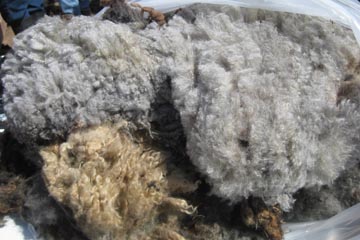
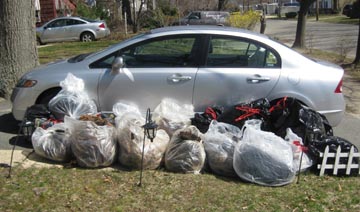
And we returned from Delaware, several pound heavier:

So, now you know. You can put 19 raw fleeces in a Honda Civic. John likened this to a wool clown car.

Laugh if you like, but these are nice fleeces. Here is a sample of Daffodil’s fleece, unwased on the right and washed on the left. I am going to enjoy working with these!


Spring Spinning

April 18, 2011

I do, occasionally, still get to spin:

In between spinning wheel rescue and rehabilition efforts, sewing, and everything else that seems to eat up time, I did manage to spin up this skein. It is Northern Lights pencil roving, but I forget the colorway:

It has been sitting here since before Christmas, begging, “spin me.” Sometimes, there are just not enough hours in a day ….