Primitive Technologies Day

November 5, 2011

I have not made a post in awhile, and for this I am sorry! Between a regular job which has turned up into high gear lately, and a seeming constant flow of spinning wheel rescues, I haven’t had much time to tend to my blogging.

Another event which took up a bit of time was the Primitive Technologies Day I recently participated in. What, you ask, is Primitive Technologies? This is a growing niche of the archaeology field known as “Experimental Archaology.” You don’t just go dig up artifacts and interpret them; you actually recreate them. Flintknappers chip out arrowheads, braintanners prepare raw hides, bowmen show how native woods were made into bows and arrows. Unlike some of my reenactment endeavors, however, modern clothing is the preferred method of dress!

An archaeology professor friend of mine runs this annual event in Washington’s Crossing Park in New Jersey. Knowing I was a handspinner, he invited me to the event but handspinning is too modern. I debated what to present and then hit on natural dyeing, with some drop spindling and weaving thrown in.

Because I had never done an event of this type before, I had little to nothing prepared. I outlined what I wanted to do, and set out to design a suitable display. In the end, here is what I came up with:

I used our regular craft show table, but covered it with 3 sheep pelts: a white Icelandic, a shaela frost Shetland, and a brown Navajo Churro with sunbleached tips. I found a basket wholesaler from who I bought several rattan trays. I was able to find wooden berry baskets from the Texas Basket Company, and lined the trays with rows of berry baskets that held fiber samples:
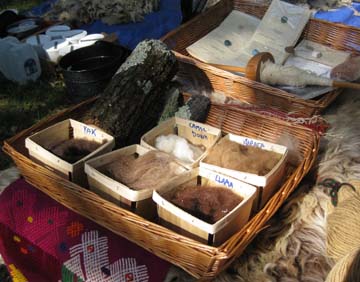
A Sharpie marker worked fine for writing on the berry baskets. I also acquired a number of primitive drop spindle whorls from various time periods. Not entirely sure who authenticated them, but the Certificates of Authenticity claim they are from ancient Egypt, the Roman period, and the pre-Columbian. I also had some quickly-dyed up samples of wool, linen and cotton, using some quickly-gathered dyestuffs:
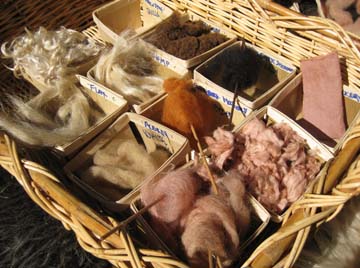


These are among the more surprising results. The rose color resulted from using pignut hickory hulls. The very orange sample in the photo center, and the very black right above it are from shagbark hickory. The black was the result of dipping wool into a very fresh batch of boiled up hulls; the orange resulted after the dye bath had been allowed to oxidize for a few days. All interesting results which need to be pursued more next season!

For the main demonstration, I took two canning pots, filled them with pre-made dye baths — one pignut hickory and one black walnut — and boiled them over an open fire:

As the time of year was prime time for the black walnuts, and they abounded in the park, we were able to add some fresh hulls to the pre-made dye bath. This gave the dye a little more depth of color.

Ours was not the only fire. There was also a demonstration of pit-firing clay pots:

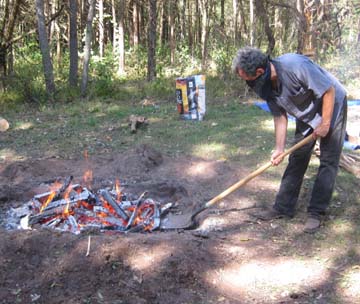
Does this guy look like a college professor? Well, he is and he’s the one whose class you want to take!  This is Dr. William Schindler of Washington College in Chestertown, Maryland. Bill is building the perfect fire to fire up some clay pots made with native clays.

Our fire was not quite as large, but certainly as hot! John uses a hooked poker to get the lids on and off.

While the fires are burning and the pots are boiling, what else is happening at the event?  Lots of flintknappers are displaying their talents:
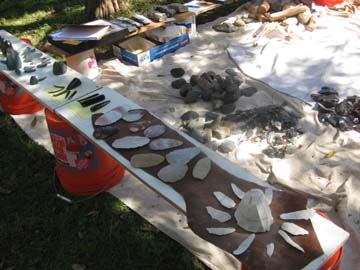
 

This fellow is making wooden bows from osage orange:

I even brought along a rigid heddle loom to demonstrate weaving basics. This made me realize how much I missed weaving!

The pottery fire pit, tended by another college professor. If I’d had more professors like this when I was in school, I only imagine where I would have been now!
As Professor Bill now had help tending the fire, he moved on to another skill … defleshing a deer hide:


The two students behind him are working over a hide that has been brain tanned. The last step is to make sure all the water is out of the hide’s cells. This is accomplished by pulling the hide by hand, sort an old-fashioned taffy pull but with leather. The resulting hide is absolutely cloud-soft. Bill says there are exactly the right amount of brains in one deer to tan the hide with.

As the day wore on, the fire pit turned to embers
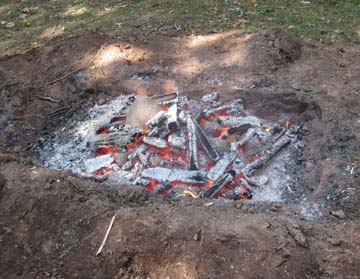
While we kept the dye pots boiling:

The ladies worked equally hard as the guys, defleshing their own deer hides:
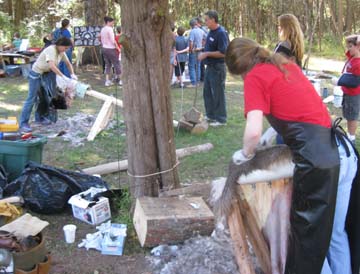
What a project for class! How ever do you grade someone on this:
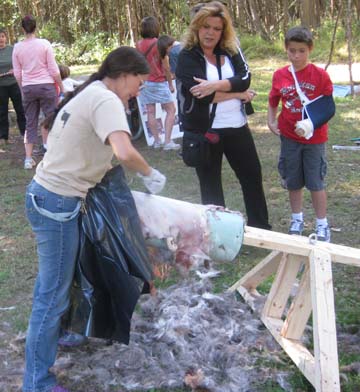
By the way, that is a pile of deer hair on the ground. Other than tying trout flies, there does not seem to be much use for the hair. It is not spinnable, unfortunately.

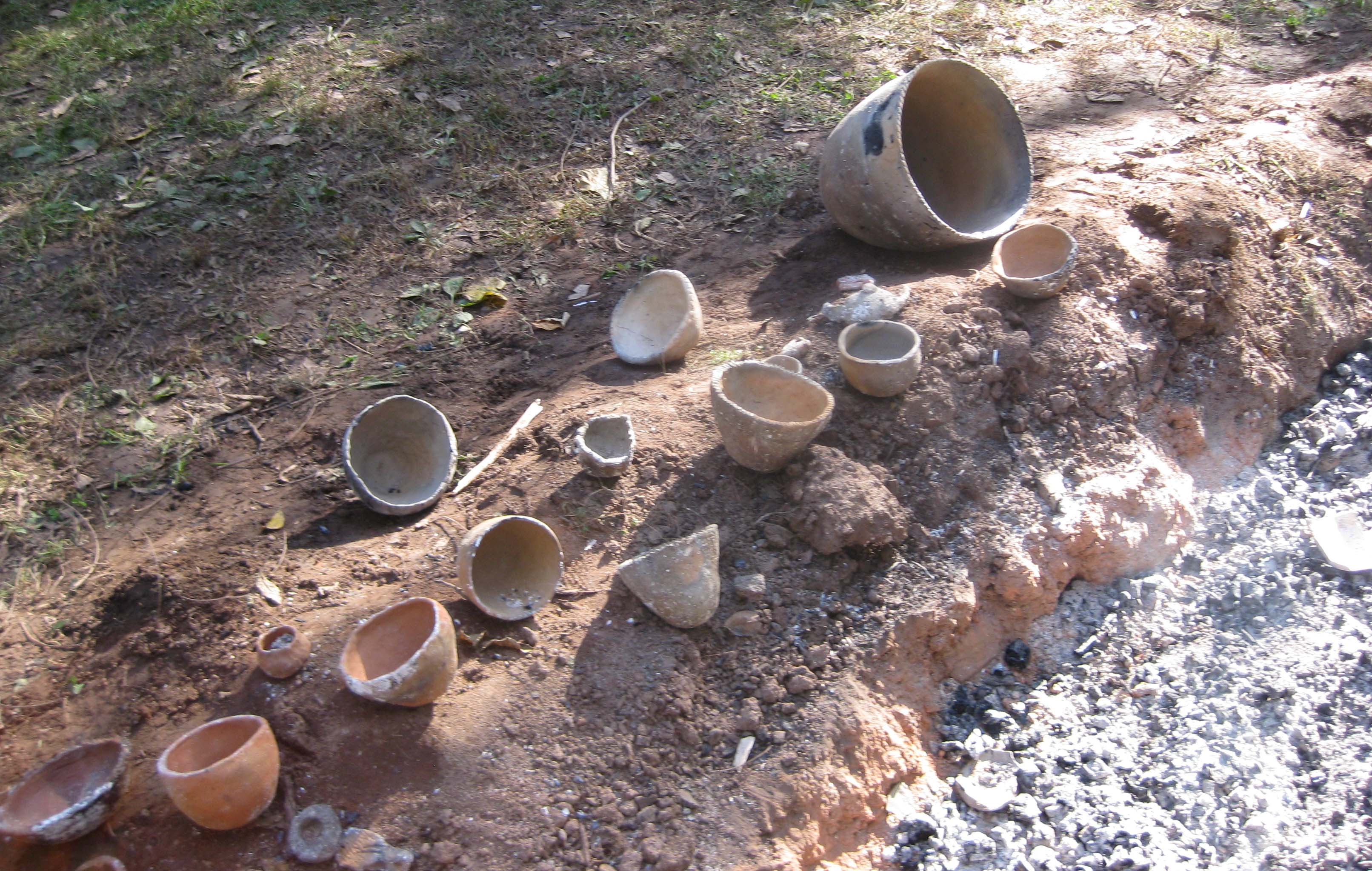
Eventually, the pottery fired was allowed to burn down and the pots fished up from the ashes to be allowed to cool slowly:

The pots are almost all student projects:

Cooled and removed from the ashes, the firing pit was pronounced a great success. Almost every piece had fired properly, very few had broken, and most rang out with a lovely tone when tapped with a stick.

The wool was dredged up from its dye bath about the same time and was pronounced an equal success”
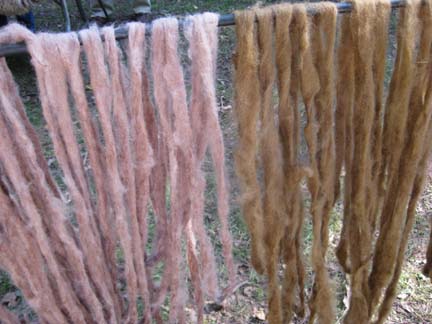
 

On the left is the pignut hickory dye which produces a remarkably clear rose pink. On the right is the black walnut dye.

The cooled pots waited collection alongside the fire pit:
John discusses fiber and dyeing with a visitor while newly-dyed wool roving dries on a rack:


It was a full day, but a successful one. I had not done much dyeing at all, let alone natural dyeing so I am now looking forward to following up on this next year, when I have a new supply of dye materials available!


Castle Wheel or Oil Derrick?

September 20, 2011

My new-to-me Irish Castle Wheel arrived from Washington State via Greyhound Package Express. We went and collected her on Saturday and I spent part of Sunday assembling her. The other part of Sunday was spent rearranging the living room in order to make space. She is Winsome Timbers Fiona by now-retired wheelwright, Ken Lennox.

This is an absolutely magnificent wheel, and one that I have been longing for for years. When I first discovered the Lennox Fionas, I couldn’t afford one. By the time I was able to afford one, Ken Lennox had retired. So, I waited patiently, hoping one would turn up. It did. Unfortunately, it was in Washington State. Fortunately, one of my Ravelry friends had experience in shipping via Greyhound Bus. She picked up the wheel, boxed it, and set it off safely to New Jersey. It arrived in something like 8 days and cost less than half what a UPS shipment the same size would have costs. Who knew?

The only thing I was a bit startled by was her size. I have always loved Irish Castle Wheels and was lucky enough several years ago to acquire an antique one. This was too fragile to spin on, so I kept the quest alive for a Fiona. Now that she has arrived, I have realized one thing. She is ginormous.

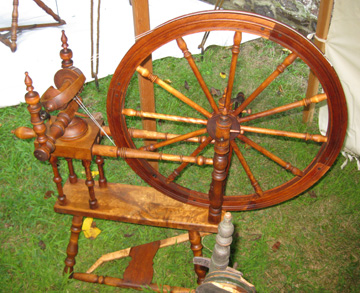
This is what she looks like next to the antique Irish Castle Wheel:

She is easily twice the size and positively towers over my poor little Irish girl, who I’d always thought was such a big wheel! If she dwarfs the Irish Castle, my “go-to” wheel for everyday spinning, my Jensen Tina II, is lost in the crowd:

The Lennox compares favorably to the Jensen as far as spinning goes. She is smooth and fast. However, her size in motion is a bit disconcerting and invites comment from my husband, a non-spinner. His first remark was that if the drive wheel ever broke loose while spinning, it would go right through the wall of the house. Then after watching the 46 inch dual footmen cranking away, he casually asked if I’d struck oil yet. Ha-ha. Funny guy, huh?

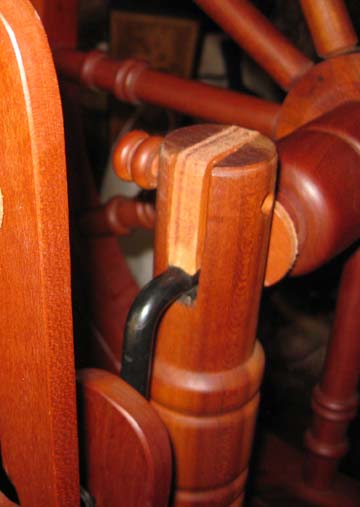
The Fiona has some interesting details. Her wheel axle slots have custom-fit leather wedges instead of wooden retaining pins:

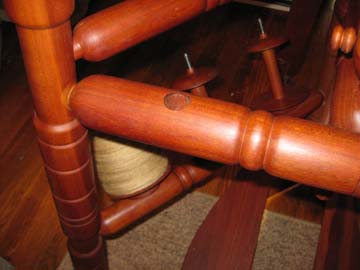
The footmen have little wire retaining pins:

She is signed and dated, something I wish all wheelwrights would do, having gone through the maddening exercise of trying to identify Canadian Production Wheels by maker. I do wish the model name, Fiona, had been added here, though!

She has a lovely built-in lazy kate along the left-hand lower crossbar:

But, best of all, she spins wonderfully well!

This is a bobbin of acorn-dyed corriedale. In the wake of Hurricane Irene, hundreds of white oak acorns were blown down. Gathered and boiled, they produced a dark brown dye which I used to dye 3 pounds of roving. But that, as they say, is a story for another day!


Whitehorse Mountain Tensioning Arm

September 6, 2011

Another message from a Whitehorse Mountain Green Springs Spinner owner! I am as amazed as their maker, Dan Yeager, was to know so many people out there still have these wheels. This question was in regards to the tensioning system. Here is a close-up of one of my wheels with the short flyer and bobbin. Does this help to explain how the tension should work? The L-shaped arm with the round disk attached has a wing nut that holds it to the back of the upright; you can loosen or tighten the tension on the driveband by bringing the disk in contact with it. Ingenious, but when I mentioned it to Mr. Yeager, he shrugged it off as “early Industrial Revolution stuff.” Well, it’s ingenious to me!


What Do I Do With All Those Wheels?

August 16, 2011

Well, surprisingly, I sometimes DO get to spin on them:

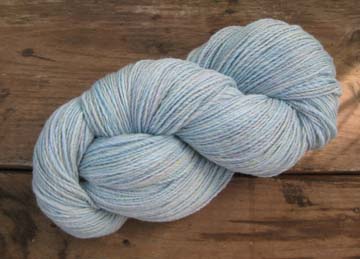
This is the 8 ounces of pale blue merino top from Twists in New Hope, PA, from our Valentine’s Day trek out there. Yes, I finally got to spin it!

Pretty, huh? Pale blue with pinks and yellows mingled in. And it made a huge skein. Not sure what it is destined for at this point. Just glad to finally get some spinning done again!


Wheel Exhibit Videos are Up!

August 16, 2011

At long last, the videos of the July 30 wheel exhibit are posted to YouTube, and please don’t think about my voice which is positively painful to hear. Yes, I had laryngitis. Yes, it hurt.  If I knew more about editing video I probably could have removed the original sound track and re-recording but, hey, everyone really only wants to see the wheels anyway!

Part One which shows the CPWs and bench wheels is here:

Part Two which shows the upright and modern wheels is here:


From the Mailbag …

August 9, 2011


Well, okay. “Mailbag” is a relative term when the mail is electronic. However, Charlotte writes:

“I am very new to spinning and looking for a spinning wheel. I would like an upright wheel – limited space & tight budget. I would like one that I can use for years not just a starter. What would you suggest? Also do you know anything about the babes wheels or the heavenly spinning wheels. I live in the desert so I was think maybe the pvc would be better as the wood would dry out – I understand you have to keep them oiled, but I know its still hard on wood. I would love any help you can give me.
I was looking on craigslist at a spinning wheel they had a white horse mountain wheel. Googled that and found you :)
Thanks!”

First of all, the Whitehorse Mountain Wheel. If you read my earlier post, you’ll see that I found Dan Yeager, the maker, after many, many years. Dan made these wheels in the late 70s and early 80s and advertised through Shuttle, Spindle & Dyepot Magazine. When the magazine folded, he thought the renaissance in spinning wheels was over and decided to move on to something else. He was quite surprised to find these little wheels that he called “my ugly beast” were still known and loved. He sold them for $75 back in the day and you can still buy them for around this now. Dan says he made them 20 at a time with scraps from the local mill and help from his brother who did all the machining. The earliest wheels had short flyers and bobbins; the later ones had a longer flyer and a bobbin with an aluminum tube core.

These are sturdy little wheels and spin very well, although they can be rattly, particularly the ones with the longer bobbin. Considering you could find one for $100 or less, it is a worthwhile wheel.

The only Babe wheel I’ve had an opportunity to spin on kept coming apart at the treadle. I like a heavy, substantial wheel and the Babe wasn’t it. We just didn’t see eye-to-eye.

The Heavenly Handspinning Bellus wheel, I think, is about the best deal you will get on a double-treadle wheel. I did buy one as a graduation gift for one of my fiber students and she seems to enjoy spinning with it. She is left-handed and having the double treadle and centered flyer seem to help with the concept of left/right orientation. This, to me, may be the best bet.

Another relatively inexpensive upright is the Ashford Kiwi, which was purchased for a different fiber student and was equally loved and welcomed. Also a double treadle.

My personal favorite inexpensive upright is a Rappard Little Peggy. The Little Peggy and Wee Peggy (only difference is the front maiden) were New Zealand wheels made during the 1970s. The wheel is lead weighted and very solid. When it gets spinning, it keeps spinning. Very happy with these wheels. Single treadle, but the treadle is wide enough for me to treadle with both feet.

And, of course, the real workhorse or uprights is the Ashford Traveller. Sometimes you can pick one up cheaply on Ebay or Craigslist. I got a great deal on one that was missing its flyer, but because the wheel is still in production all I needed to do was go to the Woolery.com and buy a replacement flyer. And at the same time the wheel listing was playing out, there was another listing for an Ashford Jumbo flyer which I also got for cheap and so was able to outfit the thing for a fraction of what the dealers are asking for new ones. There is also a double-treadle kit available for these although I have yet invested in one. You can’t kill an Ashford. They may not be the classiest thing going, but are solid, sturdy spinners that last forever.

I used an Ashford Traveller as my main wheel for years, and then lucked out and found a relatively inexpensive Jensen Tina II which introduced me to the wonderful world of double-treadling and I never looked back.

Sometimes you need to try out different wheels to see which one is the right fit. Check to see if there is a spinning shop or maybe some sort of fiber event nearby that you could attend to try out a wheel at. Big sheep and wool shows like Estes Park in Colorado typically have vendors who will let you try a wheel. Another good place is Ravelry.com — there are a number of boards like the Spinners Central where you can go to ask for people’s opinions on wheels. There are many, many brands I haven’t even touched here but can only comment on the ones I know about!

Hope this is of some help and that we get you up and spinning before long!


Whitehorse Mountain Woodworks Green Spring Spinner

August 4, 2011

Everyday for about the past week or so, my blog gets tons of hits from a Google search on the Whitehorse Mountain Woodworks spinner. Please, don’t be shy!  Who is it that is looking for information? Fill out a comment and let me know if I can help you find the information you obviously are so actively seeking!


… And Even More Wheels!

August 1, 2011


We had wheels from Norway:

From Sweden:

Germany:

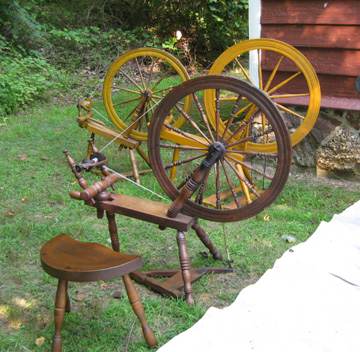
Canada:

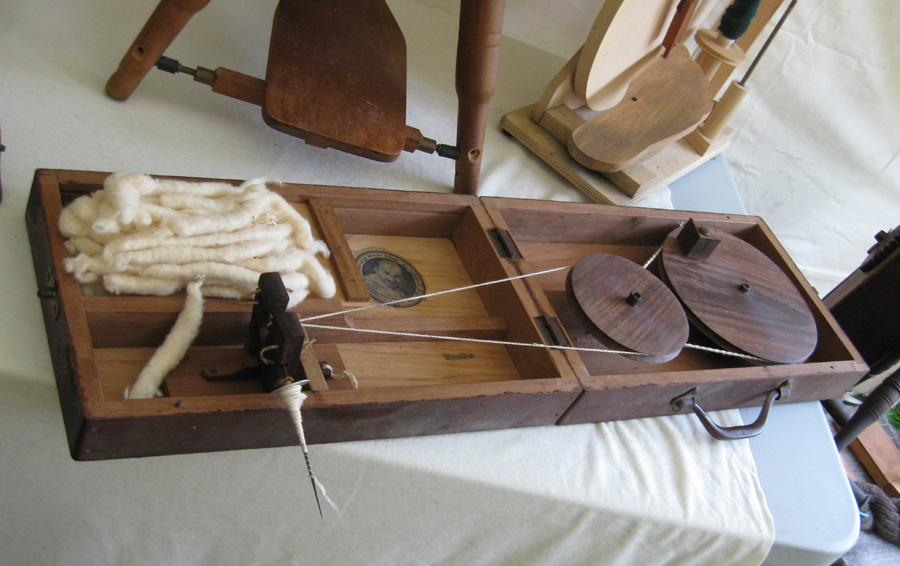
And India:

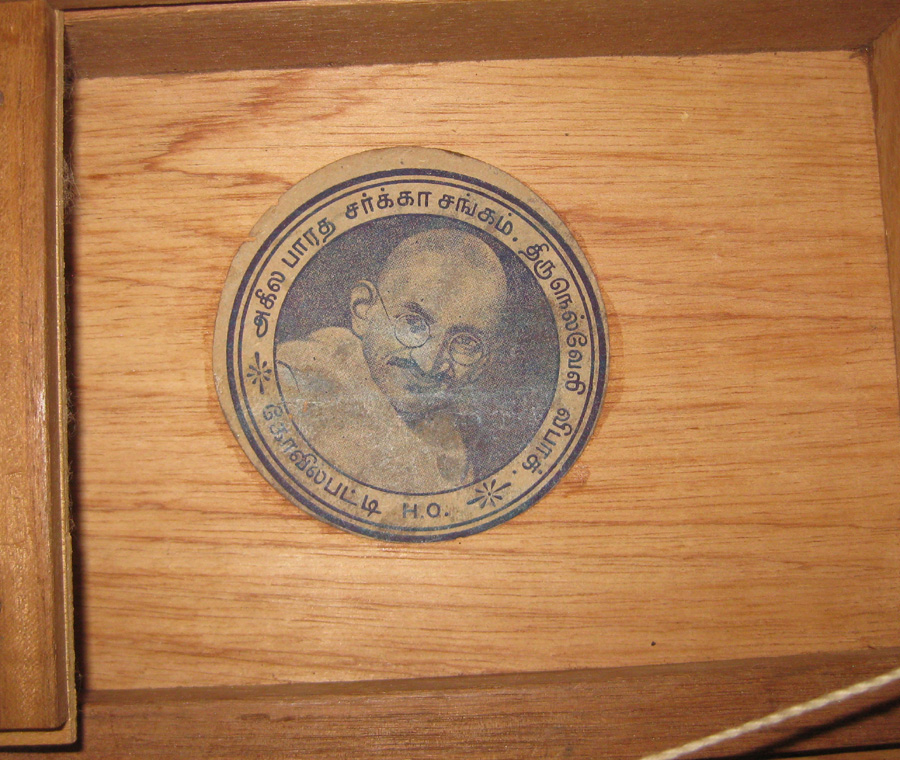
The box charka even had a Gandhi label inside:

This was particularly appropriate, since the exhibit title came from a quote by Gandhi: “For every revolution of the wheel spins peace, good-will and love.”

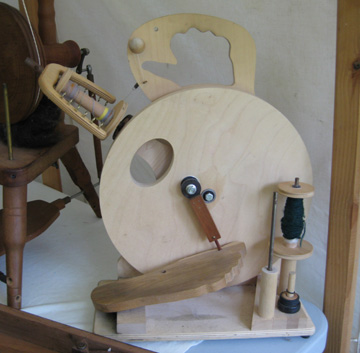
We had a modern-day wheel with fanciful woodwork:

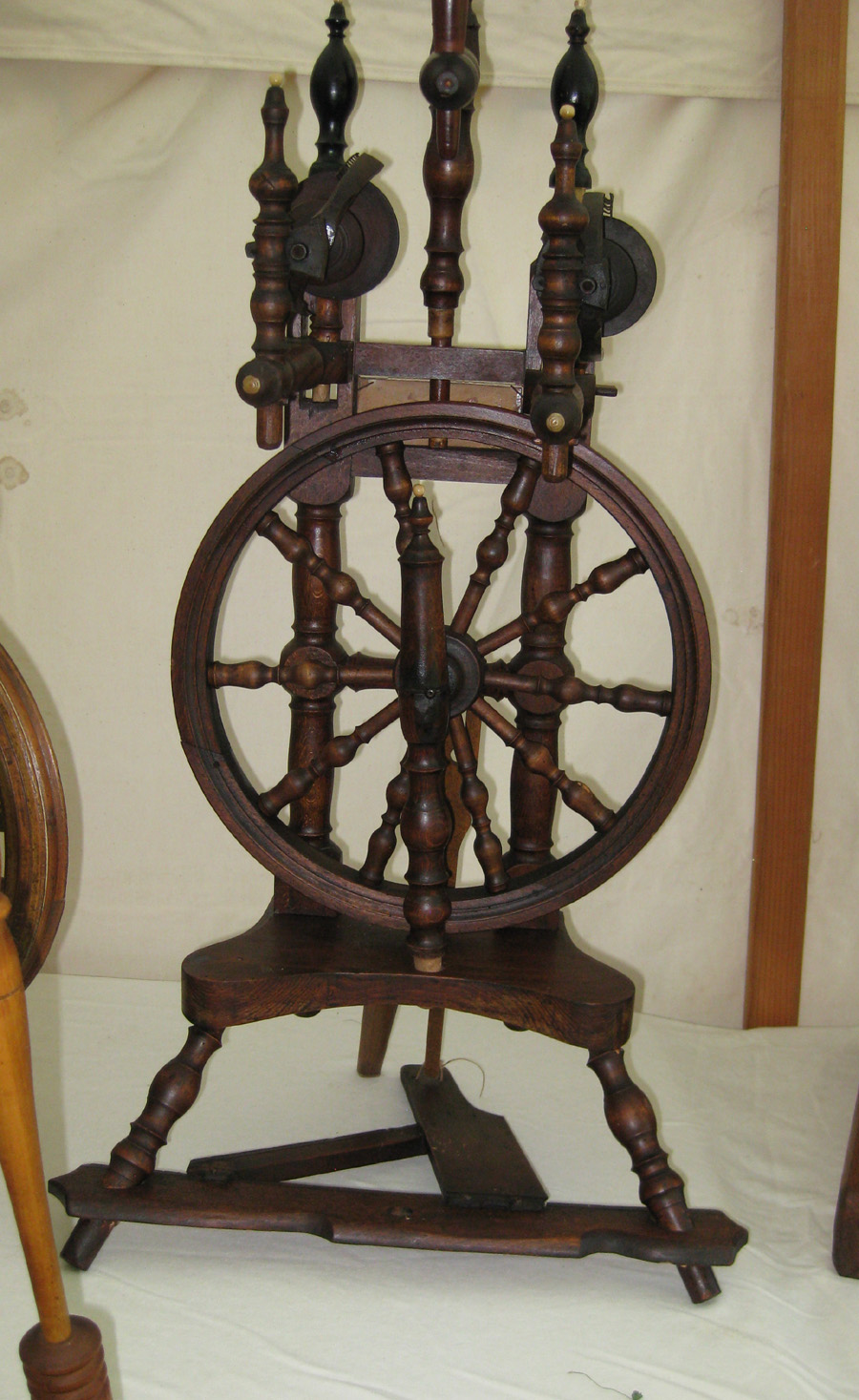
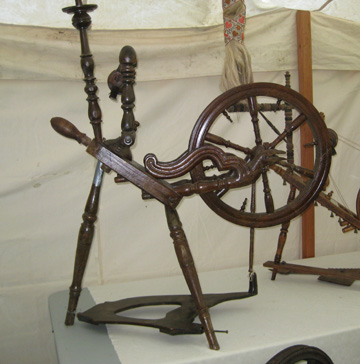
And a very old wheel with fanciful woodwork:

But all things must end, and as the sun started below the tree line, we began to pack up our tents and steal away into the evening:

No event like this can be without the support of others, I would like to thank my “crew,” Jenn and Jess, Pati and Taryn, Pati’s husband Will, who went out for subs, and my husband, John, who patiently went through months of wheel cleaning and preparation, who rented and loaded (and unloaded) the van, supervised tent set up, and otherwise made himself useful in a dozen ways. I would also like to the the Monmouth County Historical Association for letting us host the event at the Holmes-Hendrickson House and to their education coordinator, Glen May.


Wheels, Wheels, and More Wheels!

August 1, 2011

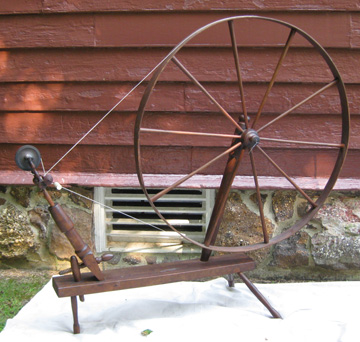
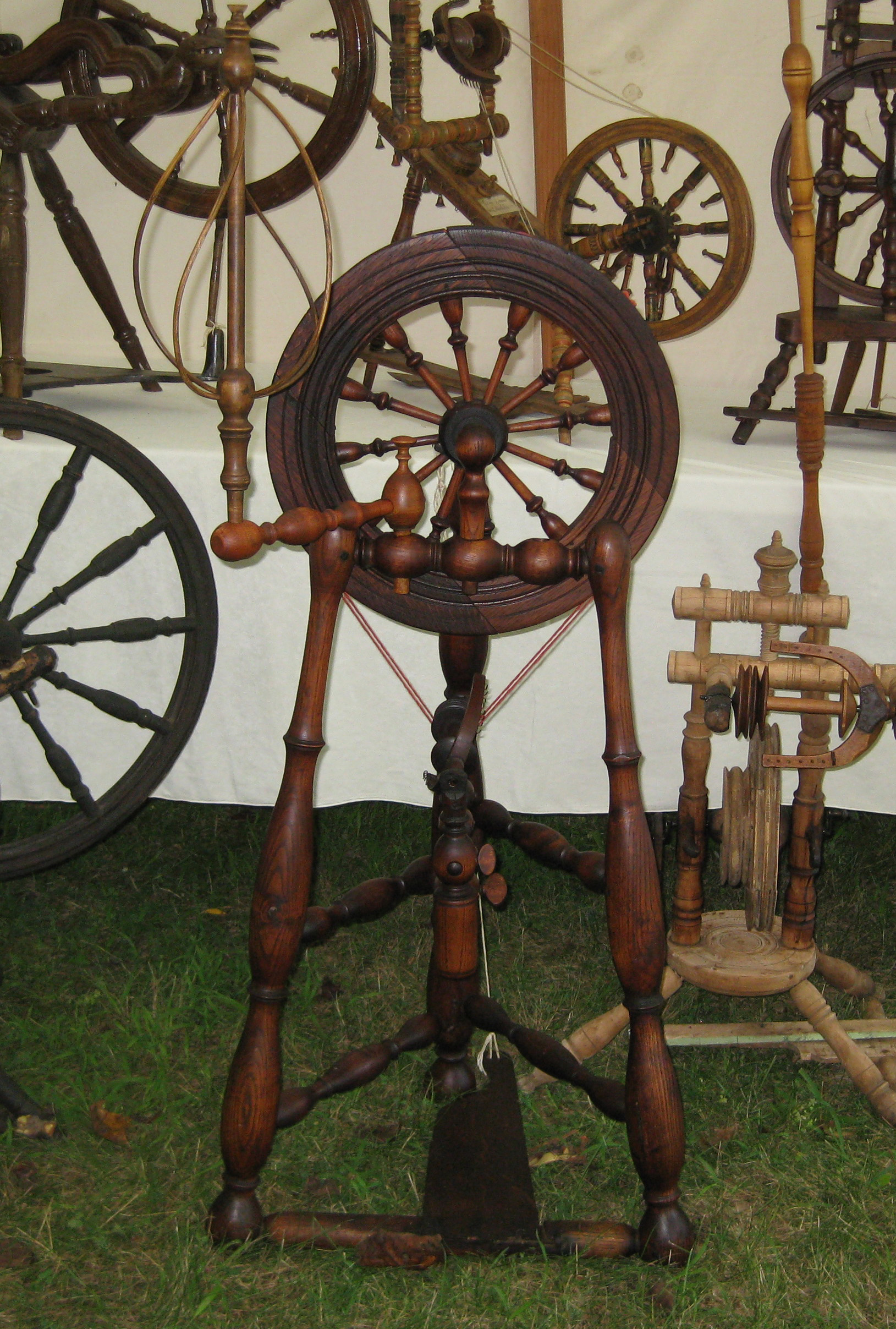
The exhibit included as wide a range of wheel styles as I could manage to put together. We had big wheels:

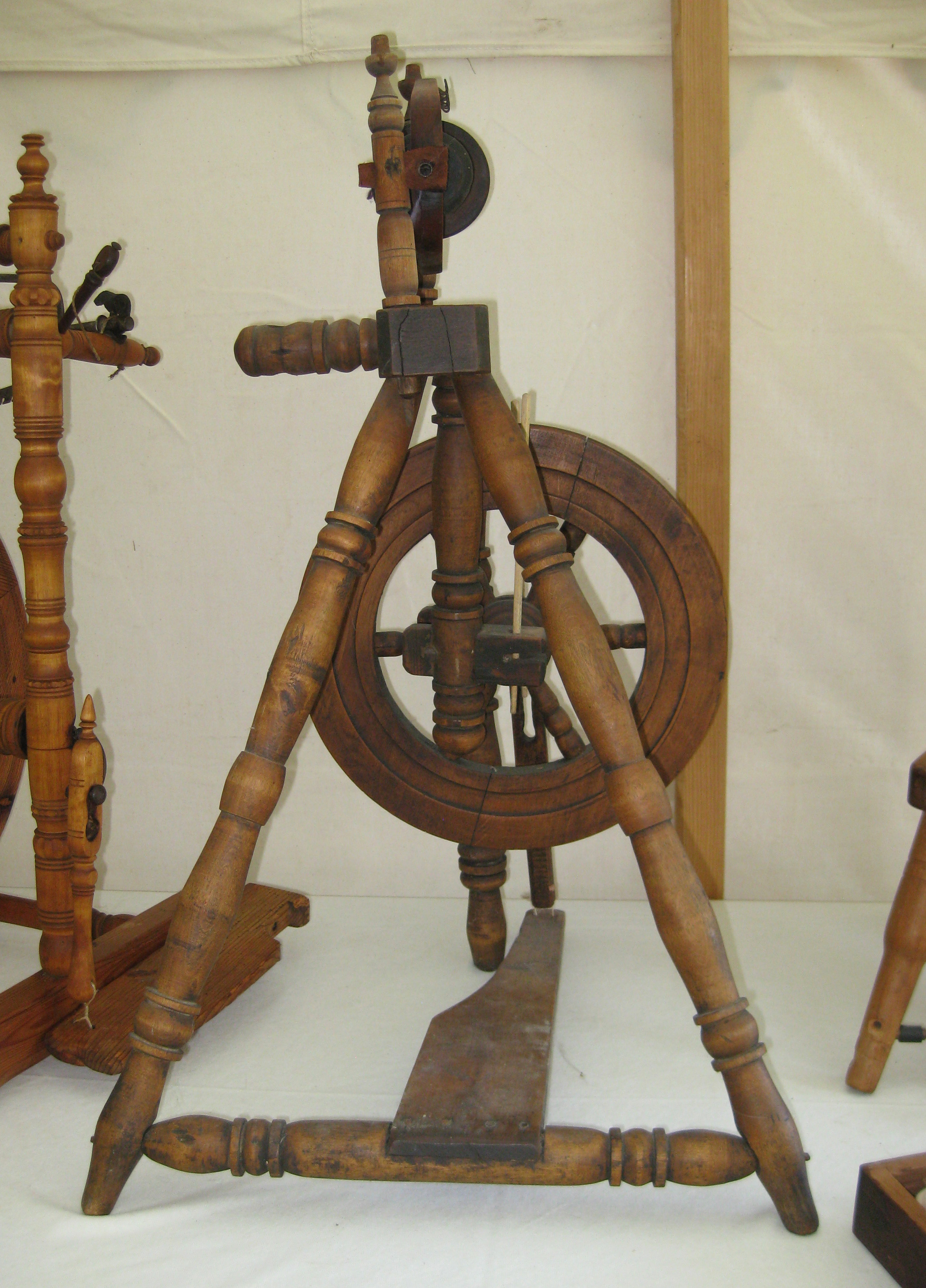
We had small wheels:

We had wheels with the wheel on top:

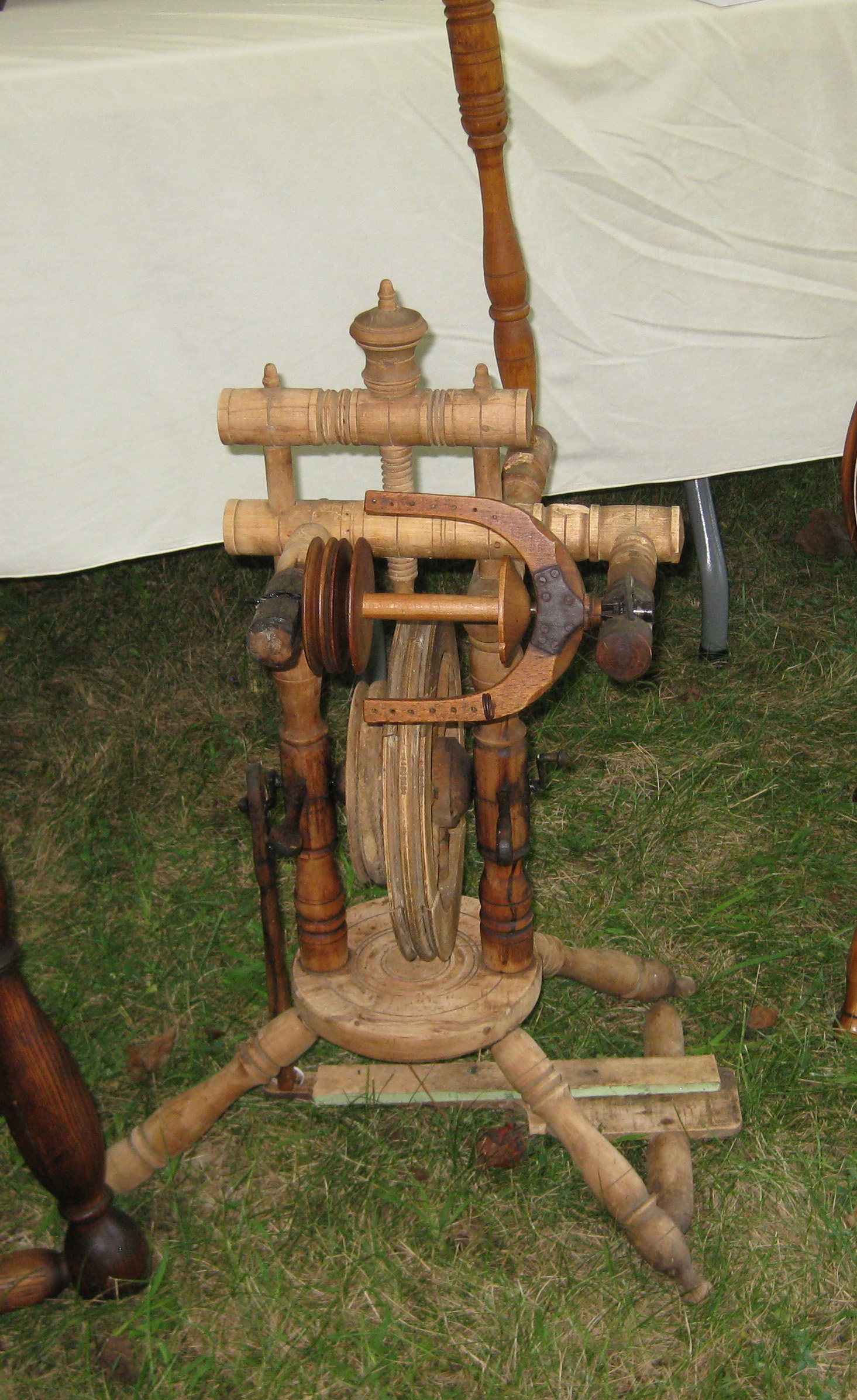
And wheels with the wheel on the bottom:


The Wheels!

July 31, 2011

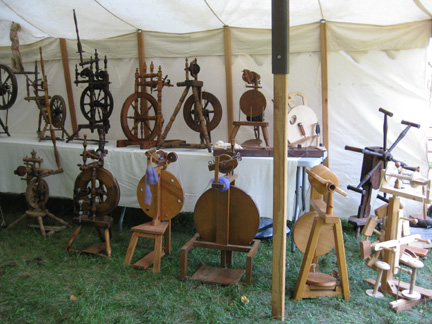
First, some long shots!

Here:

And here:

And here:

Close ups to follow soon! It takes time to size all these shots!