Rhinebeck 2013 Sweater: Enniscorthy by Maggie Jackson

October 14, 2013


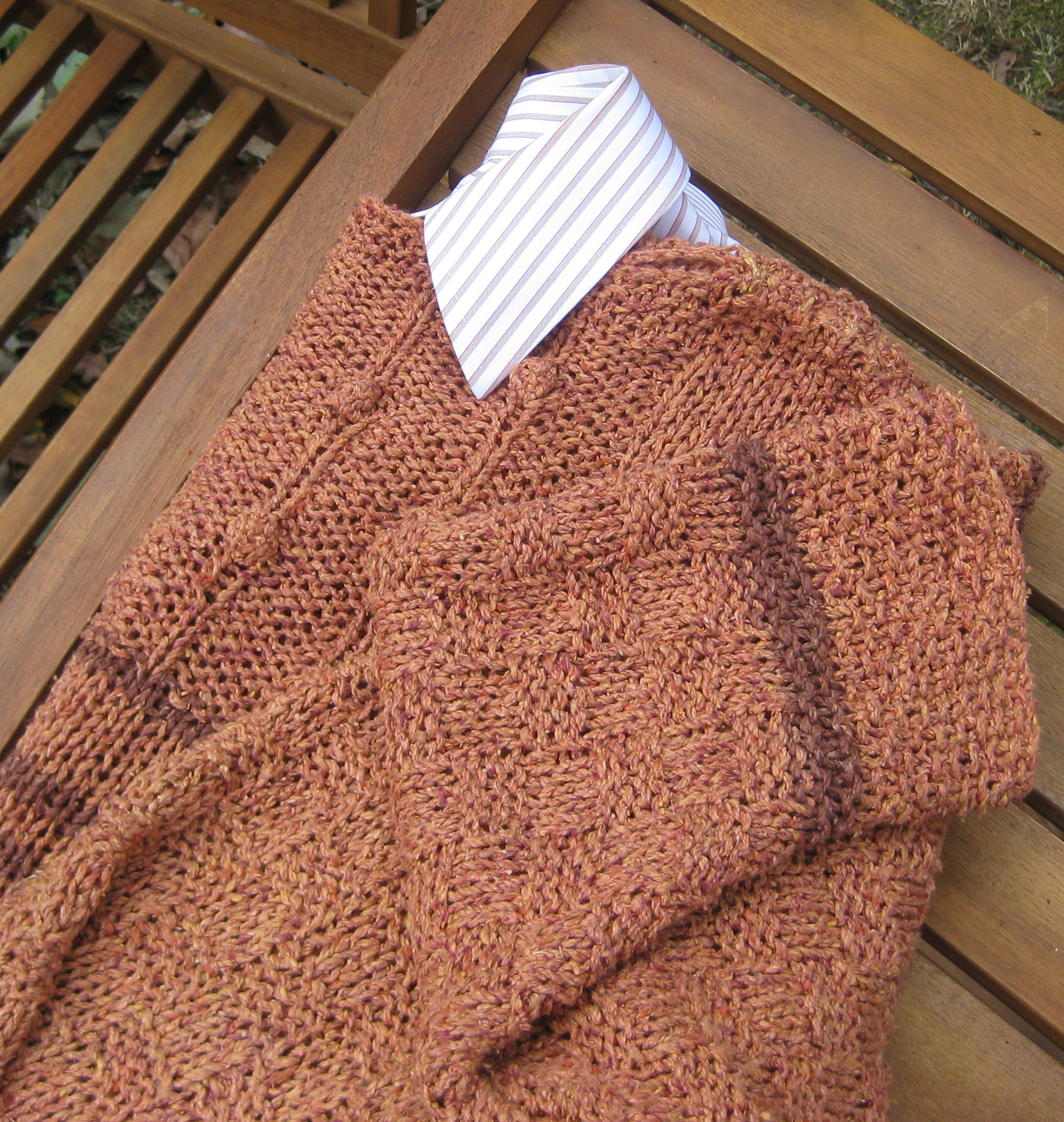
Done!

01 enniscorthy

02 enniscorthy

03 enniscorthy

04 enniscorthy

05 enniscorthy

06 enniscorthy

07 enniscorthy

08 enniscorthy

09 enniscorthy


Yarn is Rowan’s Summer Tweed: Sweater is mango, bolero is torrid, contrasting stripe is toast. Bolero on a size 9 needle, sweater on a size 8 and this helped with sizing. The bolero is a tiny bit large on me. Great buttons from the local JoAnn’s crafts.

This is the first full sweater I’ve ever knitted so, in case you can’t tell, I am just overjoyed that it came out as well as it did. Are you going to Rhinebeck on Saturday? Say hello if you recognize the sweater!


Maggie Jackson’s Enniscorthy Bolero

October 6, 2013

Irish knitwear designer Maggie Jackson wrote almost two dozen books of patterns for her lovely garments. It was not until I stumbled on Volume 16, Irish Fashion Knits, that I discovered her ornate and seemingly elaborate designs. Seemingly, because they are deceptively simple. Most are squares and rectangles and many are knitting samplers, containing squares and panels of different stitches. Combined on the same panels, the different stitches blend and contrast and play off one another to produce truly unique garments. The instructions are not always easy, being written as abbreviations, but a little perseverance and they are fairly easy to parse out, section by section.

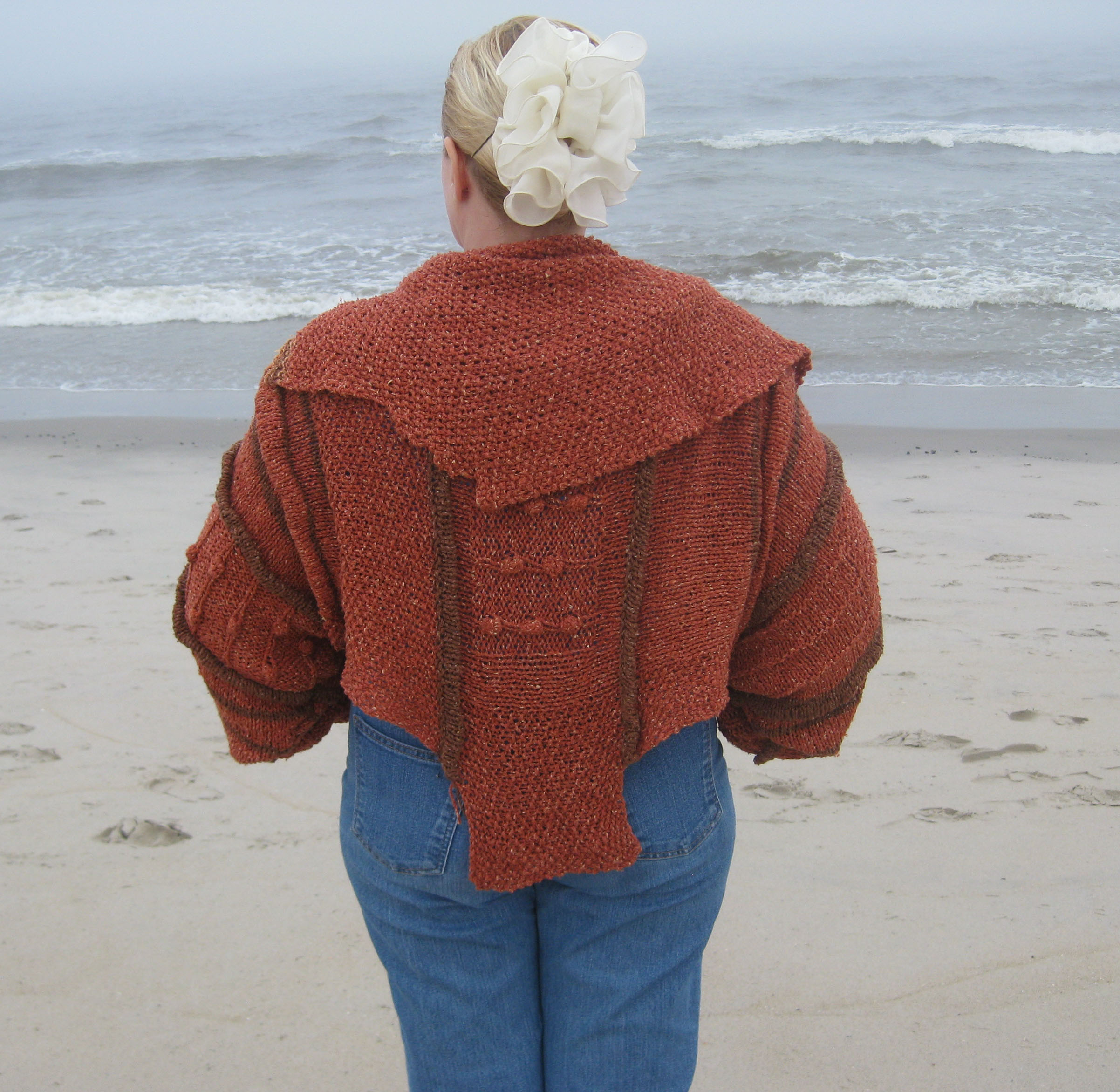
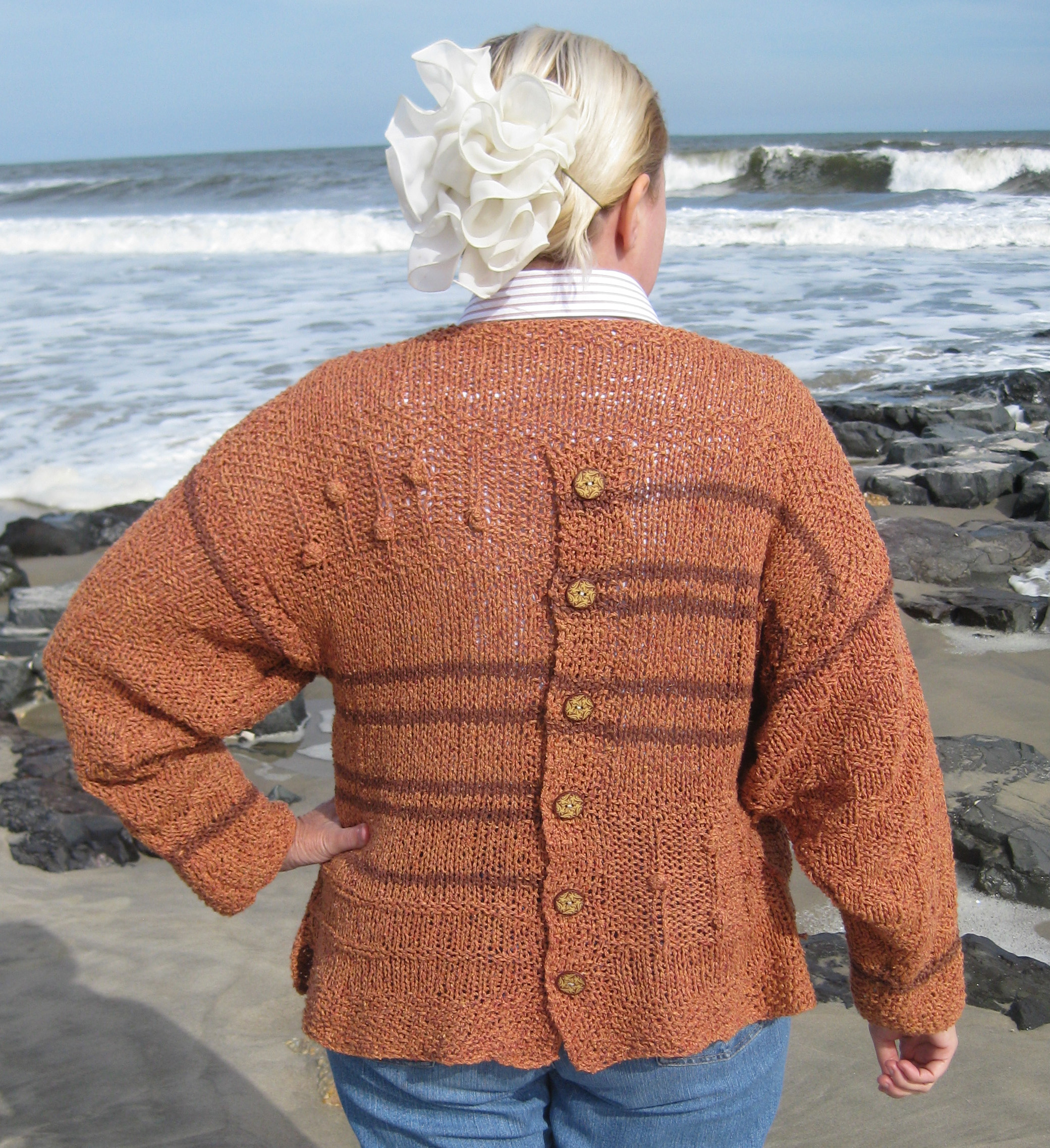
As I was finishing this year’s Rhinebeck sweater, the Enniscorthy, I realized I hadn’t photographed LAST year’s Rhinebeck sweater, the Enniscorthy Bolero. So, on a foggy, misty Sunday afternoon, off we went to the beach and the newly-restore boardwalk:

01 kat

The Enniscorthy Bolero has an asymmetical closing and a huge, sweeping collar that doubles as a hood. There are miles of moss stitches in this!

02 kat

I also learned how to do a bobble stitch with this. The bolero is knitted in one piece, starting with the left cuff and ending on the right — knitted right across from one arm to the other, stitches cast on and cast off as needed.

03 kat

I couldn’t find  the Maggie Jackson yarns readily available in the U.S., so substituted Rowan’s Summer Tweed. The bolero is knitted in the color “Torrid,” with contrast of “Toast.” Along the final edge of the hood I added two rows of “Mango,” which is the color of the matching sweater I am finishing up.

04 kat

Summer Tweed is 70% silk and 30% cotton. I have read that silk is four times warmer than wool and I believe it. This was extremely warm on a 60-degree day, even with a loose knit that let the breezes through it.

05 kat

In the “if I were to do it all over again” department, the one size fits all was a little big on me. Because it is knit end-to-end from the cuffs, this tends to stretch end-to-end, even with the structuring of tubes to prevent stretching. I had to go back and take it up at the shoulder line, folding the fabric and stitching it in additional tubes. This did tuck it up by a few inches on each side. If the arms stretch again, I would be inclined to add two more of these folded tubes, one on each arm.

06 kat

This knitted up fairly quickly (for me), probably about a month’s time. It took just under 9 skeins of Summer Tweed on a size 9 needle and I had I known it needed to be shorted, I probably could have gotten it done in 7 skeins. It was a challenging pattern to decipher, and certainly challenged my knitting skills by making me learn new stitches, so all and all, I would need to say this was a successful project.


Northanger Abbey Mitts

October 4, 2013


I am a big mitten fan. To me, they keep my hands warmer than gloves. So, I’m always on the lookout for a good mitten pattern.

I am also a fan of the specialty pattern magazines like Jane Austen Knitting, even though the patterns are typically aimed at sweet young things who envision themselves as Austen heroines. However, there are often accessories like shawls and mittens that are cross-generational enough as to not give me the “mutton dressed as lamb” look, if you get my meaning.

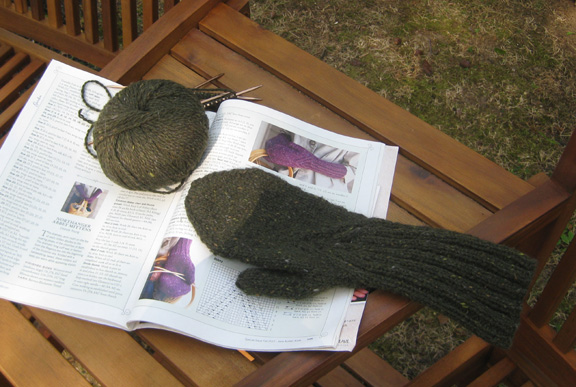
These mittens were one of those pattens:

02 mitten

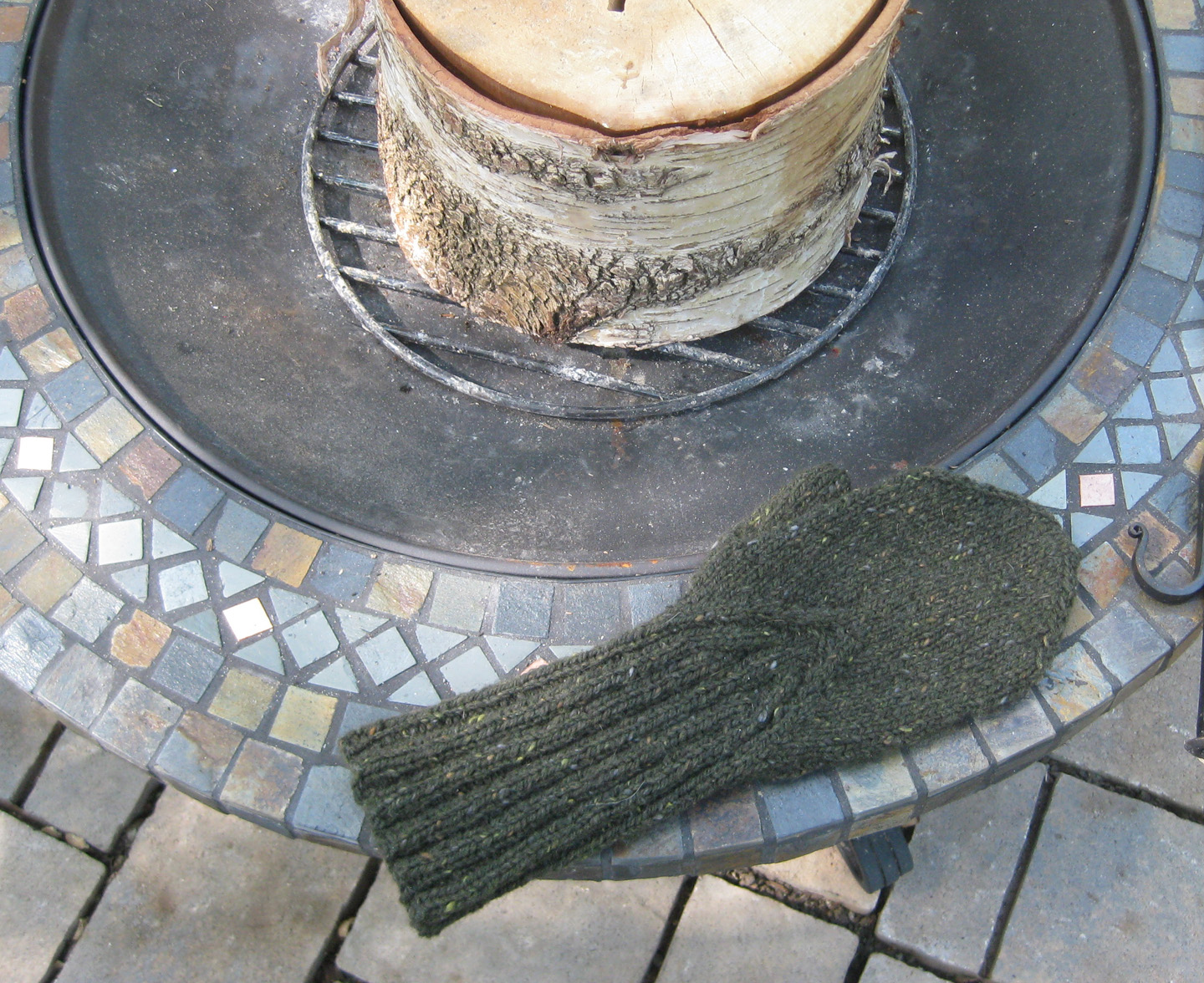
I happened to have two skeins of Berroco Blackstone Tweed in my stash, although a different color than used in the original pattern. The simple design appealed to me, along with the long arms. Something else I liked — while this yarn is suggested for use on a size 8 needle, these mitts use a size 5 and I always like a dense fabric. This is dense but keeps its soft hand.

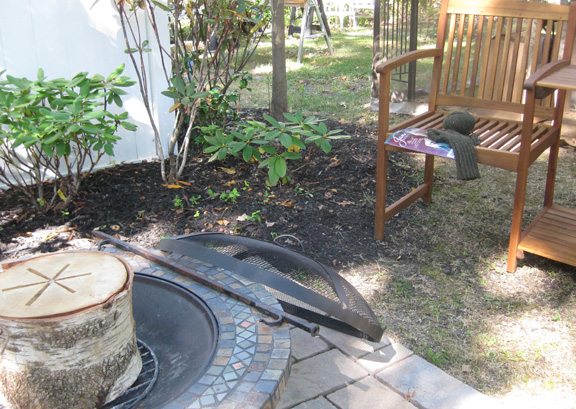
It is not quite mitten weather yet, but the firepit area makes a lovely knitting spot:

03 mitten

The weekend is shaping up to be another one of mild, sunny days so I am hoping the get the mate to the first mitten completed.

01 mitten


Something for Autumn …

September 23, 2013


Okay, so I know you all are saying, hey the flowers are pretty, but what about the spinning wheels? the knitting? the wool?

Just to prove I haven’t forgotten how to spin, here is the recently completed skein of polwarth and silk called “Pumpkin Spice” …

pumpkin spice

I’m finishing my Rhinebeck sweater and hope to get a few shots of it on this upcoming weekend ….


Rhododendrons

September 16, 2013

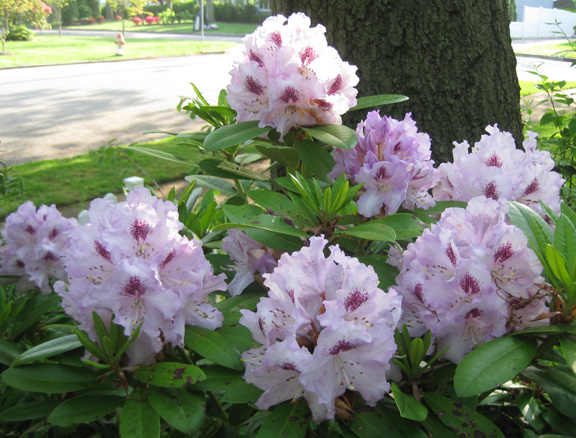
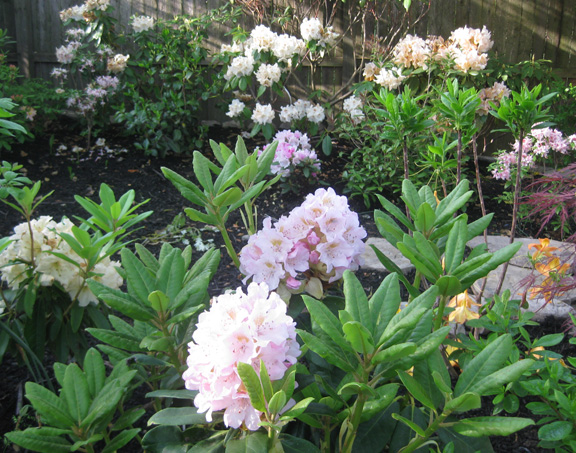
The rhododendrons this year were, in a word, spectacular. This was good considering the amount of time and expense that went into installing them!

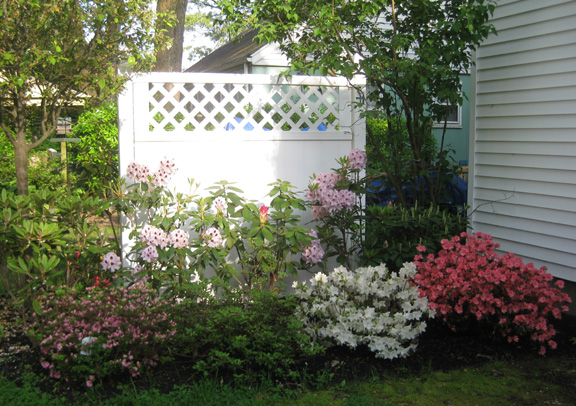
One new bed was very small but important. This was screening for the firepit area. This is the view looking east; the firepit is on the other side:

may 016

I have a fellow who helps with gardening and he installed the section of fence and the crabapple tree to the immediate left of the fence. I put in markers for him to dig the holes and I dropped in the shrubs. We have a great working arrangement this way.  Some of the rhodys in this section are:

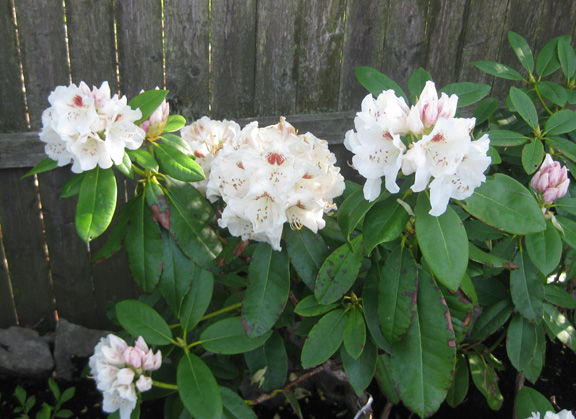
Victoria’s Consort:

may 003

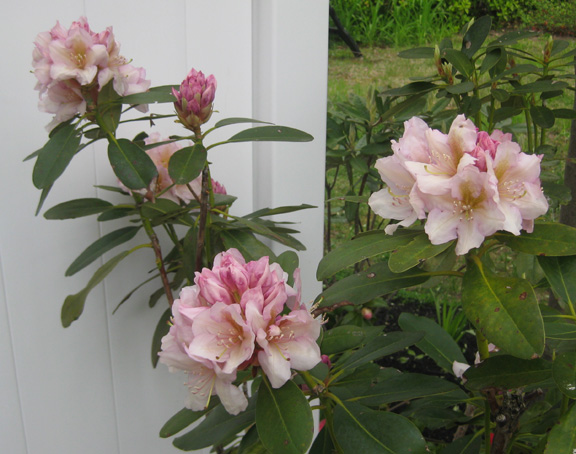
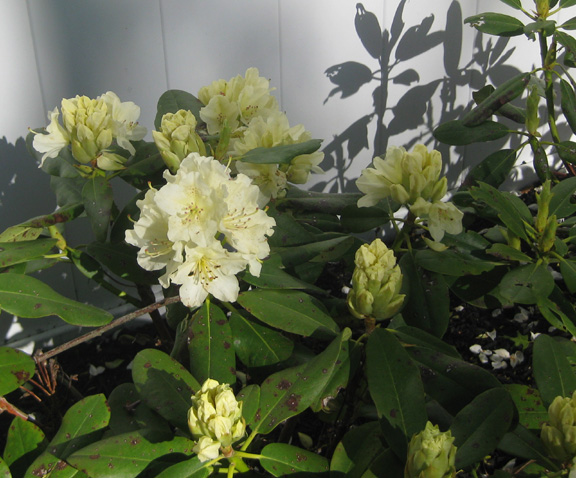
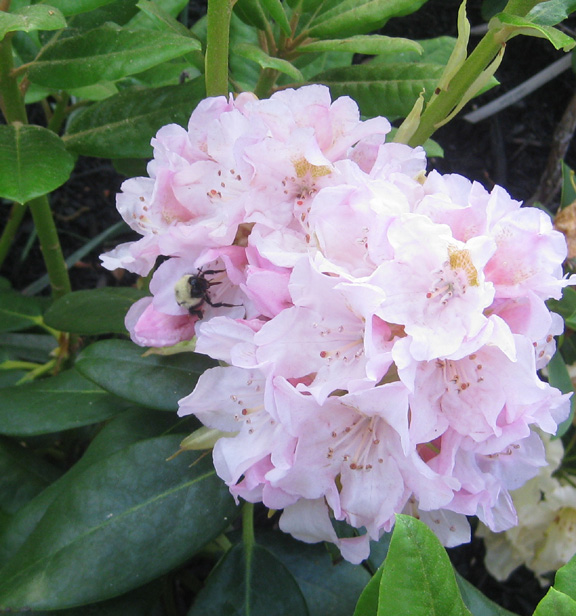
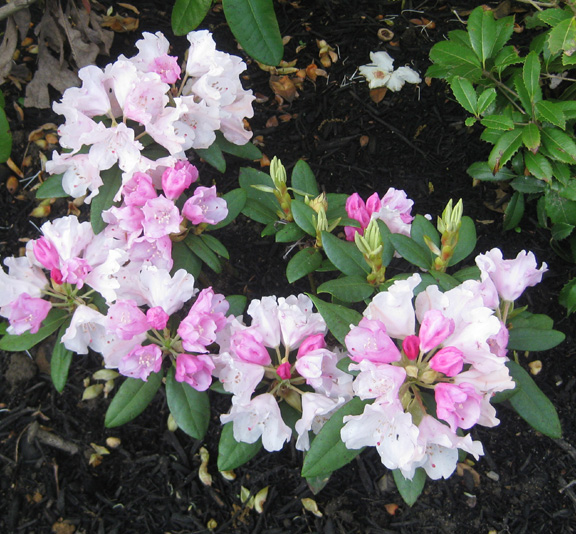
Victoria’s Consort is interesting because it is billed as a white rhody with a yellow throat. Eventually, you do get a creamy white but they start out a very pale mauve with a darker bud. After a week or so, they go to this:

may 004

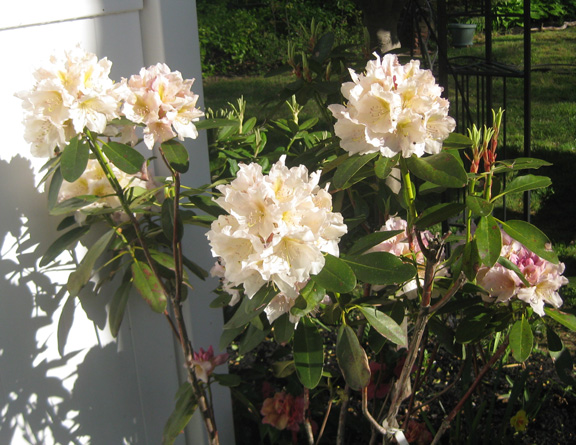
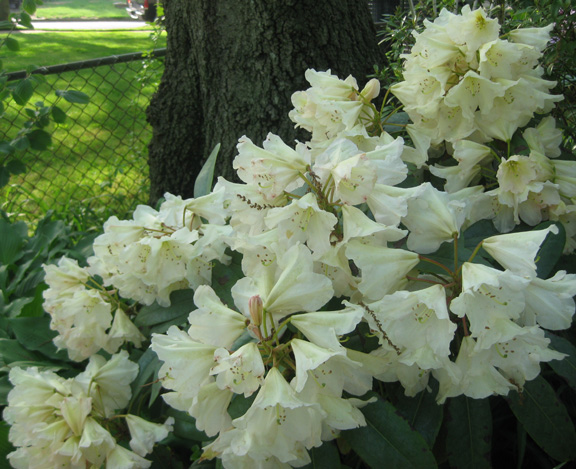
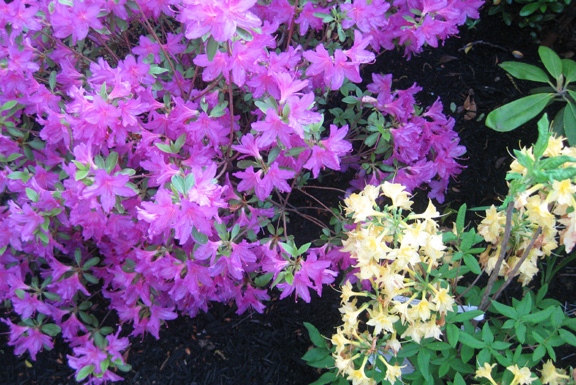
Next to those are some Capistranos, to carry over the yellow theme:

may 008

The Capistranos also get a bit lighter as the blooms age:

may 025

One usual rhody with the unfortunate name of “Calsap” is white with a distinctive eye:

may 017

Another variety with the colored center was a bit of a mix-up and no one is sure what variety it actually is. It was tagged as an Edwin Beineke, yellow with an apricot throat, but that clearly was a mistake:

may 009

Happily, even though this wasn’t the color I was after, I had purchased 3 of these, and they performed wonderfully well, whatever they are. The one in the front yard produced masses of blooms:

may 012

Nearby, we added a REAL yellow rhody, Buzzer Beater:

may 015

And next to that added a really interesting variety, Percy Wiseman:

may 014

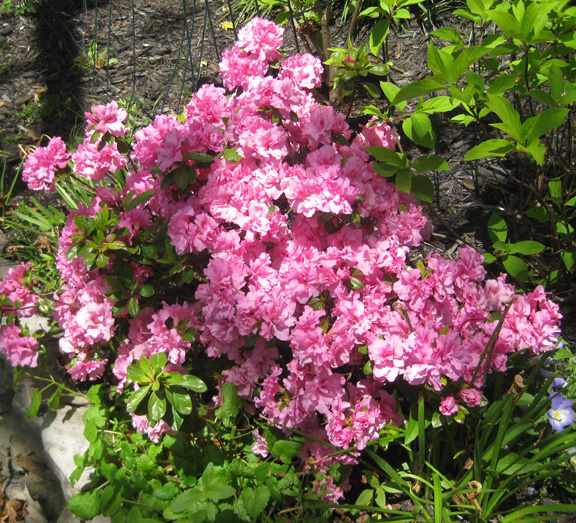
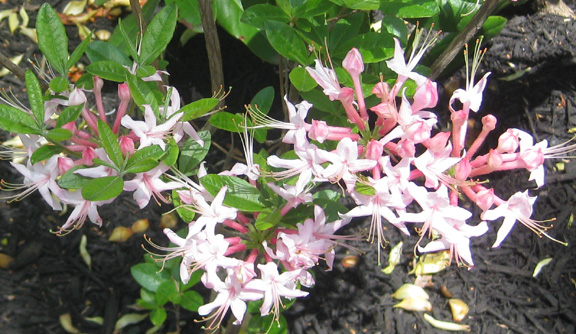
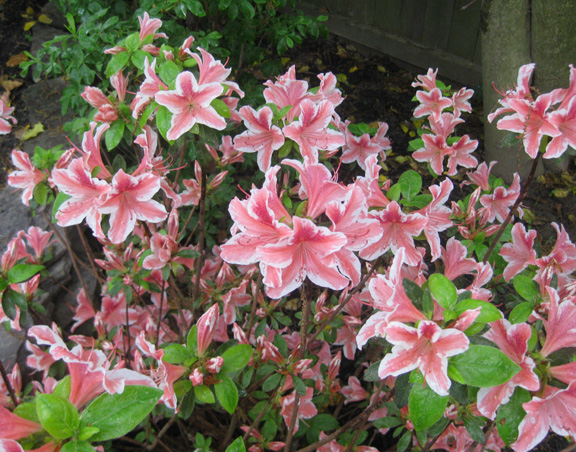
We plugged in some azaleas, too, both evergreen and deciduous. Not sure of the variety on this evergreen one:

may 010

This is one of the deciduous ones, and it is fragrant:

may 011

And this is not fragrant, but who needs fragrance with this color? From the Confederate General series of deciduous azaleas, this is the “Stonewall Jackson:”

may 013

Again to the back yard, where I finally finished installing a raised bed. Not just a raised bed, but a two-foot slate wall filled with soil and containing a seating area that you walk up little stone steps to get to. My back will never be the same again:

may 022

This bed contains a variety of things, but mainly rhodys and azaleas, due to the shady location.  I think one of the showiest varieties we put in was the “Janet Blair:”

may 021

Another variety with a colored throat. This was labelled only as: smirnowii hybrid Sandy/Hank. The beauty of finding a nursery where the breeders can’t stop producing new varieties — this doesn’t even appear to be named yet:

may 005

This was another multi-color variety, Trinity:

may 018

An evergreen and a deciduous azalea and again, the deciduous one is scented:

may 019

And a lovely evergreen variety called “Ben Morrison:”

may 027

And that, good friends, wraps up the garden for May and after all these photos, I’m guessing you realize a.) why it took so long to post them and b.) why gardening has cut into my spinning and wheel restoration time!


May Garden Update

September 3, 2013

What better way to start autumn than by looking back at May? May turned out to be such a riotous month of garden blooms that photos won’t all fit in one post. Well, they would fit, but it would be a really long scroll. So, first, an update on the basics.

There were Siberian iris along the front walkway:

may 026

There were still bulbs blooming in the back garden, where it had been relatively shady. The flowering pink almond bloomed into mid-month and the variegated hostas started up:

may 001

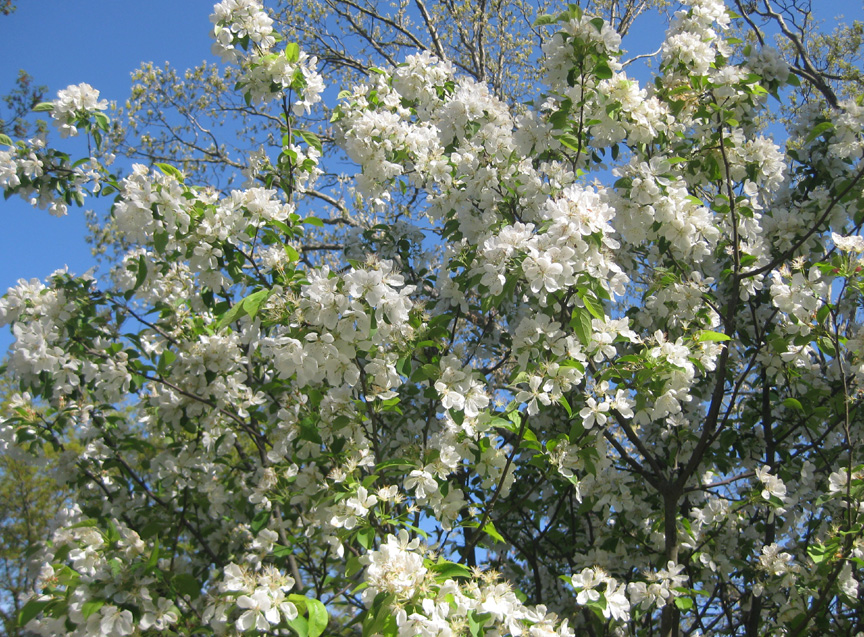
In the new area framing the fire-pit, the crab-apple blooms turned from pink to white (more about the rhody under it in a separate post):

may 002

I love the crab-apple. I had seen it blooming at the garden center the year before, but was not ready for a tree until the fall. Fortunately, it was still there AND half-off by the time I got to it. The guy that does my gardening took one look at it when it was delivered, and calmly stated, “That root ball has to be 400 pounds.” Still, he managed to drop it on a dime, right where I wanted it and it performed exceptionally well:

may 007

Further in the back yard, we had the less showy, but none-the-less lovely spring blooming redbud:

may 006

In the new shade garden, we had bleeding hearts:

may 020

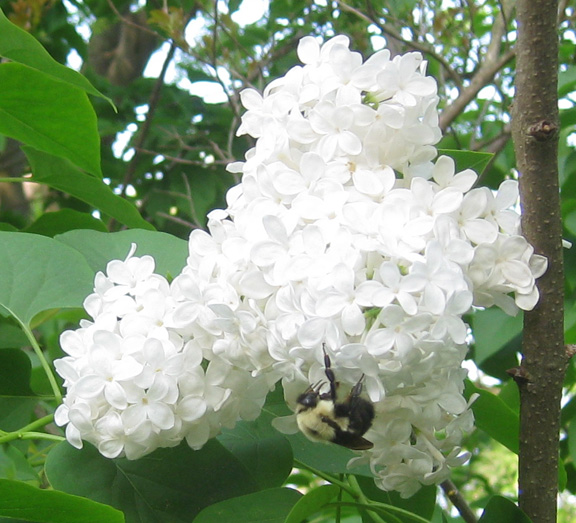
And as the month wore on, the white lilacs bloomed in such profusion, you could smell them all the way to the front sidewalk. The bees loved them:

may 023

I finally got one to light long enough to get his picture:

may 024

White lilacs, perennials, blooming trees, they couldn’t hold a candle to the real stars of May. Coming up next: RHODODENDRONS!


The Slaughter of the Great Wheels

August 16, 2013


Warning: this is not a happy story. This is a story of when wheel rescue goes very, very wrong and the result. If you love great wheels in particular, steel yourself. In fact, you may not want to know this.

I get home from work on Wednesday and my husband says there is a voice mail from another wheel collector who specializes in great wheels. The message is that there is a cache of great wheels in New Jersey and can I help, if need be?

I call back. It seems that another great wheel expert we both know was contacted by a woman who now lives in Illinois, but who has property in New Jersey where she used to live. On the property is a trailer with over 30 great wheels, all dismantled. The owner is returning to sell off some items and wants to get rid of the wheels. Apparently, she purchased them at auction years ago but needs helping sorting and figuring out what is there, so the GW expert was called in.

The GW owner is asking $400 for all the great wheels and parts. My contact notes that he and the other expert have agreed to go in halfsies on this, if the expert thinks the wheels are worth saving. I offer to kick in part, too, or pick up the whole $400 if the expert decides to pass. He notes that most, if not all, are missing their spinning head but I point out that with a whole crate of heads in my kitchen, this wouldn’t be a problem. I offer to take off work to go along, we decide to let the expert take a look at the wheels and determine what the next steps are and I am happy to go along with this, since taking off work right now is virtually impossible.

So, Thursday comes. I go to work but rush home because it is our anniversary and we are going out to dinner. Come home from dinner and decide to check my e-mail before I go to bed. We have a VOIP phone system in work that converts voice mails into .wav files and emails them. I see two messages from an unusual phone number and play them back. It is the GW expert.

She called around 6 PM; she has been at the farm with a friend since around 2:00 and they haven’t made a dent in what is there. They did count 35 benches, 31 wheel posts and 20-some spindle posts, but then found other parts, so think they had approximately correct amounts. They never counted the drive wheels, but said there were at least 35. Everything was separated. Then it came out that the woman never actually saw ANY of them put together correctly. She’d won an auction lot of all the parts and put together several herself before giving up and storing everything for years.

They find the ones the GW owner assembled, but they are incorrect. They spend time trying to match up the rest. Finally, GW expert calls me to say it will take probably two weeks to actually figure out what is there. She has pulled out one wheel that I wanted, and 3 others that they were able to assemble, but she is unsure how to proceed and it is getting late. She says she thinks they will put everything back in the trailer and figure out in the morning how to proceed.

I get this message at around 11:00 Thursday night, so wait until Friday morning and call back around 10:00 AM. GW expert tells me that by the time they left the night before around 8 PM, the GW owner and her husband were talking about going back to Illinois today. She gives me GW owner’s cell phone number and I call.

GW owner is already on the road and seems annoyed that I have called. I explain who I am, who referred me, etc. She tells me that she and her husband are already heading back in separate vehicles and he has the trailer. She has one of the complete wheels that she is keeping and he has the other wheels. But, not exactly. Just literally, the wheels.

GW owner has decided that, “since the wheels aren’t worth anything,” she and her husband have loaded up the trailer with JUST THE DRIVE WHEELS. She says that when she comes back to New Jersey, IF she comes back, she will sell the benches and wheels posts for scrap lumber.

I beg. I plead. I try to explain the concept of wheel rescue. Finally, GW owner says a little irately, “If you want the wheels, you can just get yourself in the car and drive out to Illinois and pay me $30 for each wheel. That’s what I’m going to sell them for, for decorations.” I explain, again, that the drive wheels without the benches and posts are useless, as are the benches and posts without the drive wheels. The only way the collection is potentially valuable is to put them back together and spend the two weeks seeing what matches up.

No go. The woman will not call her husband to see where he is. She claims “he is probably already to the Ohio state line,” but will not check. He may have been 5 minutes out of New Jersey for all I know. She cannot understand why anyone would possibly be interested in a load of old wheels but says, “These wheels don’t matter. They are no good to anyone. There are thousands of good wheels out there, I see more in Illinois that I ever did in New Jersey. Everyone in Illinois has one and they are all complete and in great shape. These ones are good only for decoration.”

I realized I was talking to a stone wall and had to get off the phone before I said something like, “look, you effing idiot, don’t you get it?”

I called the GW expert back and broke the news to her. She was horrified. She had not been given a clue that this would be the solution to matching up the wheels. She thought they were just going to be put back in the trailer. She kept saying “If I’d only known.” She said a few of the drive wheels were split or missing spokes, one was out of true, but they were by-and-large in decent shape. Among the benches were a marked Farnham and a marked E.S. Williams.

The rest of the day, I had a sinking feeling that can only be described as this: It felt like being at the New Holland horse auction at the end of the day when the tractor trailer full of horses pulls out, headed for the slaughter house in Canada, and you can’t do a damned thing about it except watch it go down the road.

I think the thing that bothers me the most is this: It is not just the loss of so many wheels, which may or may not have been able to be brought back to spinning condition, but the loss of the history that goes with them. The history of the Farnhams, the Williams, and all the other makers. The history of the unknown spinners and how thrilled they were to find themselves with a new wheel. The work the wheels were put to. The stories of how they eventually came to be where they all were together, trapped in a trailer in New Jersey. All the history no one knew about them, and never will, now. They will be sold off for garden trellis, for chandelier bases, for god knows what. And the benches will be sold as scrap lumber.

It was not a good day in the wheel world. I remember at my first job, one of the guys there had a favorite saying, “Some days you eat the bear, and some days, the bear eats you.” Today, the bear is somewhere between
here and Illinois, picking his teeth with a great wheel spindle …..


50-Below Mittens

July 16, 2013

What better thing to think about in 100 degree weather (that is Fahrenheit, not Centigrade) than mittens?
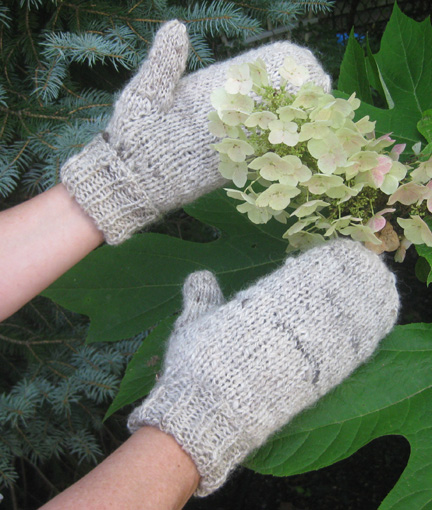
014 mitten

I’m one of those people who, in winter, are always cold. And when it is REALLY cold out, or there is snow to shovel, I invariably think, “Why didn’t I knit myself some mittens?
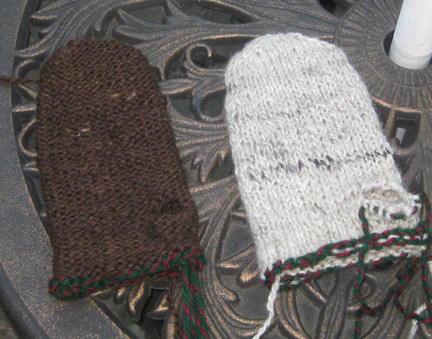
Truthfully, at one time or another, I had knitted mittens for myself. I even knitted and felted a pair. But I never hit on the ultimate mitten, the one that held up under the coldest conditions.

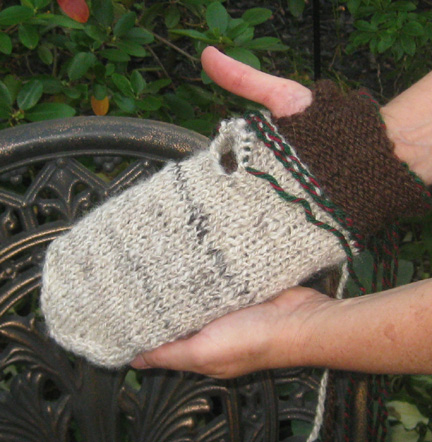
Suddenly, the other day, a vision appeared: it was a vision of a double mitten. I had been sorting through some leftover balls of handspun wool, trying to figure out what I was going to do with it when I had this vision. MUST. MAKE. DOUBLE. MITTEN. I saw how, too. In that blinding flash, I suddenly envisioned exactly what I needed to do.

The first thing was measure the base of my hand right above my skinny little wrist and then around the middle of my hand, just above the thumb. Approximately 6 inches. I like my knitted fabric a little on the stout side for something like mittens, so I studied the yarn and determined it would be 30 stitches on a size 5 needle, going up to 32 above the thumb gusset.I cast on 30 stitches on waste yarn and knitted in the round for 5 rows. I allowed only 7 stitches for the gusset, then slipped it off on some waste yarn. I did not want to double the thumb, but keep it single to allow movement. I did three yarnovers to reconnect above the gusset and kept knitting around until above my index finger where I decreased and rounded off the tops.

I did this, four times, two of the outside color and two of the lining. I turned the liner inside out:

003 mitten

And carefully put the two layers together:

005 mitten

I made sure they lined up exactly where I wanted them:

006 mitten

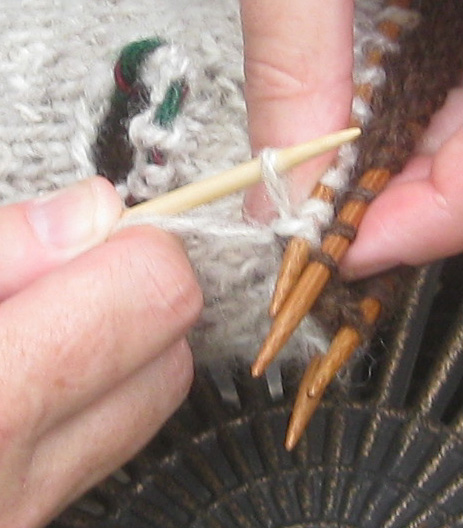
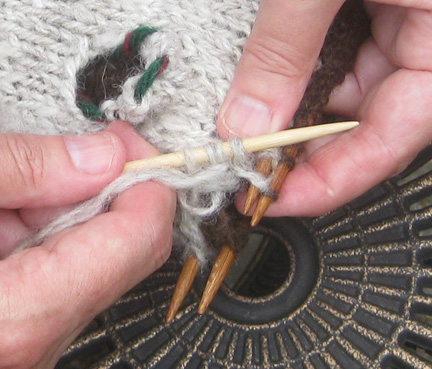
Once they were both lined up, I pulled out the waste yarn and reinserted the needles into the live stitches. I then carefully worked my way around and knitted two stitches together the whole round, one from the outside and one from the liner:

007 mitten

Very carefully drop off the two knitted stitches as you knit them. Here were are with the first three sets finished:

008 mitten

At the halfway point. Outside and liner are joined for one half of the mitten, the two needles are the other two sets remaining:

009 mitten

A little further, and soon all the stitches are doubled up and you are back to working in the round:

010 mitten

You can work the cuff in any combination of ribbing you like. I also knitted the cuffs long enough to double-up if desired or wear long. It doesn’t take long until the only thing left is the thumb. You need to do the same thing with the 7 thumb stitches, knit them together. Then you will need to pick up stitches around the open to knit your thumb.

011 mitten

Did I say the only thing left was the thumb? Well, on one mitten, anyway. This was so much fun to concoct there was no “second mitten syndrome” here:

012 mitten

It wasn’t long before I had mittens, lovely mittens, warm wooly mittens of my own devising and my own specifications:

013 mitten

Warm. Wooly. Waiting for Winter. I used up some of the leftover handspun. Husband pointed out that he tends to be the one to shovel snow, so he will get a pair, too, and I will use up more leftover handspun. Double mittens to stay warm in. AND I have long cuffs to tuck up my sleeves so snow doesn’t run down my arms. Does it get any better, even if it IS 100 degrees outside?!

015 mitten


Irish Quartet

July 15, 2013


It’s hot, I’m tired, I’ve been fighting the local battles against rezoning to build huge commercial development in our postage stamp sized town. I had my check-up for Lyme’s today and was told I was progressing well, but will still be on antibiotics another month. I was supposed to start jury duty yesterday but called the automated line and found out my group was only on call and not needed tomorrow. I’m kind of crapped out but feel like I should make a post.

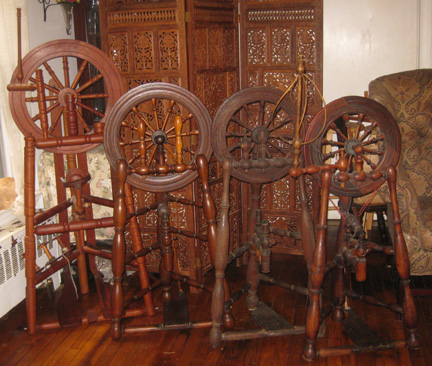
We recently rearranged the living room to do some work (actually, we rearrange it about once a week doing work of one kind or another). The work presented an opportunity to bring together four of the five Irish Castle wheels in the collection:

irish castle wheels

From left to right: the Ken Lennox Winsome Timbers Fiona, the newly-acquired at auction Pennsylvania wheel, my birthday wheel from the Lambertville Flea Market, and my original Irish Castle acquired from collector Bill Leinbach. Missing is the wheel rescued from Sinking Springs, PA and currently with Fred Hatton for a new flyer.

What intrigues me about these wheels is that no two are alike, even with size. The antique wheels, that is. That Lennox wheel is in a category by itself as far as size!


April Garden Update

July 8, 2013


This is a very belated update on the garden status. Once things started blooming, the gardens took off fast. Between new plantings going in, deadwood coming out, and constant deadheading of old blooms, there has been a little time for working on the computer. Perhaps I need to take my laptop into the garden to keep up on blogging!

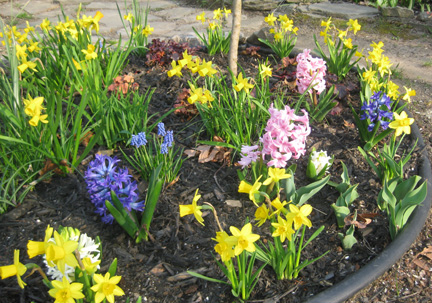
April was the month for bulbs. Other spring bloomers, too, but primarily bulbs. Mainly daffodils:

012 daffodils four

The daffodils don’t show up in photos as spectacularly as they did in person, but at one point, the garden was a disneyworld of daffodils:

08 daffodils

We had big daffodils and little tete-a-tete daffodils:

09 daffodils two

Then there were hyacinths, both grape hyacinths and regular:

010 daffodils three

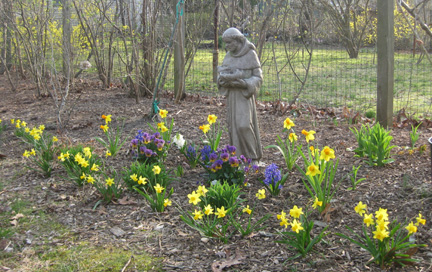
When nothing else was blooming in the back yard, even St. Francis had a sea of daffodils:

07 st francis

The yellow was a welcome sight after the winter. It was good to see growing, green things blooming. After the daffodils started, the flowering trees began to follow suit. First, the Snow Fountain cherry in the front yard bloomed:

06 snow fountain

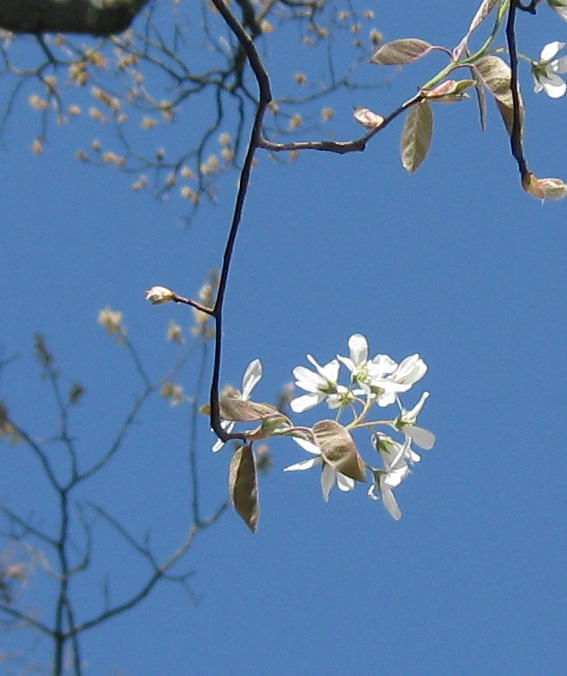
The serviceberry in the side yard performed exactly the way I had envisioned when we planted it over 10 years ago:

03 serviceberry

My house and my neighbors’ are on the old 1950 side setbacks of 6 foot each, so our houses are only 12 feet apart. I wanted something feathery in there to give some bloom and light leaf cover, plus being good for the birds. Plus, a pretty, delicate spring bloom:

04 serviceberry closeup

Shrubs began blooming, too. The PJM Rhododendron and the Chinese Witch Hazel:

05 pgm and witch hazel

The spring-blooming camelias, this one is “April Kiss”:

01 camelia

And something that was a long time coming, the flowering pink almond. I live in the house I grew up in and, as a child, remembered that my mother always had a flowering pink almond on the front southwest corner of the property. I can’t remember exactly what happened to it, either a lawn mower got it or the kids playing in the yards crushed it, but it had long disappeared. One of my goals was to reestablish the flowering pink almond:

02 pink almond

It is not very flashy but should fill out in time. I was happy to see it in the traditional spot.

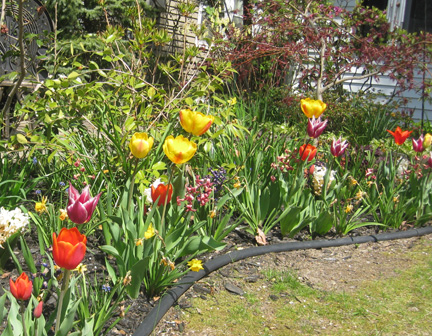
As April and the daffodils waned, other bulbs came to take their place. I am not much of a tulip person, but had invest all of 20 dollars in a huge bag of mixed tulip bulbs from Home Depot. Who knew? It turned out to be one of the best investments:

tulip border